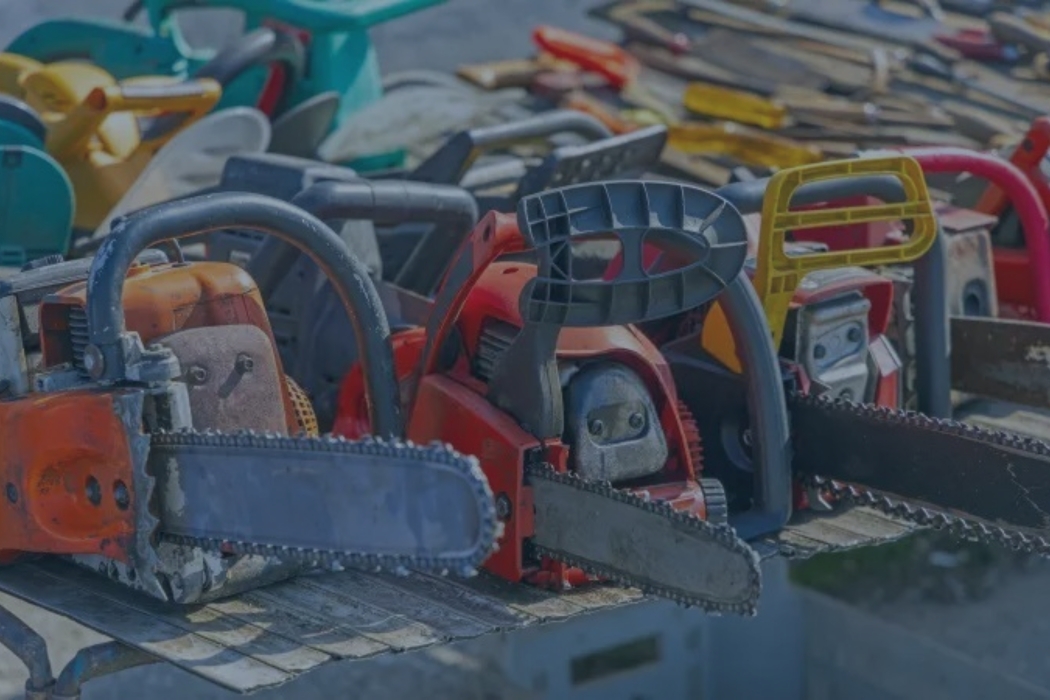
Chainsaw recycling starts with one simple reality: these tools are small but not simple to throw away. A chainsaw may look like one compact piece of equipment, but it usually includes a mix of metal, plastic, wiring, and internal parts that make disposal less straightforward than people expect. Some contain fuel and oil, some use battery systems, and all of them have sharp cutting components that can become a problem if they are handled carelessly.
That is why old chainsaws tend to sit around longer than they should. People store them in garages, sheds, job trailers, and maintenance areas, then forget about them until they stop working, get replaced, or start taking up space. You see this with homeowners replacing old tools, landscaping companies upgrading equipment, storm cleanup crews, and construction or property maintenance teams cycling through worn gear.
The good news is that chainsaw disposal gets a lot easier when you break it down the right way. This guide shows you how to identify your chainsaw type, what disposal and recycling options actually work, how to prepare it safely, and when drop off versus pickup makes the most sense.
Quick Answer: How to Recycle a Chainsaw
Most chainsaw recycling situations fall into one of three routes: retailer take back or trade in programs in limited cases, local drop off or electronics recycling, or scheduled pickup for business quantities.
If you are dealing with one chainsaw, drop off is usually manageable. If you are dealing with multiple tools, mixed equipment, or business volume, pickup is usually the cleaner option. The bigger the load gets, the less practical it becomes to piece together the process on your own.
The key takeaway is simple. If you are dealing with more than a couple units or mixed equipment, pickup usually becomes the better way to handle the job.
What Counts as a Chainsaw? And Why It Matters
Common chainsaw types
Not every chainsaw should be handled the same way. The most common types are gas powered chainsaws, electric corded chainsaws, and battery powered chainsaws.
That may sound basic, but it matters a lot once you get into disposal. A gas chainsaw creates one kind of recycling project. A battery powered chainsaw creates another. Even if the tools look similar from the outside, the internal components and handling needs can be very different.
Why type matters
Chainsaw type affects the whole recycling process. Fuel versus no fuel changes the prep work. Battery powered tools may require battery removal and separate battery recycling. Electric models may be more straightforward, but they still involve mixed materials and electronic components.
It also affects safety. A gas unit with leftover fuel is not the same as a dead corded chainsaw sitting on a shelf. The more clearly you identify the type upfront, the easier it is to choose the right recycling route.
Condition matters too
Condition matters just as much as the tool type. A working chainsaw may still have resale or reuse potential. A non-working one may be better suited for recycling. A damaged or leaking unit needs more caution from the start.
Missing parts matter too. A chainsaw with a missing bar, damaged housing, or loose pieces may not be worth trying to resell, but it still needs to be handled properly. Knowing the condition upfront helps avoid wasted time and bad assumptions.
Chainsaw Disposal Options: What Actually Works
Option 1: Sell or reuse
Selling or reusing a chainsaw can work if the tool still runs and has enough life left to interest a buyer. This is more common for homeowners or small tool turnover situations where the chainsaw is still functional and easy to move.
The problem is that this option gets less appealing fast when the tool is older, damaged, or low in resale value. In those cases, the time and effort it takes to list, explain, and coordinate the sale may not be worth much in return.
Option 2: Recycle
Recycling is usually the better path when the chainsaw is no longer useful as equipment. Metal components may be recovered, while plastic and mixed materials are handled separately through the appropriate process.
That said, it still takes some basic prep. If the chainsaw contains fuel or oil, that needs to be addressed. If it is damaged, it should be handled more carefully. Recycling is definitely better than throwing it away, but it is still not something to do carelessly.
Option 3: Retailer or take back programs
Some take back or trade in programs exist, especially around battery powered tools. But availability is limited, and these options are often tied to a replacement purchase or specific retailer program.
That means it can be a nice option when it fits, but it is not something most people should count on as the default path.
Option 4: Scheduled pickup
Scheduled pickup is usually the best option when chainsaws are being removed as part of a larger equipment load or business project. This makes the most sense for landscaping companies, property maintenance fleets, construction companies, and municipal or storm cleanup equipment.
The reason is simple. Pickup reduces the manual sorting and hauling on your end, creates a safer handling process, and works better when multiple tools are involved. Once the job moves beyond one or two chainsaws, pickup usually stops being a convenience and starts becoming the smarter way to manage the project.
Chainsaw recycling gets a lot easier when you treat it like a real equipment disposal project instead of just tossing an old tool in a pile. The process is usually simple once you identify the type, remove what needs to be removed, check the condition, and stage the tool safely for the next step.
How to Prepare a Chainsaw for Recycling
Step 1: Identify the type
Start by figuring out what kind of chainsaw you have. Is it gas, electric, or battery powered? That one detail changes the prep process right away.
If needed, note the brand and model too. That can help confirm battery type, tool category, or whether the unit has any obvious handling requirements before it moves.
Step 2: Remove fuel if applicable
If it is a gas chainsaw, make sure fuel is not still sitting in the tank. It also helps to check the oil reservoir so you know whether there are still fluids inside the tool.
This does not need to become a complicated procedure here. The point is just to avoid treating a fuel containing tool like it is dry and ready to go when it is not.
Step 3: Remove battery if applicable
If the chainsaw is battery powered, remove the battery before recycling the tool. Do not leave it installed and assume it will all be handled the same way.
Lithium batteries usually need separate handling, so identifying and removing them early helps keep the load cleaner and safer.
Step 4: Inspect condition
Take a quick look at the overall condition before the tool goes anywhere. Check for leaking fluids, damaged casing, broken parts, or anything else that changes how the chainsaw should be handled.
A worn out chainsaw is one thing. A leaking or broken one is another. It is always better to spot those issues before the tool gets mixed into a larger load.
Step 5: Stage safely
Once the chainsaw is prepped, stage it in a way that keeps it controlled. Keep the blade covered or secured, store the tool upright and stable if possible, and keep it away from traffic areas where it can get bumped or knocked over.
This is a small step, but it matters. A little organization upfront makes the load safer and easier to manage later.
Safety Basics for Chainsaw Handling
Why chainsaws require care
Chainsaws need more care than a lot of people think because they combine several risks in one piece of equipment. There are sharp cutting components, possible fuel and oil exposure, and electrical or battery hazards depending on the tool type.
Even when the chainsaw is old or no longer working, those issues do not automatically disappear. That is why basic handling still matters.
Common mistakes
A few mistakes come up all the time. Leaving fuel inside is one. Tossing chainsaws loosely into piles is another. Ignoring battery removal is also common, especially with smaller battery powered tools that people treat like regular scrap.
Another problem is handling the chainsaw without securing the blade. Even if the unit is dead, the cutting side of the tool still needs to be treated carefully.
Extra caution with damaged units
If a chainsaw is leaking, isolate it early and keep it separate. If it is battery powered, separate the battery unit properly instead of mixing it in with everything else.
And do not stack damaged tools carelessly. Once you are dealing with leaking fluids, broken housings, or loose components, the job needs a more controlled approach.
When Pickup is the Best Option
Landscaping or tree service companies
Pickup makes the most sense when a business is cycling through chainsaws as part of normal operations. Landscaping and tree service companies often deal with multiple worn out tools at once, which makes drop off less practical.
Equipment fleet upgrades
If a company is replacing several tools during an equipment upgrade, pickup usually creates a cleaner process. Instead of sorting, loading, and hauling everything yourself, the project can be handled in one coordinated move.
Storm cleanup or municipal projects
Storm cleanup and municipal work often create mixed equipment loads and damaged tools in a short amount of time. That is a good case for pickup because the volume and condition of the equipment can get messy fast.
Multiple chainsaws or mixed tools
Once you are dealing with multiple chainsaws or a load mixed with other small equipment, pickup usually becomes the smarter option. It is easier to manage and usually safer than trying to piece together disposal one item at a time.
Damaged or fuel containing units
If the chainsaws are damaged or still contain fuel related concerns, pickup is often the better route. These are the kinds of tools that benefit from more controlled handling instead of a casual drop off plan.
Rules and Documentation: What to Keep
Why documentation matters
For businesses, documentation matters for simple practical reasons. It helps with internal tracking, vendor accountability, and environmental reporting where needed.
Certificates of recycling give a clear record of what was removed and how the project was handled, which is useful when equipment turnover happens regularly.
What Happens After Chainsaw Collection
After collection, chainsaws are usually dismantled into material categories so the parts can move through the right recycling channels. Metals may be separated for reuse, plastics are processed appropriately, batteries are routed through proper battery handling channels, and any fluids are handled safely as part of the controlled process.
The bigger point is that chainsaw recycling is not just about getting rid of the tool. It is about separating reusable materials and making sure the load is handled in a way that makes sense for what it actually contains.
Frequently Asked Questions About Chainsaw Recycling
Can chainsaws be recycled?
Yes. Chainsaws can often be recycled, but the process depends on whether the tool is gas, electric, or battery powered and what condition it is in.
Can I throw a chainsaw away?
That is usually not the best option. Chainsaws often contain mixed materials, fuel residue, batteries, or sharp components that make proper recycling a better route.
Do I need to remove fuel first?
If the chainsaw is gas powered, yes, fuel should be addressed before recycling the tool.
Are electric chainsaws easier to recycle?
In many cases, yes. Electric chainsaws are often simpler than gas models because they do not involve fuel systems, though they still contain mixed materials and electrical components.
What do I do with the battery?
If the chainsaw uses a battery, remove it and make sure it is handled through the proper battery recycling route instead of leaving it installed in the tool.
Where can I take an old chainsaw?
That depends on the type and quantity. Some may be manageable through local drop off or electronics recycling options, while larger loads are usually better handled through pickup.
Is pickup available for chainsaw recycling?
Yes. Pickup is often the better option for businesses, cleanup projects, or loads involving multiple tools.
Can businesses recycle multiple chainsaws at once?
Yes. Businesses can recycle multiple chainsaws as part of a larger equipment load or scheduled pickup project.
What happens to chainsaws after collection?
They are typically dismantled and separated by material type so metals, plastics, batteries, and other components can move through the correct recycling channels.
Are damaged chainsaws handled differently?
Yes. Damaged or leaking chainsaws should be identified early and handled more carefully than intact tools.
Conclusion
Chainsaw recycling is much easier when you keep the process simple. Identify the chainsaw type, remove fuel or batteries where needed, choose the right disposal route, prep the tool safely, and use pickup when the load gets bigger or more complicated.
If you’re dealing with chainsaw recycling for a business, fleet, or cleanup project, EACR Inc. is an electronics recycling company that can handle pickup, logistics, and proper recycling without the guesswork.