Business electronic recycling matters because businesses generate a lot of outdated equipment, and none of it belongs in the trash. From old office computers and monitors to servers, phones, printers, scanners, networking gear, and warehouse electronics, businesses need a clear way to handle devices at end of life without creating clutter, risk, or compliance headaches.
That is where a structured recycling program comes in. Businesses usually need more than simple disposal. They need safer handling, data protection, cleaner facilities, easier equipment turnover, and a process they can repeat as technology changes over time. Depending on the volume and setup, that can include drop-off recycling, bulk pickup, e-waste containers, or electronics recycling events. EACR Inc. helps businesses recycle old electronics through drop-off, bulk pickup, e-waste containers, and custom collection programs.
What is Business Electronics Recycling?
Business electronic recycling is the collection, handling, transportation, and processing of outdated, broken, surplus, or end-of-life electronics from business environments. Instead of storing old equipment indefinitely or throwing it away, businesses move it through a proper electronics recycling process built for commercial needs.
This applies across many different environments, including offices, warehouses, hospitals, schools, retailers, labs, government facilities, and commercial properties. If a business uses electronics regularly, it will eventually need a system for handling them when they come out of service.
Why Businesses Need Electronics Recycling
Businesses replace electronics constantly
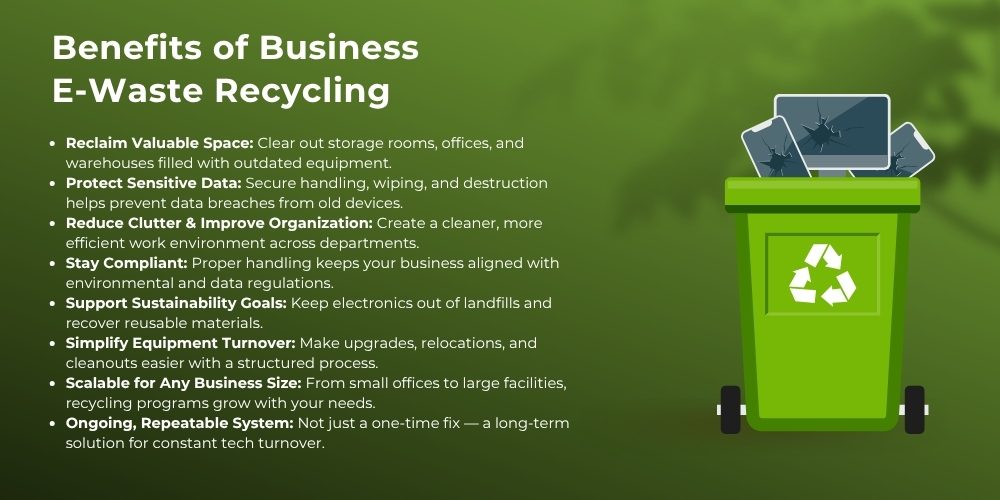
Most businesses are always cycling through technology. Computers age out, IT equipment gets upgraded, and phones, monitors, and printers start piling up faster than expected.
Over time, departments also collect obsolete devices that nobody wants to throw away but nobody is using either. Without a recycling plan, those devices tend to stay in place much longer than they should.
Electronics take up valuable space
Old electronics do not just disappear when they stop being useful. They end up in storage rooms, IT closets, back offices, maintenance areas, and warehouse corners.
That space adds up. A structured recycling program helps businesses reclaim room that would otherwise be lost to outdated equipment.
Some devices contain sensitive data
Many business devices may still hold sensitive information. That includes laptops, desktops, servers, hard drives, mobile devices, and even copiers or multifunction equipment.
That is one reason business electronic recycling is about more than cleanup. It also needs to account for data protection and proper end-of-life handling.
Electronics should not go in the trash
General waste is not the right stream for business electronics. Batteries, circuit boards, and data-bearing devices need to be handled more carefully than regular trash.
Throwing electronics away creates the wrong outcome operationally and environmentally. Businesses need a more responsible system that matches the type of equipment they are getting rid of.
Businesses need a repeatable system
For most organizations, this is not just a one-time cleanout problem. Electronics keep getting replaced, departments keep generating old equipment, and storage space keeps filling up.
That is why an ongoing recycling process is usually the better solution. A repeatable system helps businesses stay ahead of the problem instead of reacting only when the buildup becomes unmanageable.
Common Electronics Businesses Need to Recycle
Office electronics
Office environments generate a steady stream of outdated devices. That often includes desktops, laptops, monitors, keyboards, mice, docking stations, phones, and tablets.
Even routine office upgrades can create a surprising amount of old equipment. Without a plan, those devices quickly stack up in workspaces and storage areas.
IT and network equipment
IT departments often need to recycle servers, hard drives, switches, routers, firewalls, cables, UPS units, and backup equipment. These devices are critical during use, but once replaced, they can be some of the hardest items to store and manage.
This category is especially important because much of it may involve data-bearing or infrastructure-related equipment that needs more controlled handling.
Print and scanning equipment
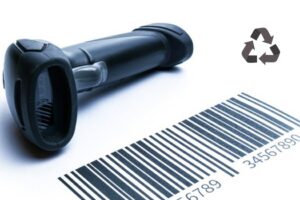
Printers, copiers, scanners, barcode scanners, barcode printers, and multifunction devices are another major category of business electronics. These machines often stay in place for years, then get replaced all at once.
That makes them a common source of bulk electronics during office refreshes, warehouse upgrades, and departmental cleanouts.
Warehouse and industrial electronics
Warehouse and industrial settings often use handheld scanners, rugged devices, mobile computers, tablets, charging stations, industrial printers, control panels, and related hardware. These sites usually have recurring equipment turnover tied to operations, wear and tear, or fleet upgrades.
Because of the volume, these businesses often need more than casual disposal. They need organized collection and removal.
Retail and POS equipment
Retailers frequently need to recycle POS terminals, barcode scanners, receipt printers, cash drawer electronics, payment hardware, and customer-facing screens. Store refreshes and equipment rollouts can generate a large number of old devices in a short period of time.
That makes retail one of the clearest examples of why business recycling services need to be practical and scalable.
Miscellaneous business electronics
Businesses also accumulate AV gear, conference room electronics, telecom systems, security electronics, breakroom electronics, old batteries, and related accessories. These items may not always be the first thing people think of, but they are still part of the larger electronics waste picture.
A strong recycling program should account for more than just computers. It should help businesses handle the full range of devices they use every day.
What Types of Businesses Use Electronics Recycling Services?
Offices and corporate campuses
Offices and corporate campuses regularly replace workstations, monitors, phones, printers, and networking hardware. Recycling services help keep those environments cleaner and more organized.
Warehouses and logistics operations
Warehouses and logistics operations often deal with rugged devices, handheld scanners, charging equipment, and printer replacements. These sites benefit from structured collection and bulk removal options.
Retail stores and chains
Retail stores and chains generate electronics waste through POS hardware, checkout equipment, scanners, and display systems. Recycling helps manage those refresh cycles more efficiently.
Healthcare and medical facilities
Healthcare and medical facilities often use large amounts of technology across departments. A proper recycling process helps these organizations handle outdated equipment in a more controlled way.
Schools, colleges, and universities
Schools, colleges, and universities regularly replace classroom devices, office equipment, networking hardware, and shared electronics. Recycling services can support both ongoing turnover and larger scheduled cleanouts.
Municipal and government offices
Municipal and government offices also generate old electronics that need proper handling. A structured recycling option helps keep public facilities organized and supports more responsible disposal.
Property managers and commercial buildings
Property managers and commercial buildings may need to recycle office electronics, access systems, telecom hardware, security equipment, and leftover devices from tenant turnover. A clear recycling plan helps simplify that process.
Manufacturers and industrial sites
Manufacturers and industrial sites often use a mix of office electronics, operational devices, and facility-related hardware. Recycling services help these businesses manage older equipment more effectively as systems change over time.
Business Electronics Recycling Options
Drop-off recycling for smaller volumes
Drop-off recycling is a good option for businesses with limited quantities of electronics. It works well for smaller offices, occasional cleanouts, and businesses that do not need full pickup service.
It is a simple option when the volume is manageable and the business wants a direct way to move material out.
Bulk pickup for larger business loads
Bulk pickup is the better fit for larger office cleanouts, IT refreshes, relocations, warehouse clear-outs, and multi-pallet loads. It helps businesses remove a large amount of equipment without handling all transportation internally.
For companies with volume, pickup is often the most efficient path. It reduces disruption and makes larger projects easier to manage.
E-waste containers for ongoing collection
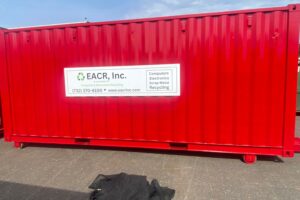
E-waste containers are best for businesses with recurring electronics turnover. They create one centralized collection point and work especially well for campuses, warehouses, hospitals, school districts, and larger commercial properties.
This is often the strongest long-term solution because it supports ongoing collection, not just one-time removal.
Electronics recycling events
Electronics recycling events can be useful for employee drives, office cleanout days, corporate sustainability initiatives, and municipal or campus collection events hosted with EACR Inc. They give organizations a structured way to collect electronics during a planned window.
For some businesses, events are a good way to combine operational cleanup with broader sustainability efforts.
When a Business Should Use an E-Waste Container
Ongoing equipment turnover
If electronics are regularly coming out of service, a container creates a consistent way to collect them instead of letting them scatter across the facility.
Multiple departments generating electronics
When several departments generate old electronics at once, a centralized container helps keep the process organized.
Limited internal storage space
If back rooms and storage areas are already tight, a container helps prevent outdated electronics from taking over valuable operational space.
Large facilities or campuses
Larger sites benefit from having a dedicated collection point because electronics can build up across multiple buildings or departments.
Recurring IT refreshes
Businesses that regularly replace computers, monitors, and related equipment often benefit from a long-term collection setup rather than repeated ad hoc cleanouts.
Seasonal or scheduled collection needs
Some organizations generate electronics in waves. A container works well when equipment turnover follows a seasonal, annual, or scheduled pattern.
When a Business Should Schedule a Pickup
Office relocations
Moving offices often uncovers a large amount of outdated electronics that no longer need to come along.
Technology upgrades
New technology rollouts usually leave behind older devices that need to be removed quickly and responsibly.
Warehouse cleanouts
Warehouse cleanouts can generate bulk electronics fast, especially when handheld devices, printers, and charging equipment are involved.
Closing or consolidating locations
When a business closes or combines locations, pickup helps clear out electronics without adding extra strain to staff.
Bulk loads of outdated equipment
If the business already has pallets, rooms, or storage areas full of obsolete electronics, pickup is usually the most practical option.
Fast removal needs
Sometimes speed matters. Pickup can be the right fit when a business needs electronics gone quickly to free up space or keep a project moving.
When a Business Should Host a Recycling Event
Employee electronics collection days
A recycling event can help businesses collect electronics during a set day or campaign, especially when participation and visibility matter.
Sustainability initiatives
For companies focused on sustainability goals, an event can support those efforts with a visible and practical collection program.
School or campus drives
Schools and campuses can use recycling events to collect electronics in a more organized way during designated collection periods.
Community-facing business events
Some businesses may want to support broader community collection efforts as part of outreach or environmental programming.
Annual cleanout programs
An annual recycling event can give organizations a repeatable way to clear out old electronics before they become a larger storage problem.
The EACR Inc. Electronics Recycling Process
Business electronic recycling works best when the process is clear, repeatable, and built around how organizations actually operate. EACR Inc. uses a structured process designed to help businesses handle end-of-life electronics with more security, better reporting, and less disruption.
1. Identify
The process starts when a business submits a request. From there, EACR Inc. reviews the scope and sends a proposal based on the material, volume, and service needs involved.
That scope can range from a single office cleanout to a larger multi-site collection program. Businesses can also recycle electronics in any condition, which makes the process easier when equipment is outdated, broken, or no longer usable.
2. Transport
Once the project is approved, EACR Inc. handles transportation through scheduled pickups and custom logistics. This helps businesses move electronics out safely without having to manage the full removal process internally.
The goal is compliant handling from the site to the facility. That matters especially when businesses are moving larger volumes of electronics or data-bearing equipment.
3. Protect
For devices that may contain data, protection is a core part of the process. Data-bearing electronics are transported securely and handled with data security in mind.
EACR Inc. performs a DoD 5220.22-M 3-pass wipe on applicable hard drives. If a hard drive fails verification, it is then physically destroyed. That keeps data protection central to the recycling process instead of treating it like an afterthought.
4. Report
Reporting is another important part of a strong recycling program. EACR Inc. provides a certificate of recycling showing the overall weight of material collected and recycled.
5. Recycle
Once material reaches the appropriate facility, it is processed through approved recycling channels. Equipment is repurposed, reused, or properly recycled based on the material and condition.
EACR Inc. also operates with a zero-landfill policy, with a focus on reducing waste and recovering reusable material wherever possible. That gives businesses a more structured and responsible end-of-life path for old electronics.
What to Expect From a Business Electronics Recycling Program
Easier internal organization
A business electronics recycling program gives teams a clearer way to manage old equipment. Instead of letting outdated devices pile up across departments, the business has a defined process for removal.
Safer storage conditions
When old electronics are handled properly, there is less risk tied to messy storage areas, stacked devices, damaged batteries, or cluttered back rooms. A recycling program helps businesses keep equipment in a safer state until it is removed.
Less clutter
Old electronics take up room fast. A structured recycling program helps reduce clutter in offices, IT closets, maintenance areas, and warehouse corners.
Better end-of-life planning
A business recycling program helps organizations think beyond one-time disposal. It creates a more predictable system for handling electronics as devices age out or get replaced.
Documentation and reporting
For many businesses, documentation matters just as much as removal. A strong program can include certificates, and reporting that supports internal records and operational visibility.
More consistent recycling practices across departments
Without a defined process, every department tends to handle old electronics differently. A recycling program helps create more consistency across teams, locations, and facilities.
How Businesses Should Prepare Electronics for Recycling
Separate data-bearing devices
Businesses should separate laptops, desktops, servers, hard drives, and other data-bearing devices from general electronics when possible. That helps make data handling more organized from the start.
Organize by device type when possible
Grouping similar devices together can make the recycling process easier. For example, businesses can separate monitors from computers, printers from scanners, and network equipment from general office electronics.
Remove obvious non-electronic trash
Before pickup or drop-off, it helps to remove boxes, loose packaging, food waste, or other obvious non-electronic materials. This keeps the load cleaner and easier to process.
Identify batteries or damaged devices if applicable
If equipment includes batteries or has obvious physical damage, flagging that in advance is helpful. It allows the recycling provider to plan for safer handling.
Stage material for pickup or container loading
Businesses should place electronics in a clear, accessible area when possible. That makes pickup or container loading smoother and reduces delays during collection.
Why Work With an Electronics Recycling Company
Better than throwing equipment away
Business electronics do not belong in the trash. An electronics recycling company provides a more appropriate path for equipment that contains metals, circuit boards, batteries, and data-bearing components.
Better than storing obsolete devices indefinitely
A lot of businesses hold onto old electronics simply because there is no clear plan for removal. Working with a recycling company helps move that material out instead of letting it sit unused for months or years.
Better than relying only on occasional cleanouts
Waiting for one big cleanout is not always enough. A recycling company can help businesses build a more repeatable process that works year-round.
More service options for different business sizes
Different businesses need different service models. Some need a simple drop-off option, while others need pickup, recurring containers, or event-based collection.
Better support for data-bearing electronics
For businesses dealing with computers, servers, drives, and mobile devices, data handling matters. An electronics recycling company is better equipped to support that part of the process.
Why EACR Inc. Makes Business Electronics Recycling Easier
Flexible service options
EACR Inc. offers multiple service paths depending on the size and structure of the job. That includes drop-off, pickups, e-waste containers, and recycling events.
Business-focused logistics
The service model is built for organizations, not just households. That matters when the project involves office equipment, warehouse devices, multi-department cleanouts, or recurring commercial collection needs.
Data protection support
EACR Inc. supports data protection through wiping and destruction workflows for applicable devices. That helps businesses manage old electronics more securely.
Documentation and reporting
Certificates and customizable reporting options make the process more useful for businesses that need records, and audit support.
Scalable programs
The recycling program can scale from a single office to a larger multi-site organization. That makes it easier for businesses to match the service to their actual volume and operational needs.
Frequently Asked Questions About Business Electronics Recycling
What is business electronics recycling?
Business electronics recycling is the collection, transportation, and processing of outdated or end-of-life electronics from commercial environments.
What electronics can a business recycle?
Businesses can usually recycle computers, laptops, monitors, printers, phones, servers, scanners, networking gear, POS equipment, and other related electronics.
Can businesses schedule electronics pickup?
Yes. Pickup is a common option for businesses with larger volumes of electronics or projects that require on-site removal.
Can a business get an e-waste container?
Yes. E-waste containers are often a strong fit for businesses with recurring electronics turnover or larger facilities.
Are electronics recycling events available for companies?
Yes. Some businesses use recycling events for employee drives, annual cleanouts, sustainability initiatives, or campus-style collection days.
What happens to old computers and laptops?
They are collected, transported, and processed through a proper electronics recycling stream. Data-bearing devices may also go through wiping or destruction workflows where applicable.
How is data handled during business electronics recycling?
For applicable devices, data can be addressed through processes like a DoD 5220.22-M 3-pass wipe, and failed drives may be physically destroyed.
Do printers, scanners, and phones count as e-waste?
Yes. These are all electronic devices and should be handled through proper recycling channels.
Can businesses recycle electronics in bulk?
Yes. Bulk business recycling is common, especially during upgrades, relocations, cleanouts, or fleet replacements.
Do businesses receive a certificate of recycling?
Yes. EACR Inc. provides a Certificate of Recycling showing the overall weight of collected and recycled material.
What if the business has multiple locations?
Multi-site collections can be supported depending on the scope of the project and service needs.
Can damaged or non-working electronics still be recycled?
Yes. Businesses can recycle electronics in any condition, including broken or non-working equipment.
Final Takeaway
Businesses generate more e-waste than they think, and a proper recycling program helps with cleanup, data protection, organization, and long-term operations. The right solution depends on how much equipment the business has and how often it needs to be removed.
Smaller loads may be a good fit for drop-off. Bulk volumes often call for pickup. Ongoing turnover may be best handled with an e-waste container, while organized drives can be handled through recycling events. EACR Inc. is an electronics recycling company that helps businesses recycle office electronics, IT equipment, warehouse devices, and more through pickups, e-waste containers, drop-off options, and recycling events.