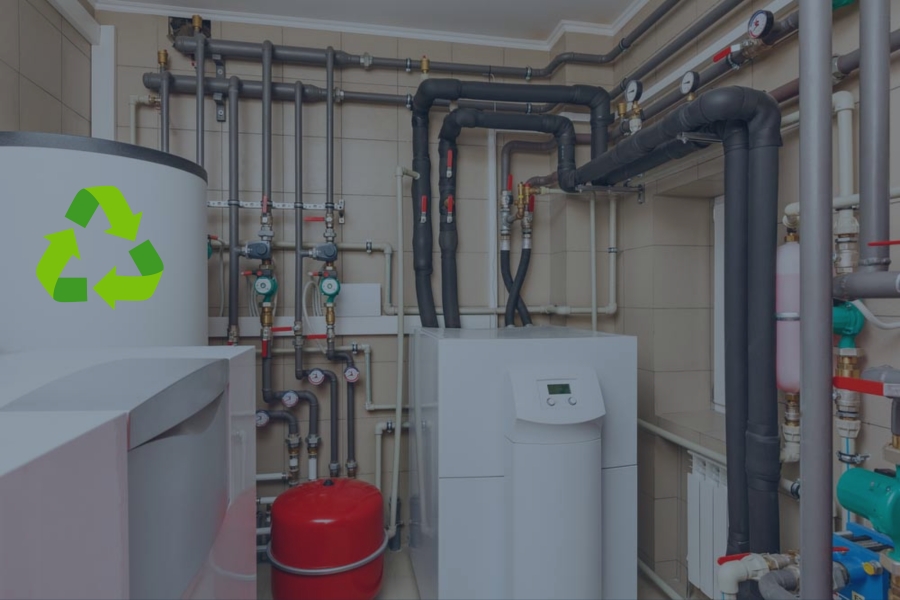
Boilers are built to last for years, but eventually every system reaches a point where repairs no longer make sense, efficiency declines, or a replacement becomes necessary.
Whether installed in a home, office building, school, hospital, or industrial facility, boilers contain significant amounts of metal, wiring, controls, motors, and other components that should not simply be abandoned or sent to a landfill. Proper boiler recycling helps recover reusable materials while keeping large equipment out of the waste stream.
Whether you’re replacing a single boiler or managing a larger facility upgrade, EACR Inc. helps organizations recycle boilers, electronics, and related equipment through licensed e-waste recycling and equipment recycling services.
How Do You Recycle a Boiler?
The best way to recycle a boiler depends on its size, location, and the scope of the project. A residential boiler replacement is very different from removing multiple commercial units during a facility renovation.
Option 1: Scrap Metal and Equipment Recycling
This option is often appropriate for:
- Residential boiler replacements
- Small commercial systems
- Individual boiler units
Because boilers contain large amounts of steel and other metals, many units can be routed through equipment recycling channels after proper removal and preparation.
Option 2: E-Waste Collection Containers
E-waste collection containers can be useful during larger renovation, demolition, or equipment replacement projects.
When facilities are replacing multiple systems at once, collection containers help centralize materials and create a more organized recycling process. This is especially useful when boilers are being removed alongside HVAC equipment, electrical systems, or other facility assets.
Option 3: Scheduled Recycling Pickup
Scheduled pickup is often the safest and most efficient option for larger boiler recycling projects.
This approach is commonly used by:
- Commercial buildings
- Schools
- Hospitals
- Industrial facilities
- Government buildings
Because boilers are heavy, bulky, and often located in mechanical rooms or utility spaces, professional pickup helps simplify logistics and reduce handling challenges.
Quick Summary
| Situation | Recommended Option |
| Single boiler | Equipment recycling |
| Multiple equipment upgrades | Collection containers |
| Large facility project | Scheduled pickup |
What is a Boiler?
A boiler is a heating system that uses heated water or steam to provide warmth to a building or support industrial processes.
While designs vary, boilers are commonly found in residential, commercial, and industrial environments.
Residential Boilers
Residential boilers are commonly installed in homes, apartment buildings, and multi-family properties.
These systems typically provide heat through radiators, baseboard heaters, or in-floor heating systems.
Commercial Boilers
Commercial boilers are used in larger buildings where heating demands are greater.
Common locations include:
- Office buildings
- Schools
- Universities
- Healthcare facilities
- Government buildings
- Hotels
These systems are often significantly larger than residential units and may operate continuously during colder months.
Industrial Boilers
Industrial boilers support manufacturing and industrial operations.
They may be used to generate heat, create steam, support production processes, or provide facility-wide heating for warehouses and industrial campuses.
Why Boiler Type Matters
Not all boilers are recycled the same way.
Size, weight, component types, access requirements, and associated equipment can vary significantly between a residential boiler and a large commercial or industrial system. Understanding the type of boiler involved helps determine the safest and most efficient recycling approach.
What is Inside a Boiler?
Many people assume boilers are simply large steel boxes, but modern systems contain a variety of materials and components.
Steel Housing
Steel is usually the largest material component in a boiler.
The outer shell, frame, and structural sections of many boilers contain substantial amounts of steel that can often be recovered through recycling.
Copper Components
Boilers frequently contain copper in:
- Piping
- Tubing
- Wiring
- Heat transfer components
Copper is widely used because of its durability and ability to transfer heat efficiently.
Electrical Components
Modern boilers rely on electrical systems for monitoring and operation.
These systems may include:
- Wiring
- Switches
- Sensors
- Relays
- Control assemblies
Pumps and Motors
Many boiler systems include pumps and motors that help circulate water throughout the system.
These mechanical components contain metals and other materials that may be separated during recycling.
Insulation Materials
Boilers often contain insulation materials designed to improve efficiency and reduce heat loss.
Depending on the age, condition, and design of the equipment, some insulation materials may require additional evaluation before processing.
Control Panels and Electronics
Modern boilers frequently include electronic control systems.
These systems may contain:
- Circuit boards
- Digital controls
- Monitoring systems
- Electronic sensors
- Communication modules
As boilers become more advanced, the amount of electronics inside the equipment continues to increase.
Which Parts of a Boiler Can Be Recycled?
One of the primary goals of boiler recycling is recovering reusable materials and reducing unnecessary waste.
Steel
Steel is one of the most recoverable materials found in boiler systems.
Because boilers contain significant amounts of steel, recycling can help return this material to future manufacturing applications.
Copper
Copper is commonly recovered from wiring, tubing, and other internal components.
Its widespread use in heating equipment makes it one of the most important recyclable materials found in many boiler systems.
Aluminum
Certain boilers contain aluminum components, including some heat exchangers and structural parts.
These materials may also be separated and processed through appropriate recycling channels.
Electric Motors
Boiler pumps and motors contain a combination of metals and mechanical components that may be recoverable during processing.
Circuit Boards and Electronics
Modern boilers often contain electronic controls and circuit boards.
These components require electronics recycling processes that differ from standard metal recycling and help ensure materials are handled appropriately.
Why Boilers Should Not Be Sent to Landfills
Sending a boiler to a landfill wastes a significant amount of potentially reusable material.
Proper boiler recycling helps:
- Recover steel, copper, aluminum, and electronics
- Reduce large equipment waste
- Support resource conservation
- Reduce environmental impacts associated with disposal
Because boilers are large, durable pieces of equipment with substantial material value, recycling is often a more responsible end-of-life option than disposal.
Preparing a Boiler for Recycling
Boiler recycling goes smoother when the equipment is prepared before pickup or processing. Because boilers are connected to building systems, preparation should be handled carefully and, when needed, by qualified professionals.
Disconnect Utilities
Before a boiler can be recycled, it needs to be disconnected from utilities such as gas, electric, water, and related heating lines.
This work should be performed by qualified personnel. Improper disconnection can create safety risks, especially with gas lines, electrical connections, and pressurized systems.
Drain Remaining Fluids
Boilers often contain water or other system fluids that should be drained before recycling.
Removing remaining fluids helps reduce mess, weight, and handling issues during transport. It also helps prevent leaks during staging or loading.
Remove Hazardous Materials If Applicable
Older boiler systems may require additional review before recycling.
Depending on the age and condition of the equipment, there may be insulation, coatings, residues, or other materials that require special handling. If there is any concern, the equipment should be inspected before removal or recycling.
Plan Equipment Access
Boilers are often located in mechanical rooms, basements, utility closets, or other tight areas.
Before scheduling recycling, consider:
- Door widths
- Stairs
- Elevators
- Loading docks
- Mechanical room access
- Parking or truck access
Planning access ahead of time helps prevent delays on removal day.
Identify Associated Equipment
A boiler replacement project may involve more than the boiler itself.
Associated equipment can include:
- Pumps
- Controls
- Expansion tanks
- Motors
- Wiring
- Piping components
Identifying these items upfront helps create a cleaner recycling plan.
The Boiler Recycling Process
The exact recycling process depends on the boiler type, size, and materials, but most projects follow a similar path from collection to processing.
Step 1: Collection and Transportation
After preparation, the boiler is collected and transported to an appropriate recycling facility.
For large commercial or industrial units, safe loading and transport are key parts of the process.
Step 2: Sorting and Evaluation
Once received, the boiler is evaluated to identify recyclable components and determine how materials should be separated.
This step helps route metals, electronics, motors, and other parts into the right processing streams.
Step 3: Component Separation
Boilers may be separated into major material categories such as:
- Steel
- Copper
- Aluminum
- Motors
- Wiring
- Circuit boards
- Electronic controls
Separating components improves recovery and helps avoid treating the entire unit as one mixed waste item.
Step 4: Material Processing
After separation, materials are prepared for recovery.
This may include size reduction, sorting, cleaning, or routing certain components to specialized downstream processors.
Step 5: Material Recovery
Reusable materials such as steel, copper, aluminum, and electronic components can be recovered through appropriate recycling channels.
This helps return materials to productive use instead of sending them to a landfill.
Step 6: Responsible End-of-Life Management
Materials that cannot be recovered are managed through appropriate downstream methods.
The goal is to recover as much usable material as possible while handling the remaining materials responsibly.
Can Other HVAC Equipment Be Recycled?
Yes. Boilers are only one part of a larger HVAC and facility equipment recycling category.
Other equipment that may be recyclable includes:
- Air conditioners
- Furnaces
- Heat pumps
- Chillers
- HVAC control systems
- Mini splits
- Rooftop units
- Radiators
If a facility is already replacing a boiler, it may make sense to evaluate other outdated HVAC equipment, controls, and related electronics at the same time.
Frequently Asked Questions About Boiler Recycling
Can boilers be recycled?
Yes. Boilers can often be recycled because they contain steel, copper, aluminum, motors, wiring, and electronic components.
Can I scrap an old boiler?
In many cases, yes. However, boilers should be properly disconnected, drained, and prepared before being routed for scrap or equipment recycling.
What metals are inside a boiler?
Common metals found in boilers include steel, copper, aluminum, and other metals used in wiring, tubing, motors, and structural components.
Are boiler control boards recyclable?
Yes. Modern boiler control boards may be recyclable through electronics recycling channels, depending on the equipment and processing requirements.
Can commercial boilers be recycled?
Yes. Commercial boilers can often be recycled, though larger systems may require scheduled pickup, equipment access planning, and coordinated handling.
Do boilers contain copper?
Yes. Many boilers contain copper in wiring, piping, tubing, heat transfer components, and related system parts.
How do I dispose of a large boiler?
A large boiler should usually be handled through scheduled equipment recycling pickup or a coordinated facility recycling project.
Does EACR Inc. recycle boilers?
Yes. EACR Inc. helps organizations recycle boilers and other equipment as part of broader electronics, HVAC, and facility equipment recycling projects.
Conclusion
Boilers contain significant amounts of recoverable materials, including metals, motors, wiring, and electronic controls. Because they are large pieces of equipment, they should be handled through proper recycling channels rather than sent to a landfill.
The right recycling option depends on the size of the boiler, the condition of the equipment, and the scope of the project. A single small unit may be handled differently than a commercial boiler replacement or industrial equipment cleanout.
If your business, school, healthcare facility, or organization is replacing boilers or upgrading facility equipment, EACR Inc., an electronics recycling company, can help manage the electronic controls, wiring, and other e-waste generated during the project.