UN3480 is the United Nations identification number for lithium-ion batteries shipped by themselves.
This means the batteries are not installed inside equipment and are not packaged with the devices they are designed to power. Common examples include loose rechargeable battery packs, replacement laptop batteries, power-tool batteries, and bulk lithium-ion cells.
UN3480 shipments are regulated because lithium-ion batteries can overheat, short circuit, ignite, or enter thermal runaway if they are damaged or improperly packaged.
Explore EACR Inc.’s battery labels for markings used to identify regulated battery shipments.
What Does UN3480 Mean?
UN3480 is the shipping classification for:
Lithium-ion batteries, including lithium-ion polymer batteries, shipped without equipment.
The U.S. Department of Transportation classifies these batteries as Class 9 hazardous materials.
The basic shipping description is:
- UN identification number: UN3480
- Proper shipping name: Lithium-ion batteries
- Hazard class: Class 9 miscellaneous dangerous goods
The exact packaging, labeling, documentation, and carrier requirements depend on the specifications and condition of the batteries.
When Does UN3480 Apply?
UN3480 applies when lithium-ion batteries are transported as standalone items.
Examples include:
- Replacement laptop batteries
- Rechargeable power-tool batteries
- Loose battery packs
- Lithium-ion cells shipped to a manufacturer
- Bulk rechargeable batteries
- Spare batteries shipped without a device
The classification should only be used after confirming that the shipment contains lithium-ion or lithium-ion polymer batteries.
Why Are UN3480 Batteries Regulated?
Lithium-ion batteries store a significant amount of energy in a relatively small space.
If a battery is crushed, punctured, overheated, incorrectly packaged, or allowed to contact conductive material, it may short circuit. This can create intense heat and potentially cause fire, explosion, or the release of hazardous gases.
A damaged cell may also enter thermal runaway. During thermal runaway, increasing internal heat causes the battery to release more energy, which can spread to nearby cells.
These risks are why lithium-ion batteries are classified as hazardous materials and dangerous goods during transportation.
What Does a UN3480 Label Look Like?
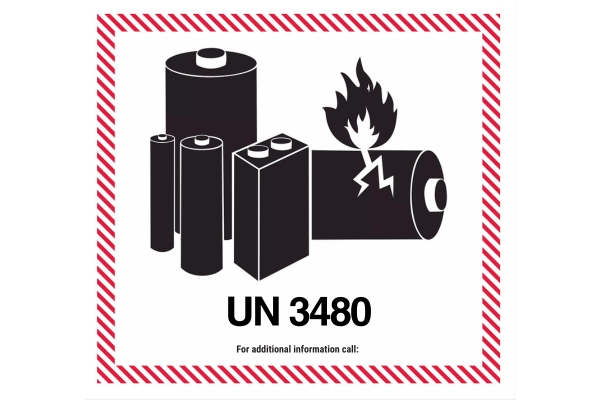
The UN3480 identification number may appear inside a lithium battery mark used to identify qualifying packages containing lithium-ion batteries.
The mark generally includes:
- A battery symbol
- A damaged battery emitting a flame
- Diagonal border markings
- The identification number UN3480
Fully regulated shipments may also require a separate Class 9 lithium battery hazard label.
A lithium battery mark and a Class 9 hazard label are not always interchangeable. The required markings depend on the battery capacity, quantity, package weight, transportation mode, and regulatory provisions being used.
Does Every UN3480 Shipment Need a Class 9 Label?
No. Not every UN3480 shipment follows the same labeling requirements.
Fully regulated lithium-ion cells and batteries generally require a Class 9 lithium battery hazard label, appropriate shipping papers, and additional dangerous-goods documentation.
Smaller cells and batteries may qualify for exceptions when they meet specific capacity, quantity, packaging, testing, and marking requirements.
Qualifying for an exception does not mean the shipment is completely unregulated. Packaging, terminal protection, testing, and carrier requirements may still apply.
UN3480 Packaging Requirements
UN3480 batteries must be packaged to reduce the risk of short circuits, movement, impacts, and damage during transportation.
Protect the Terminals
Battery terminals must not contact other batteries, metal objects, or conductive packaging materials.
Terminals may need to be covered with nonconductive tape, protective caps, or individual inner packaging.
Separate the Batteries
Cells and batteries should be separated so they cannot touch one another and create a short circuit.
Nonconductive dividers or individual packaging may be used when appropriate.
Prevent Movement
Use cushioning and strong inner packaging to keep the batteries secure.
Batteries should not slide, roll, shift, or collide inside the package during normal handling.
Use Strong Outer Packaging
The outer package must be appropriate for the batteries’ size, weight, and transportation method.
It should protect the contents from crushing, punctures, impacts, and other foreseeable damage during transit.
What Must Be Verified Before Shipping UN3480 Batteries?
Before preparing a shipment, confirm:
- Battery chemistry
- Watt-hour rating
- Number of cells or batteries
- Individual and total battery weight
- Battery dimensions
- Package configuration
- Transportation method
- Domestic or international destination
- Carrier acceptance requirements
- Battery condition
- UN 38.3 testing status
Lithium-ion batteries offered for transportation generally must be of a type that has passed the applicable tests in the UN Manual of Tests and Criteria, Part III, subsection 38.3.
The manufacturer or distributor may be able to provide a UN 38.3 test summary.
Are There Special Rules for Air Transportation?
Yes. Air transportation generally has stricter requirements because a lithium battery fire can be especially difficult to manage inside an aircraft.
Air shipments may be subject to requirements established through the International Air Transport Association and International Civil Aviation Organization.
Depending on the shipment, requirements may address:
- State of charge
- Package quantity
- Net battery weight
- Cargo-aircraft restrictions
- Dangerous-goods declarations
- Package markings and labels
- Shipper training
- Airline approval
Carrier policies may be more restrictive than the underlying regulations. A shipment permitted under a regulation is not automatically accepted by every carrier or service.
Can Damaged UN3480 Batteries Be Shipped?
Damaged, defective, swollen, leaking, recalled, or overheating lithium-ion batteries should not be placed into an ordinary shipment.
These batteries present a higher risk of short circuit, fire, and thermal runaway.
Transportation may require:
- Specialized fire-resistant packaging
- Ground-only service
- Carrier preapproval
- A U.S. Department of Transportation special permit
- Competent-authority approval
- A specialized hazardous-materials agreement
End-of-life batteries and batteries being shipped for recycling may also face additional carrier restrictions.
Contact a qualified hazardous-materials professional, carrier, or battery recycling provider before attempting to ship a damaged battery.
Who is Responsible for UN3480 Compliance?
The shipper is responsible for correctly identifying, classifying, packaging, marking, labeling, and documenting the batteries.
Personnel preparing fully regulated hazardous-material shipments may also need formal dangerous-goods training.
Purchasing and applying a UN3480 label does not make a shipment compliant by itself. The batteries, packaging, documentation, transportation method, and carrier acceptance must all satisfy the applicable requirements.
Verify the Requirements Before Shipping
UN3480 identifies lithium-ion batteries shipped by themselves, without equipment.
Because these batteries are regulated hazardous materials, shippers must verify the battery capacity, condition, quantity, testing status, transportation mode, packaging, markings, documentation, and carrier requirements before shipment.
For clear package identification, explore EACR Inc.’s UN3480 battery labels and other battery shipping labels.