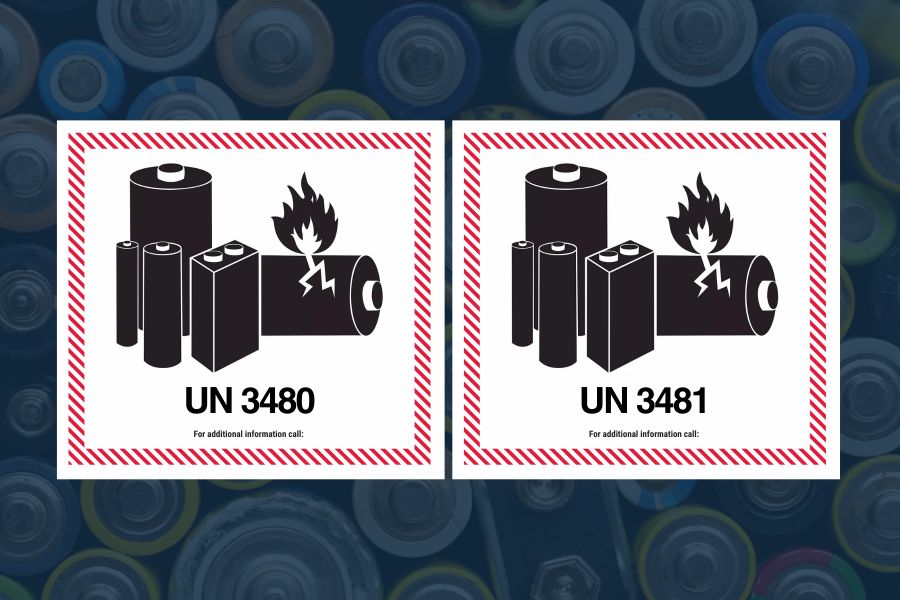
The difference between UN3480 and UN3481 comes down to how lithium-ion batteries are packaged for transportation.
UN3480 applies to lithium-ion batteries shipped by themselves. UN3481 applies when lithium-ion batteries are installed inside equipment or packed in the same shipment as the equipment they are intended to power.
Both classifications cover lithium-ion batteries, including lithium-ion polymer batteries, but the packaging configuration changes the UN identification number and may affect the applicable marking, labeling, packaging, documentation, and transportation requirements. The U.S. Department of Transportation regulates lithium batteries as hazardous materials during transportation.
Explore EACR Inc.’s battery labels for markings used to identify regulated battery shipments.
What is the Difference Between UN3480 and UN3481?
The simplest difference is whether the lithium-ion battery is traveling with equipment.
| Classification | What It Means | Example |
| UN3480 | Lithium-ion batteries shipped by themselves | A box of replacement laptop batteries |
| UN3481 | Lithium-ion batteries packed with equipment | A laptop shipped with a separate replacement battery |
| UN3481 | Lithium-ion batteries contained in equipment | A laptop shipped with its battery installed |
PHMSA specifically distinguishes standalone lithium-ion batteries from lithium-ion batteries packed with or contained in equipment when determining the appropriate shipping classification.
The battery chemistry has not changed. What changes is the shipping configuration.
What Does UN3480 Mean?
UN3480 identifies lithium-ion batteries, including lithium-ion polymer batteries, shipped without equipment.
Common examples may include:
- Replacement laptop batteries
- Power-tool battery packs
- Loose rechargeable lithium-ion cells
- Spare batteries
- Bulk lithium-ion batteries
- Power banks shipped as standalone products
Under IATA’s current 2026 guidance, power banks are treated as batteries rather than equipment and are classified as UN3480 when they contain lithium-ion cells or batteries.
What Does UN3481 Mean?
UN3481 identifies lithium-ion batteries in either of two configurations:
- Lithium-ion batteries packed with equipment
- Lithium-ion batteries contained in equipment
Both configurations use UN3481, but they are not exactly the same shipment type.
Batteries Contained in Equipment
A battery is contained in equipment when it is installed inside the device it powers.
Examples include:
- A battery installed in a laptop
- A battery installed in a mobile phone
- A battery installed in a cordless tool
- A rechargeable battery built into medical equipment
- A lithium-ion battery installed in a tablet
The battery travels as part of the functioning device.
Batteries Packed With Equipment
A battery is packed with equipment when it is not installed in the device but is shipped in the same package as the equipment it is intended to power.
For example, a camera packaged with a separate rechargeable battery intended for that camera may qualify as lithium-ion batteries packed with equipment.
The distinction between packed with and contained in equipment can affect the applicable packaging and air-transport provisions even though both use UN3481.
UN3480 vs UN3481 Examples
Looking at real-world scenarios can make the distinction easier to understand.
Replacement Laptop Battery Shipped Alone
A company sends a customer one replacement lithium-ion laptop battery without a laptop.
Likely classification: UN3480
The battery is traveling by itself rather than with the equipment it powers.
Laptop With Battery Installed
A business ships a laptop with its lithium-ion battery installed inside the computer.
Likely classification: UN3481, batteries contained in equipment
The battery is physically installed in the device.
Laptop With a Separate Spare Battery
A laptop and a compatible spare battery are packaged together, but the spare battery is not installed.
Likely classification for the separate battery configuration: UN3481, batteries packed with equipment
The battery is traveling with the equipment it is intended to power rather than as an independent battery shipment.
Box of Power-Tool Batteries
A distributor ships multiple rechargeable power-tool batteries without any tools.
Likely classification: UN3480
The batteries are being transported independently of the equipment.
Cordless Tool With Battery Installed
A cordless tool is shipped with its lithium-ion battery installed.
Likely classification: UN3481, batteries contained in equipment
These examples illustrate the basic classification principle, but shippers must still verify the battery specifications, packaging configuration, quantity, condition, mode of transportation, and applicable regulations before shipping.
Do UN3480 and UN3481 Use the Same Label?
Not necessarily.
Both UN3480 and UN3481 packages may be subject to lithium battery marking and labeling requirements, but the UN number displayed on the applicable lithium battery mark must correspond to the contents of the package.
A qualifying standalone lithium-ion battery shipment may display:
UN3480
A qualifying shipment containing lithium-ion batteries packed with or contained in equipment may display:
UN3481
Depending on the shipment, additional labels may also be required, including the Class 9 lithium battery hazard label for fully regulated shipments.
A lithium battery mark and a Class 9 hazard label serve different purposes and should not be treated as interchangeable. PHMSA’s shipper guidance separates requirements according to battery size, configuration, transportation mode, and other shipment characteristics.
Are UN3480 and UN3481 Both Class 9?
Yes. Lithium-ion batteries transported under UN3480 and UN3481 are regulated as Class 9 hazardous materials under applicable U.S. transportation requirements.
Lithium-ion batteries can create significant safety hazards when they are:
- Short circuited
- Crushed
- Punctured
- Exposed to excessive heat
- Improperly packaged
- Damaged or defective
A damaged lithium-ion cell can generate substantial heat and potentially enter thermal runaway, creating a risk of fire and hazardous gases.
The presence of equipment around a UN3481 battery does not automatically eliminate these risks or the applicable transportation requirements.
Do UN3480 and UN3481 Have Different Packaging Requirements?
Yes. The shipping configuration can change which packaging provisions apply.
UN3480 Packaging
Because UN3480 batteries are shipped independently, the batteries themselves generally need to be secured and protected against:
- Short circuits
- Contact with conductive materials
- Movement
- Impacts
- Crushing
- Other physical damage
Terminals may need to be covered or otherwise protected, and cells or batteries may need suitable inner packaging or separation.
UN3481 Packaging
UN3481 packaging depends on whether batteries are contained in equipment or packed with equipment.
When batteries are installed in equipment, the equipment may need to be secured against movement and accidental activation.
When batteries are packed separately with equipment, the batteries still need appropriate short-circuit protection, separation, and secure packaging.
PHMSA provides separate scenario-based shipping guides because requirements vary according to the battery configuration and characteristics of the shipment.
Are the Air Shipping Rules Different?
Yes. The distinction between UN3480 and UN3481 becomes especially important for air transportation.
Standalone UN3480 lithium-ion batteries are prohibited as cargo aboard passenger aircraft under applicable air-transport rules. PHMSA also identifies restrictions for UN3480 batteries transported aboard cargo aircraft.
UN3481 batteries packed with or contained in equipment are addressed under separate air-transport provisions. IATA’s current lithium battery guidance distinguishes each configuration and applies different packing instructions and conditions depending on how the battery is shipped.
Air-shipping requirements may depend on:
- Watt-hour rating
- State of charge
- Number of batteries
- Net battery weight
- Whether the batteries are installed or packed separately
- Package configuration
- Passenger or cargo aircraft
- Required markings and labels
- Documentation
- Airline acceptance
Carrier policies can also be stricter than the underlying transportation regulations.
Does Battery Size Affect UN3480 or UN3481?
Battery size does not usually determine whether a lithium-ion battery is classified as UN3480 or UN3481.
The shipping configuration determines the UN number.
However, battery capacity can significantly affect which packaging, labeling, documentation, and exception provisions apply after the correct classification has been identified.
For lithium-ion batteries, the watt-hour rating is one of the important specifications shippers need to verify.
Smaller batteries meeting certain requirements may qualify for reduced regulatory provisions, while larger or fully regulated batteries can require additional packaging, hazard labels, documentation, and trained personnel.
What Should Be Checked Before Choosing UN3480 or UN3481?
Before selecting a label or preparing the package, determine:
- Is the battery lithium-ion?
- Is the battery being shipped by itself?
- Is it installed inside equipment?
- Is it separate but packaged with the equipment it powers?
- What is the battery’s watt-hour rating?
- How many cells or batteries are being shipped?
- What is the battery condition?
- Has the battery type met applicable UN 38.3 testing requirements?
- Is the shipment traveling by ground, air, rail, or vessel?
- What does the selected carrier accept?
The first three shipping-configuration questions generally determine whether the shipment falls under UN3480 or one of the UN3481 configurations.
The remaining information helps determine which specific transportation requirements apply.
What if the Battery Is Damaged?
A UN3480 or UN3481 label should not be treated as permission to place a damaged, defective, swollen, leaking, overheating, or recalled battery into an ordinary shipment.
Damaged lithium-ion batteries present a greater risk during transportation and can be subject to substantially different packaging, transportation, and carrier restrictions.
Before transporting a compromised battery, contact a qualified hazardous-materials professional, the selected carrier, or a battery recycling provider to determine an appropriate next step.
Who is Responsible for Choosing the Correct Classification?
The shipper is responsible for properly identifying and preparing hazardous materials offered for transportation.
That includes determining whether lithium-ion batteries should be classified as UN3480 or UN3481 and satisfying the applicable packaging, marking, labeling, documentation, testing, and transportation requirements.
PHMSA states that lithium batteries offered for transportation must comply with the applicable Hazardous Materials Regulations for transportation by highway, rail, air, or water.
Simply purchasing a UN3480 or UN3481 label does not make a shipment compliant.
UN3480 vs UN3481: Which One Do You Need?
The easiest way to distinguish UN3480 from UN3481 is to look at where the battery is in relation to the equipment it powers.
Use UN3480 when lithium-ion batteries are shipped by themselves.
UN3481 applies when lithium-ion batteries are installed in equipment or packaged with the equipment they are intended to power.
From there, the shipper must verify the watt-hour rating, quantity, battery condition, testing status, transportation mode, packaging, marks, labels, documentation, and carrier requirements that apply to the specific shipment.