Yes, corroded batteries can usually be recycled. Corrosion does not automatically make a battery unusable for recycling, but it does mean the battery should be handled more carefully than an intact one.
If a battery is leaking, swollen, cracked, or heavily corroded, keep it separate from other batteries and let the recycler know about its condition. EACR Inc. offers battery recycling services for a wide range of battery types, with options including drop-off, containers, and pickup depending on the load.
What Does Battery Corrosion Look Like?
Common Signs
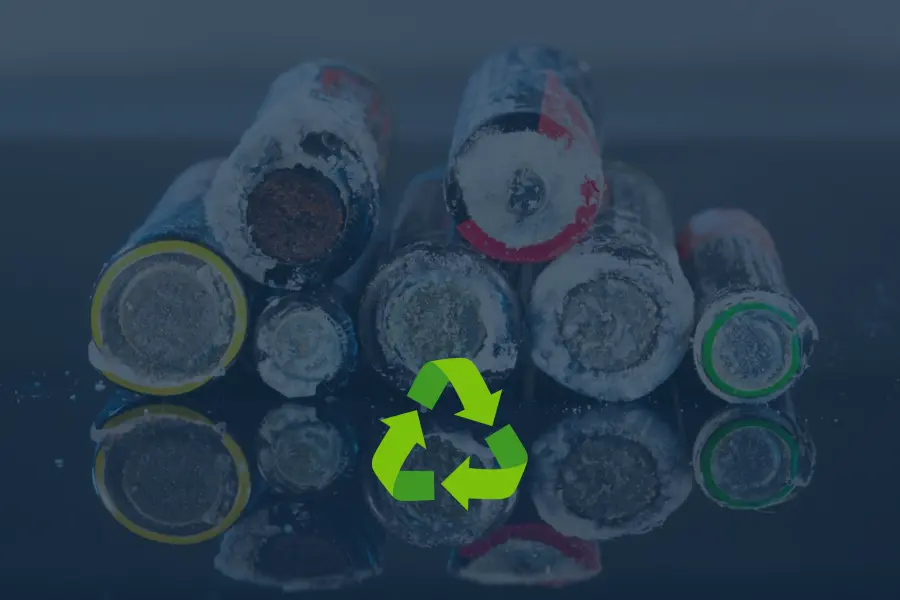
Battery corrosion can look different depending on the battery type, but common signs include:
- White powder or crust
- Blue or green buildup
- Corroded terminals
- Leakage
- Damaged or discolored contacts
If you see any of these signs, treat the battery as compromised rather than continuing to use it normally.
Why Batteries Corrode
Battery corrosion can result from leakage, age, moisture, heat, charging problems, vented gases, or physical damage.
For a deeper explanation of what causes it and how to recognize it, see EACR’s guide on what causes battery corrosion.
Can a Corroded Battery Still Be Recycled?
Yes, In Most Cases
A corroded battery can usually still enter an appropriate recycling stream.
Corrosion often shows that the battery is aging, leaking, or nearing the end of its useful life. That does not mean the materials inside suddenly become unrecyclable.
What changes is the handling. A leaking or damaged battery may need to be separated, packaged differently, or reviewed before transportation.
Corroded Does Not Mean Safe to Keep Using
If the battery is badly corroded, leaking, swollen, cracked, or otherwise damaged, stop using it.
Do not clean up a severely compromised battery just to put it back into service. At that point, replacement and proper recycling are usually the better option.
How to Handle Corroded Batteries Before Recycling
Step 1: Do Not Mix Them With Intact Batteries
Keep visibly corroded, leaking, swollen, or otherwise damaged batteries separate from intact used batteries.
That makes the condition clear and prevents a damaged battery from being overlooked inside a mixed collection.
Step 2: Identify the Battery Type
Check the battery label before recycling.
Look for:
- Chemistry
- Voltage
- Battery type
- Manufacturer markings
Common battery chemistries include:
- Alkaline
- Lithium
- Lithium-ion
- Lead-acid
- NiCd
- NiMH
Battery chemistry still matters even when the battery is corroded.
Step 3: Protect Against Short Circuits
Protect exposed terminals according to the recycler’s requirements.
Keep batteries away from loose metal objects and avoid letting damaged batteries move freely inside a box or container.
This is especially important with batteries that may still contain stored energy.
Step 4: Store Them Carefully
Until they are recycled, keep corroded batteries in a:
- Cool area
- Dry area
- Controlled location
- Place away from heat and flammable materials
Avoid leaving damaged batteries loose in drawers, toolboxes, vehicles, or mixed battery piles.
Step 5: Tell the Recycler About the Condition
Be clear about what you have before arranging recycling.
Tell the recycler if batteries are:
- Corroded
- Leaking
- Swollen
- Cracked
- Otherwise damaged
Condition can affect how the batteries need to be prepared, stored, transported, and processed.
Recycling Different Types of Corroded Batteries
Corroded Alkaline Batteries
Alkaline batteries are common in:
- Remote controls
- Toys
- Flashlights
- Household electronics
When they leak, they may develop a white or crusty buildup around the terminals or battery compartment.
They can still be recycled where appropriate battery recycling programs accept them.
Corroded Lead-Acid Batteries
Lead-acid batteries are commonly used in:
- Vehicles
- Backup power systems
- Industrial equipment
- Other larger applications
Corrosion often appears around the battery terminals.
These batteries are widely recycled, but leaking or physically damaged units need more careful handling.
Corroded Rechargeable Batteries
Rechargeable chemistries such as lithium-ion, NiCd, and NiMH can also become corroded or otherwise damaged.
The important point is simple: corrosion does not remove the need to identify the battery chemistry. The chemistry still determines the appropriate recycling route.
Recycling Options for Corroded Batteries
Small Quantities
For a small number of batteries, a suitable local battery recycling drop-off may work.
Before going, confirm that the location accepts the battery chemistry and condition you have, especially if the batteries are leaking or heavily damaged.
Business and Facility Loads
Businesses and organizations dealing with larger quantities may need a more structured solution.
Options can include:
- Scheduled pickup
- Collection containers
- Facility drop-off
The right option depends on the battery chemistry, condition, quantity, and location of the project.
Frequently Asked Questions About Corroded Battery Recycling
Can corroded batteries be recycled?
Yes. Corrosion usually does not prevent a battery from being recycled.
Can I throw away a corroded battery?
Do not assume a corroded battery belongs in ordinary trash. Use an appropriate battery recycling program.
Can I recycle a leaking battery?
Often yes, but leaking batteries need more careful handling and should be kept separate from intact batteries.
Should I clean corrosion off a battery before recycling it?
Usually not. There is no need to restore an end-of-life battery just for recycling. Avoid unnecessary handling of leaking or badly damaged batteries.
Can corroded alkaline batteries be recycled?
Yes, where an appropriate battery recycling program accepts them.
Can a corroded car battery be recycled?
Yes. Lead-acid car batteries are widely recycled, but leaking or damaged units should be handled carefully.
Should corroded batteries be separated from other batteries?
Yes. Keep heavily corroded, leaking, or damaged batteries separate and tell the recycler about their condition.
Conclusion
Yes, corroded batteries can be recycled.
The main difference is that damaged batteries need more careful handling. Identify the battery chemistry, keep compromised batteries separate, protect exposed terminals, store them properly, and confirm any special handling requirements before transportation.
If you have corroded batteries, damaged batteries, or a larger mixed battery load, EACR Inc. offers battery recycling services with options for drop-off, containers, and scheduled pickup.