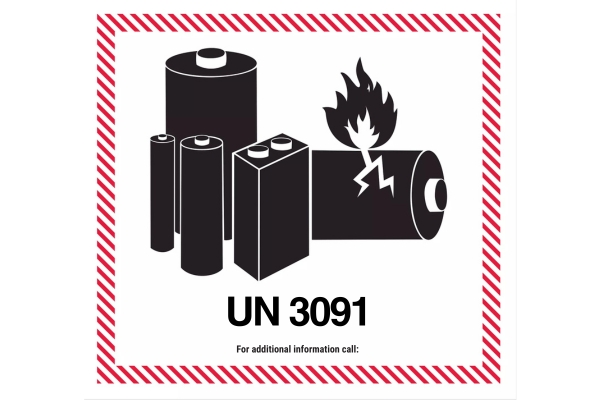
A UN3091 battery label identifies a package containing lithium metal batteries that are either installed inside equipment or packaged in the same shipment as the equipment they are designed to power.
Common examples may include watches, calculators, cameras, tracking devices, medical equipment, and other products powered by primary lithium metal batteries. IATA identifies lithium metal batteries as generally non-rechargeable batteries commonly used in devices such as watches, cameras, key fobs, and defibrillators.
The UN3091 marking alerts carriers and package handlers that the shipment contains regulated lithium metal batteries and must be prepared according to the applicable packaging, marking, labeling, documentation, and transportation requirements.
Explore EACR Inc.’s battery labels for markings used to identify regulated battery shipments.
What Does UN3091 Mean?
UN3091 is the United Nations identification number assigned to two lithium metal battery shipping descriptions:
- Lithium metal batteries contained in equipment
- Lithium metal batteries packed with equipment
This classification also includes lithium alloy batteries. IATA classifies both configurations under UN3091 when the batteries are installed in equipment or packed separately with equipment they are intended to power.
Under U.S. hazardous materials regulations, lithium batteries are regulated hazardous materials during transportation.
The exact packaging, labeling, marking, documentation, and carrier requirements depend on the battery specifications, shipping configuration, quantity, condition, and transportation mode.
Batteries Contained in Equipment
“Contained in equipment” means the lithium metal battery is installed inside the device it powers.
Examples may include:
- A lithium metal battery installed in a watch
- A battery installed in a medical device
- A lithium coin cell installed in a tracking device
- A lithium metal battery installed in a camera
- A battery installed in an electronic measuring device
For air transportation, lithium metal batteries contained in equipment fall under UN3091 Packing Instruction 970 under the current IATA framework.
The equipment must be packaged so the battery is protected from damage, short circuits, movement, and accidental activation where applicable.
Batteries Packed With Equipment
“Packed with equipment” means the battery is not installed in the device but is shipped in the same package as the equipment it is intended to power.
For example, a camera shipped with separate lithium metal batteries intended specifically for that camera may fall under UN3091.
For air transportation, lithium metal batteries packed with equipment fall under UN3091 Packing Instruction 969.
The loose batteries must be protected against short circuits, movement, and contact with conductive materials while the entire package must meet the applicable transportation requirements.
What Does a UN3091 Label Look Like?
The UN3091 identification number may appear inside a lithium battery mark used on qualifying packages containing lithium metal batteries packed with or contained in equipment.
The mark generally includes:
- A battery symbol
- A damaged battery emitting a flame
- Diagonal border markings
- The identification number UN3091
Fully regulated shipments may also require a separate Class 9 lithium battery hazard label.
Although these markings are commonly called “UN3091 labels,” transportation regulations distinguish between the lithium battery mark and the Class 9 lithium battery hazard label.
Not every UN3091 package requires the same combination of markings and labels. Requirements depend on factors such as lithium content, battery quantity, package configuration, transportation mode, and the regulatory provisions being used. IATA’s current classification guidance distinguishes between fully regulated Section I shipments and qualifying Section II shipments for lithium metal batteries packed with or contained in equipment.
Are UN3091 Batteries Hazardous Materials?
Yes. Lithium metal batteries transported under UN3091 are regulated as Class 9 hazardous materials or dangerous goods.
Lithium metal batteries contain reactive lithium and may create significant heat or fire hazards if they are crushed, punctured, damaged, improperly packaged, or allowed to short circuit.
Even when a battery is installed inside equipment, the device does not automatically eliminate the transportation risk.
PHMSA requires lithium battery shipments to comply with the applicable Hazardous Materials Regulations, including requirements addressing batteries contained in electronic equipment.
When is a UN3091 Battery Label Required?
A UN3091 lithium battery mark may be required when qualifying lithium metal batteries are installed in equipment or packaged with the equipment they are intended to power.
Before applying the mark, the shipper should verify:
- Whether the battery is contained in or packed with equipment
- Battery chemistry
- Lithium content
- Number of batteries and cells
- Battery weight
- Total battery weight
- Package configuration
- Battery condition
- UN 38.3 testing status
- Transportation method
- Domestic or international destination
- Carrier-specific acceptance requirements
Smaller lithium metal cells and batteries may qualify for reduced regulatory requirements when specific lithium-content, packaging, quantity, and testing conditions are met.
However, qualifying for an exception does not mean the shipment is automatically exempt from all transportation requirements.
UN3091 Packaging Requirements
The exact packaging requirements vary depending on whether the batteries are contained in equipment or packed with equipment.
In either configuration, batteries must be protected against short circuits, movement, damage, and other conditions that could create a hazard during transportation.
Protect the Batteries From Damage
Lithium metal cells and batteries should be protected from crushing, punctures, impacts, and other foreseeable damage.
Equipment containing batteries should also be secured so it cannot move excessively within the package.
Prevent Short Circuits
Exposed terminals on loose batteries must be protected against contact with conductive materials, other batteries, metal objects, or other surfaces capable of completing an electrical circuit.
Nonconductive tape, terminal caps, individual inner packaging, or another suitable protective method may be used depending on the battery.
Prevent Accidental Activation
Equipment containing lithium batteries should be packaged so it cannot unintentionally activate during transportation when accidental operation could create a hazard.
Controls, switches, or buttons may need to be secured or protected depending on the equipment.
Use Appropriate Outer Packaging
The package should be strong enough to protect the batteries and equipment during normal transportation conditions.
For fully regulated lithium metal batteries packed with equipment under IATA Packing Instruction 969, the current rules provide specific UN specification packaging options. Batteries contained in equipment are addressed separately under Packing Instruction 970.
Does Every UN3091 Shipment Need a Class 9 Label?
No. Not every UN3091 shipment requires the same hazard labels or documentation.
Fully regulated shipments generally require the Class 9 lithium battery hazard label along with the other applicable dangerous-goods requirements.
Smaller cells and batteries may qualify for reduced requirements when they fall within applicable lithium-content limits and meet the required packaging, quantity, and testing provisions.
IATA’s 2026 classification guidance distinguishes between Section I shipments involving larger lithium metal cells or batteries and qualifying Section II shipments involving smaller cells or batteries.
Shippers should not assume that purchasing and applying a UN3091 mark is sufficient by itself.
What Information Should Be Checked Before Shipping?
Before preparing a UN3091 package, confirm:
- Battery chemistry
- Lithium content per cell or battery
- Battery dimensions
- Individual battery weight
- Number of cells or batteries
- Equipment type
- Whether batteries are installed or packed separately
- Battery condition
- UN 38.3 test status
- Transportation method
- Destination
- Carrier acceptance requirements
Lithium cells and batteries transported by air generally must be of a type that has passed the applicable UN Manual of Tests and Criteria, Part III, subsection 38.3 tests. IATA also requires manufacturers and subsequent distributors to make the applicable test summary available for most batteries and battery-powered equipment manufactured after June 30, 2003, subject to specified exceptions.
Are There Special Rules for Air Transportation?
Yes. UN3091 shipments transported by air are subject to specific dangerous-goods requirements.
Unlike UN3090 lithium metal batteries shipped by themselves, which are generally forbidden as cargo aboard passenger aircraft, qualifying UN3091 batteries packed with or contained in equipment may be transported aboard passenger aircraft when the applicable requirements are satisfied.
Under IATA’s 2026 framework:
- Lithium metal batteries packed with equipment use Packing Instruction 969.
- Lithium metal batteries contained in equipment use Packing Instruction 970.
- Passenger-aircraft and cargo-aircraft package limits vary depending on battery size and the applicable section of the packing instruction.
Air shipment requirements may address:
- Lithium content
- Number of batteries
- Net battery weight
- Package quantity
- Packaging type
- Package markings and labels
- Dangerous-goods documentation
- Shipper training
- Airline acceptance
Carrier policies may be more restrictive than the underlying regulations, so regulatory permission does not guarantee that a particular carrier or service will accept the shipment.
Can a UN3091 Label Be Used for Damaged Batteries?
A standard UN3091 label should not be treated as authorization to ship a damaged, defective, leaking, recalled, or otherwise compromised lithium metal battery.
Damaged batteries can present a significantly greater risk of short circuit, fire, heat generation, or other hazardous reactions.
Such batteries may require:
- Specialized packaging
- Additional containment
- Ground-only transportation
- Carrier approval
- A U.S. Department of Transportation special permit
- Another authorized hazardous-materials shipping arrangement
End-of-life lithium metal batteries being transported for recycling may also face additional carrier restrictions.
Contact a qualified hazardous-materials professional, carrier, or battery recycling provider before attempting to transport damaged lithium metal batteries.
Why Correct UN3091 Labeling Matters
Correct package identification helps carriers and handlers recognize that a shipment contains lithium metal batteries and apply the appropriate transportation procedures.
Incorrect classification, missing markings, or improper labels may result in:
- Rejected shipments
- Transportation delays
- Additional carrier fees
- Regulatory penalties
- Increased safety risks
The label or mark is only one part of compliance.
The battery must also be correctly classified, tested, packaged, protected, documented where required, and accepted by the selected carrier.
UN3090 vs. UN3091
The primary difference is whether the lithium metal battery is being transported with equipment.
UN3090 applies to lithium metal batteries shipped by themselves.
UN3091 applies when lithium metal batteries are:
- Installed inside equipment, or
- Packed in the same shipment as the equipment they are intended to power
This distinction is important because the applicable packaging, marking, labeling, and air-transport requirements differ between the two classifications. IATA assigns UN3090 to standalone lithium metal batteries and UN3091 to batteries packed with or contained in equipment.
Verify the Requirements Before Shipping
UN3091 identifies lithium metal and lithium alloy batteries contained in equipment or packed with the equipment they are intended to power.
Before shipping, verify the battery chemistry, lithium content, condition, quantity, testing status, packaging configuration, transportation mode, markings, documentation, and carrier requirements.
The exact requirements differ depending on whether the batteries are packed with equipment or installed inside it, as well as their size and transportation method.
For organizations preparing lithium metal battery shipments, explore EACR Inc.’s battery labels for clear markings used to identify regulated battery packages.