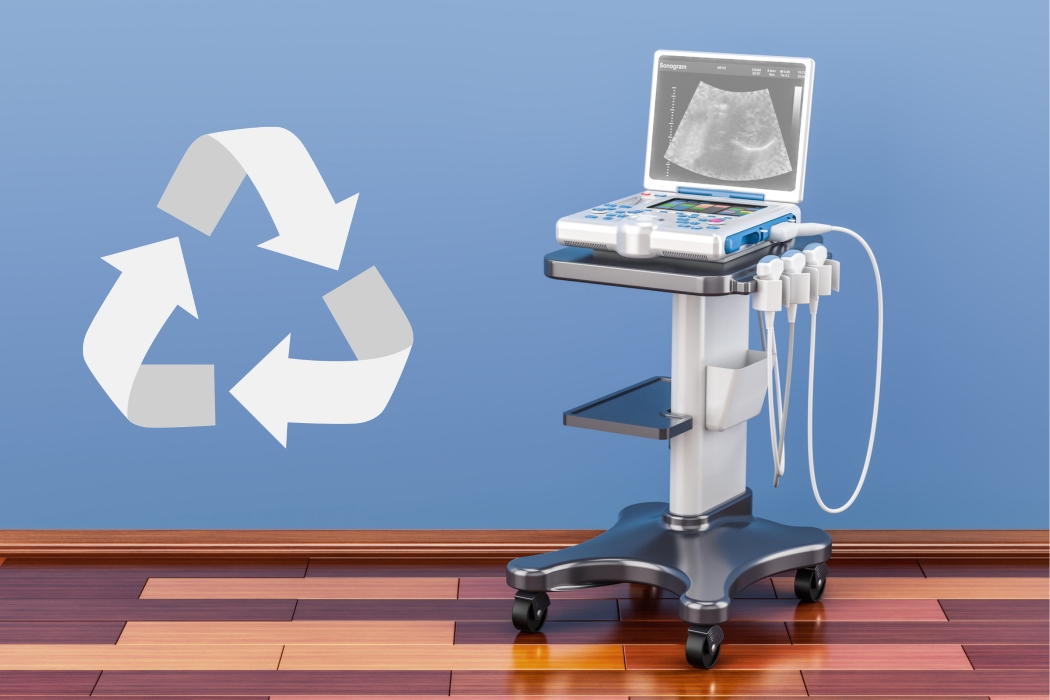
Ultrasound machine recycling is something most healthcare facilities don’t think about until it’s time to upgrade—but these machines are everywhere, from hospitals to OB/GYN offices to imaging centers. There’s also a common misconception that imaging equipment is dangerous because of radiation. That’s not the case here. Ultrasound machines are not radioactive, but they are still regulated electronic medical equipment—this is not about radiation, it’s about electronics, data, and compliance.
The real issue is what these systems contain and how they’re handled. They include electronics and internal data storage, cannot go in the trash, and require structured decommissioning and recycling. This guide breaks down what’s inside an ultrasound machine, the risks involved, and how ultrasound machine recycling actually works.
What is Inside an Ultrasound Machine?
Ultrasound systems may look simple on the outside, but internally they function like advanced computing platforms combined with medical imaging hardware.
Core Imaging System
At the heart of every ultrasound machine is the imaging system:
- Transducer probes (contain piezoelectric crystals)
- Signal processors that convert sound waves into images
- Imaging software systems that generate real-time visuals
Transducer probes are especially important—they are high-value, delicate, and require proper handling during disposal.
Circuit Boards & Electronics
Like most modern medical devices, ultrasound machines are built around electronics:
- Control boards
- GPUs and imaging processors
- Internal wiring and connectors
You see similar electronic components in other medical devices like CPAP machines, which also require structured e-waste processing.
Display & User Interface
The user-facing components include:
- LCD or LED monitors
- Touchscreen interfaces
- Control panels
These components contain mixed materials and must be separated properly during recycling.
Power Supply Systems
Ultrasound machines rely on internal power regulation systems:
- Transformers
- Capacitors
- Voltage regulators
These components store and manage electricity and must be handled carefully during dismantling.
Data Storage Components
Many ultrasound systems store patient information directly on the device:
- Internal hard drives or SSDs
- Patient imaging records
This creates a serious responsibility:
- HIPAA risk
- Protected health information (PHI) storage
Like with X-ray machine recycling, data protection is a critical part of the process.
Structural Materials
Beyond electronics, ultrasound machines contain recoverable materials:
- Aluminum framing
- Steel housing
- Plastic casings
These materials can be separated and routed into proper recycling streams.
Why Ultrasound Machine Recycling Is Necessary
Environmental Impact
Ultrasound machines are classified as electronic waste.
- Electronics cannot go to landfill
- Heavy metals and plastics require controlled separation
Improper disposal contributes to environmental contamination and wasted materials.
Data Security Risks
Ultrasound machines often store sensitive patient data.
- Patient scans may be stored locally
- Data must be securely wiped or destroyed
Failing to address this creates real legal and privacy risks.
Regulatory Compliance
Healthcare facilities must meet strict requirements:
- HIPAA for patient data protection
- EPA regulations for hazardous materials
- E-waste laws for electronics disposal
Equipment Lifecycle Reality
Imaging technology evolves quickly.
- Newer systems offer better imaging and efficiency
- Older machines become outdated fast
That means facilities are constantly:
- Upgrading
- Replacing
- Decommissioning equipment
Ultrasound machine recycling is a necessary part of that cycle.
The Ultrasound Machine Recycling Process
Recycling an ultrasound system is not simple removal—it’s a structured, step-by-step process designed to manage risk and recover materials.
Step 1: Equipment Evaluation
The process starts with understanding the system:
- Identify model and age
- Determine whether reuse or recycling is appropriate
- Check for internal data storage
Step 2: Data Destruction
Before anything leaves the facility, data must be addressed:
- Secure drive wiping
- Physical data destruction if needed
- Documentation of data removal
Step 3: Decommissioning
The system is safely prepared for removal:
- Disconnect from power and network
- Remove probes and accessories
- Prepare equipment for transport
Step 4: Dismantling & Separation
At the recycling facility, materials are separated:
- Electronics → routed to e-waste processing
- Metals → directed to recovery streams
- Plastics → sorted by type
Step 5: Material Recovery
Reusable materials are extracted and processed:
- Copper from wiring
- Aluminum from frames
- Circuit boards for specialized recovery
Step 6: Documentation
Final documentation confirms compliant recycling:
This ensures traceability and protects your organization from compliance risk.
Ultrasound Probes: Special Recycling Considerations
Ultrasound machine recycling involves more than just the main unit—probes are one of the most overlooked and misunderstood components.
Why Probes Are Different
Ultrasound probes are not standard equipment parts.
- Contain piezoelectric materials used to generate sound waves
- Highly sensitive and expensive components
- Not considered basic scrap or standard electronics
These are precision tools and require careful handling during disposal.
Disposal Challenges
Probes are difficult to process compared to other components.
- Made from mixed materials
- Contain adhesives and protective coatings
- Have limited reuse or resale options
This makes them harder to recycle through traditional methods.
Proper Handling
Handling matters here.
- Do not break probes open
- Do not attempt to dismantle internally
- Always route through a licensed electronics recycling company
Improper handling can damage materials and create compliance risks.
Ultrasound Recycling for Different Facilities
Hospitals
- High equipment volume
- Integrated IT and imaging systems
- Require strict documentation and compliance
Imaging Centers
- Frequent technology upgrades
- Bulk equipment turnover
- Need efficient, scheduled recycling
OB/GYN & Private Practices
- Smaller standalone units
- Disposal is often delayed or overlooked
Veterinary Clinics
- Same compliance requirements apply
- Often missed in recycling planning (and search visibility)
Step-by-Step: How to Recycle an Ultrasound Machine
- Confirm your upgrade or replacement timeline
- Identify whether the system stores data
- Back up or remove any patient data
- Contact an electronics recycling company
- Schedule pickup or arrange drop-off
- Receive documentation for compliance records
Frequently Asked Questions About Ultrasound Machine Recycling
Can ultrasound machines be recycled?
Yes. Ultrasound machines are electronic medical devices and can be processed through licensed e-waste recycling systems.
Do ultrasound machines store patient data?
Yes. Many systems store images and patient records, which must be securely removed before recycling.
Are ultrasound machines considered hazardous?
Not radioactive, but they contain regulated electronic components that require proper handling.
Can I sell or donate an ultrasound machine?
Only if it is functional and compliant. Otherwise, recycling is the safer option.
Is bulk pickup available?
Yes. EACR Inc. offers bulk pickup for healthcare facilities and imaging centers.
Conclusion
Ultrasound machines are regulated electronic medical equipment. The combination of data storage and electronic components creates real risk if handled improperly.
Recycling is the safest, most compliant path forward.
Work with an electronics recycling company to ensure proper handling, data protection, and full compliance from pickup through final processing.