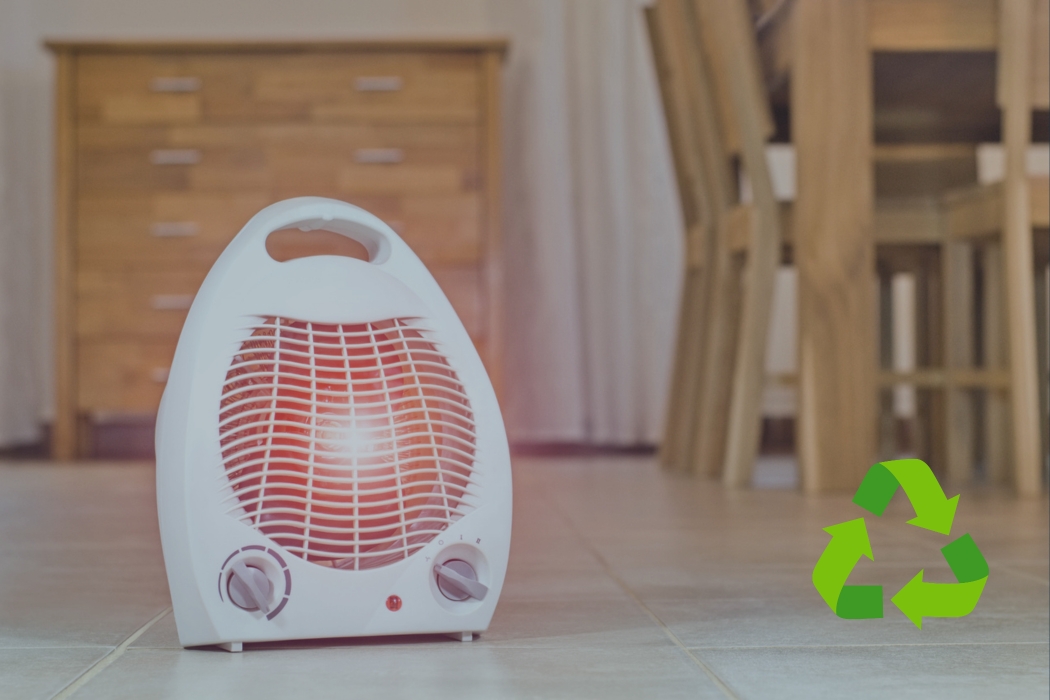
Space heater recycling is something most people don’t think about — until a unit breaks, gets recalled, or starts collecting dust in a storage closet.
Space heaters are small appliances, but they carry real fire and electrical risks when damaged or improperly discarded. They generate heat by design. When cords fray, components fail, or internal safety systems malfunction, that risk increases.
Space heaters contain electrical components, heating elements, wiring, plastics, and metals that classify them as electronic waste. They are not simple household trash.
The problem? Many people toss old space heaters in the garbage, keep recalled units in storage, or don’t know the correct disposal route.
EACR Inc. provides licensed electronics recycling services to ensure space heaters are handled safely and routed through proper e-waste channels.
This guide explains what space heaters are made of, why recycling matters, recall safety considerations, and your disposal options.
Why Recycling Space Heaters Matters
Fire & Electrical Risk
Even when unplugged, damaged or improperly discarded space heaters can create hazards.
Common risks include:
- Internal heating coils and exposed wiring
- Damaged or partially detached power cords
- Overheating failures in older or recalled models
- Improper landfill disposal where components can short-circuit or ignite waste
Space heaters are designed to generate heat. When they fail, they can do it in unsafe ways.
Recall Reality
Recent recalls highlight why responsible disposal matters.
Govee Smart Electric Heater Recall (November 2024)
- Over 500,000 units affected
- Overheating and fire hazards
- Failure to comply with UL 1278 voluntary safety standards (GoveeLife, 2024).
The wireless control features increased overheating risks.
Vornado VH2 Heater Recall (January 2025)
- Power cord detachment issue
- Electric shock and fire hazards
- Units sold exclusively on Amazon
In both cases, the hazard was serious enough to trigger federal recall action.
Recalled units should never be casually discarded, donated, or reused. They should be routed safely through proper electronics recycling channels (Vornado Air, 2025).
E-Waste Classification
A space heater is not household trash.
It belongs in the electronic waste stream because it contains:
- Electrical wiring
- Heating elements
- Metal housings
- Circuit boards (in smart models)
- Plastic insulation
Treating it like regular garbage increases fire risk and wastes recoverable materials.
What is a Space Heater Made Of?
Understanding what’s inside a space heater makes it clear why recycling is the right choice.
Metal Heating Elements
Most space heaters contain:
- Nickel-chromium (nichrome) heating coils
- Ceramic heating plates
- Steel housings or internal frames
These components are designed to withstand high temperatures — and should be handled appropriately at end of life.
Internal Wiring & Electrical Components
Inside nearly every unit, you’ll find:
- Copper wiring
- Circuit boards (especially in smart heaters)
- Thermal cut-off switches
- Safety sensors
These components qualify the unit as electronic waste and require controlled processing.
Plastic & Polymer Housing
Most space heaters use:
- Fire-resistant plastics
- Insulation materials
While designed to reduce fire risk during operation, these plastics do not belong in landfill waste streams.
Motors & Fans (Forced-Air Units)
Many models include:
- Small electric motors
- Copper windings
These are recoverable components when routed through proper recycling systems.
Smart Heater Components
Newer Wi-Fi enabled units may contain:
- Wi-Fi modules
- Control boards
- Embedded chips
These electronic components increase both e-waste classification and processing complexity.
These materials are recoverable and should not be landfilled.
Why You Should Never Throw a Space Heater in the Trash
Fire Risk in Waste Streams
Improper disposal creates real hazards:
- Lithium battery risks in smart units
- Damaged cords short-circuiting
- Heating elements igniting surrounding waste
Landfills and transfer stations are not built to manage small appliance fire risks.
Environmental Concerns
Discarding space heaters wastes:
- Copper and other metals
- Steel components
- Circuit board materials
Plastic housings can break down slowly, contributing to long-term landfill burden.
Missed Recovery Opportunity
When properly recycled, space heaters allow:
- Recovery of metals
- Separation of electronic components
- Diversion of materials from landfill
Throwing them away wastes recoverable materials and increases disposal risk.
Space Heater Recycling Options
1. Drop-Off at EACR Inc.
EACR Inc. is a licensed electronics recycling company that accepts small appliances like space heaters.
Benefits include:
- Proper routing of heating elements and internal electronics
- Safe handling of damaged or recalled units
- Processing through appropriate e-waste channels
Drop-off ensures your heater doesn’t end up in general waste.
2. Municipal E-Waste Containers
Many towns and municipalities offer:
- E-waste collection events
- Designated electronics recycling containers
- Small appliance acceptance programs
Always confirm acceptance before dropping off — policies vary by location.
3. Bulk Pickup (Businesses, Schools, Property Managers)
Bulk pickup makes sense for:
- Hotels
- Apartment complexes
- Warehouses
- Retail chains
- Schools
- Municipal storage cleanouts
Benefits include:
- Controlled handling
- Documentation like certificates of recycling
- Safe routing of recalled units
- Reduced fire and liability exposure
If you’re clearing out multiple heaters at once, structured pickup reduces risk and simplifies compliance.
What To Do If Your Space Heater Was Recalled
Space heater recycling becomes especially important when a unit has been recalled for fire or electrical hazards.
If your heater matches a recalled model, don’t ignore it. Take action quickly and route it safely.
Step 1: Confirm Recall Model
Start by checking the manufacturer label on your heater.
Recent recalls include:
- GoveeLife Smart Electric Heaters (Recall – November 2024)
- Vornado VH2 Whole Room Heater (Recall – January 2025)
Model numbers are typically located on the underside or back panel. Always confirm directly through official recall notices before making a decision.
Step 2: Follow Manufacturer Instructions
Once confirmed:
- Follow refund or replacement program instructions
- Stop using the heater immediately
Do not continue operating a recalled unit “just for a few more weeks.” Recalls are issued because of real safety risks.
Step 3: Dispose Through Licensed Electronics Recycling
After completing the manufacturer’s instructions (if applicable):
- Do not place the heater in the trash
- Do not donate it
- Route it through the proper e-waste stream
Licensed electronics recyclers ensure recalled units are handled safely and do not re-enter circulation.
Benefits of Recycling Space Heaters
Fire Risk Reduction
Recycling removes damaged, aging, or recalled heaters from homes and facilities. That reduces the risk of:
- Electrical shorts
- Cord failures
- Overheating incidents
Especially in storage areas, eliminating unused heaters reduces potential hazards.
Material Recovery
Space heaters contain recoverable materials, including:
- Copper wiring
- Steel housings
- Circuit board metals (in smart models)
Proper recycling separates and routes these materials into appropriate recovery channels instead of burying them in landfill.
Compliance Support (For Businesses)
For property managers, schools, and commercial facilities, structured recycling provides:
- Safer cleanouts of maintenance storage
- Documentation upon request
- Reduced liability exposure
If a recalled heater causes an incident after improper disposal, liability becomes a real concern.
Environmental Impact
Recycling supports:
- Reduced landfill burden
- Reduced demand for virgin metal extraction
- More efficient material use
Even small appliances contribute to larger waste volumes when multiplied across communities.
Step-by-Step: How to Recycle a Space Heater
Keep it simple.
- Unplug the heater and inspect its condition
- Separate recalled or visibly damaged units
- Do not dismantle the heater at home
- Confirm the accepted drop-off location or recycling program
- Deliver to a licensed recycler or schedule pickup
- Request documentation if disposing of commercial volume
Proper routing takes minutes — and prevents long-term risk.
FAQs About Space Heater Recycling
Can you throw away a space heater?
No. Space heaters contain electrical components and should not be placed in regular trash.
Are space heaters considered e-waste?
Yes. They contain wiring, heating elements, motors, and sometimes circuit boards, which classify them as electronic waste.
What should I do with a recalled heater?
Stop using it immediately, follow manufacturer recall instructions, and route it through licensed electronics recycling.
Can I donate an old space heater?
Donating older or recalled heaters is not recommended. Safety and liability risks make recycling the better option.
Do space heaters contain hazardous materials?
They contain electrical components and metals that require controlled processing. Damaged units can pose fire risks.
Does EACR Inc. accept small appliances?
Yes. EACR Inc. accepts small electronic appliances, including space heaters, through licensed electronics recycling services.
Is bulk pickup available for businesses?
Yes. Bulk pickup options are available for businesses, property managers, schools, and municipalities managing multiple units.
Conclusion
Space heaters are electrical devices, not trash.
Recent recalls highlight real fire and electrical risks. Improper disposal increases those risks, while proper recycling removes them from circulation.
Recycling space heaters prevents hazards, supports recovery of usable materials, and ensures safe handling through licensed electronics recycling channels.
If you have old, damaged, or recalled heaters, route them responsibly and keep your facility — and your community — safer.
Learn how space heater recycling works, recall safety steps, disposal options, and licensed electronics recycling solutions.