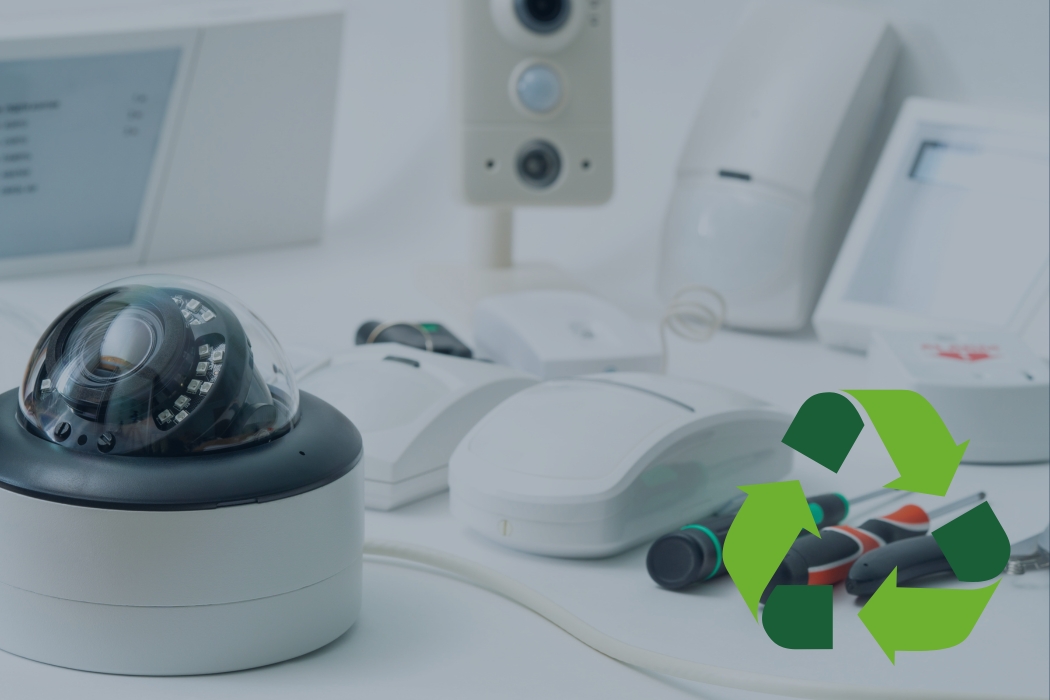
Security equipment recycling starts with a simple definition: security equipment is any electronic device used to detect, record, control access, or alert—plus the supporting gear that keeps the system running.
Most modern systems follow the same basic chain:
- Sensors detect activity (motion, doors, glass break, smoke, water)
- A control panel or hub collects signals
- The system connects through a network/app (Wi-Fi, cellular, Ethernet)
- You get alerts (sirens, push notifications, monitoring center dispatch)
There’s also a real “security vs safety” overlap. Intrusion devices (cameras, door contacts, alarms) often sit right next to life-safety sensors like smoke, carbon monoxide (CO), and flood sensors—and they all end up as e-waste when systems get upgraded.
Common Types of Security Equipment
Surveillance and Video
This is the gear that records and monitors:
- IP cameras, DVR/NVR systems, PoE switches, video encoders
- Doorbell cameras and smart cams. EACR Inc. offers complete camera recycling for all clients.
- Monitors and viewing stations (where applicable)
Intrusion Detection
This is what detects and triggers alarms:
- Motion sensors, glass-break sensors, door/window contacts
- Sirens, strobe lights, keypads, panic buttons
Access Control and Entry
This controls who gets in and when:
- Smart locks, card readers, key fobs, badge systems
- Electric strikes, maglocks, door controllers
- Intercoms and video entry systems
Life-Safety Sensors (Often Bundled With Security)
These are safety devices that often live inside the same platform:
- Smoke/CO detectors, heat sensors
- Water/flood sensors, freeze sensors
Communications and “Guard Gear”
This is the field gear used by security staff:
- Two-way radios, chargers, and earpieces
- Body cameras, flashlights, and wearable devices
For vests/holsters: the electronics (radios, cameras, chargers) belong in an e-waste stream. The textile gear may follow a different path depending on the condition and program acceptance.
Why Security Equipment Needs Special Recycling
Security gear isn’t “just plastic.” It’s built like other electronics—plus it often has batteries and storage.
- Electronics contain metals and components that don’t belong in trash. Landfilling waste material and creates long-term contamination risk.
- Batteries are common (lithium packs, alkaline, button cells, sealed backups). Mishandled batteries can short-circuit, overheat, or leak—especially during demolition or cleanouts.
- Some components may require tighter handling (older devices, certain backup batteries, or specialty sensors).
- Upgrades create volume fast. When a site replaces cameras, panels, and sensors at once, you end up with a high-volume e-waste event that needs a real plan—not a storage closet.
The Data Risk Most People Miss
Security equipment doesn’t just “work.” It stores information—and that matters before it leaves your building.
What Security Devices Store
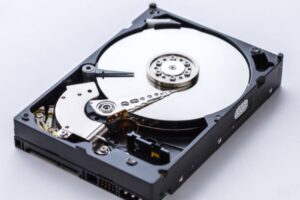
- DVR/NVR hard drives and microSD cards inside cameras
- Control panel logs and access control databases
- Network settings, Wi-Fi credentials, admin passwords
- Mobile app/cloud account access and user permissions
If you’re decommissioning a system, assume it contains data until you prove it doesn’t.
What to Do Before Recycling
- Remove and retain hard drives/microSD cards when possible.
- Factory reset control panels, cameras, and smart locks.
- Deprovision devices from apps/platforms (remove them from the account).
- Change shared credentials if the same passwords were used across sites.
- For organizations: use a company like EACR Inc who can provide secure data destruction.
Safety First: How to Prep Security Equipment for Recycling
A little prep prevents most problems—especially battery incidents and messy loads.
Separate Batteries and Power Sources
- Identify common battery types: lithium packs, alkaline, button cells, and lead-acid backup batteries (common in some panels/UPS setups).
- Tape terminals on lithium and button cells and bag them individually.
- Keep damaged or swollen batteries isolated—don’t throw them in with the good ones.
Handle Sensors and Detectors Correctly
- Smoke/CO devices: Some older units may require special handling, so don’t mix them blindly into a general pile.
- Keep devices intact. Don’t crush, puncture, or dismantle sensors—especially anything that looks sealed or press-fit.
Cables, Power Supplies, and Mounting Hardware
- If your program requests it, sort cables/adapters separately (it speeds up processing and reduces tangles).
- Keep sharp mounts/brackets contained so nobody gets cut during loading and transport.
What Security Equipment Can Be Recycled
Most security gear qualifies as e-waste and can be recycled through the proper channel, including:
- Cameras, NVR/DVR units, monitors, control panels, keypads
- Sensors (motion, contacts, glass-break, flood)
- Access control hardware (readers, controllers, key fobs)
- Networking gear (routers, switches, PoE injectors)
- Radios and related electronics
- Cables and power supplies (program-dependent)
How Security Equipment Recycling Works
Security equipment recycling is a controlled process designed to handle three things at once: electronics, batteries, and data.
Step 1 Collection
- Small drop-offs: Best for small batches of cameras, sensors, locks, and accessories.
- Bulk pickups: Best for full system removals, upgrades, and multi-room cleanouts.
- Container programs: Best for ongoing collection (installers, facilities, multi-site orgs) where gear comes out steadily.
Step 2 Sorting
- Batteries are separated first. This reduces short-circuit and leak risk immediately.
- Data-bearing devices are separated for special handling—DVR/NVR units, cameras with microSD cards, control panels, and access control servers.
Step 3 Data Handling
Depending on what you’re recycling, data handling may include:
- Drive removal and either shredding or secure destruction options
- MicroSD removal where applicable
- Documentation for organizations so you can show what was handled and when
Step 4 Processing and Material Recovery
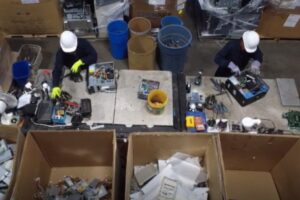
- Electronics go through processing to recover boards and metal fractions.
- Materials are managed through responsible downstream channels rather than disposal shortcuts.
How EACR Inc. Helps With Security Equipment Recycling
EACR Inc. supports security equipment recycling for businesses, schools, hospitals, municipalities, and installers/integrators across the Northeast.
Programs (as applicable):
- Scheduled pickups
- Bulk load removals for upgrades and changeouts
- On-site e-waste containers for ongoing collection programs
We provide:
- Data-bearing device handling options and documentation
- Battery segregation guidance and a safety-forward handling approach
- Recycling documentation to support internal controls and reporting
Contact EACR Inc. to coordinate drop-off, pickup scheduling, or a container program based on your volume and sites.
FAQs About Security Equipment Recycling
Can security cameras be recycled?
Yes. Cameras are electronics and belong in an e-waste recycling stream. Remove any batteries and storage media first when possible.
What should I do with DVR/NVR hard drives before recycling?
Remove the drives if you can, and route them through a secure data handling process. If you can’t remove them, recycle the unit through a program that includes secure destruction options.
Do smoke and CO detectors count as e-waste?
Often, yes—but some older devices may need special handling depending on type and age. Keep them intact and separate so they can be evaluated correctly.
Can I recycle access control key fobs and card readers?
Yes. Key fobs, readers, and related access control electronics are typically accepted as e-waste.
How should I handle batteries from sensors and panels?
Separate batteries by type, tape terminals on lithium and button cells, and keep damaged units isolated. Do not toss loose batteries into mixed boxes with metal items.
Do you offer pickups for bulk security equipment?
Yes. EACR Inc. supports bulk pickups for system upgrades, deinstalls, and multi-site refreshes.
Conclusion: Recycle Security Equipment the Right Way
Security equipment isn’t trash. It’s electronics + batteries + data, and it needs controlled handling. Prep it safely, separate batteries, manage data properly, and use a recycling program built for these devices.
Contact EACR Inc. for pickup, container, or drop-off guidance based on your equipment volume and locations.