RAM recycling matters because memory sticks pile up fast after computer upgrades, system replacements, and office IT refreshes—and their small size makes them easy to overlook. That “out of sight, out of mind” mindset leads many people to toss RAM in the trash, which is a mistake. RAM sticks qualify as electronic waste and should never go in household garbage. This guide breaks down how to recycle RAM sticks properly, where they go, and what actually happens after collection.
What is RAM and Why It’s Considered E-Waste
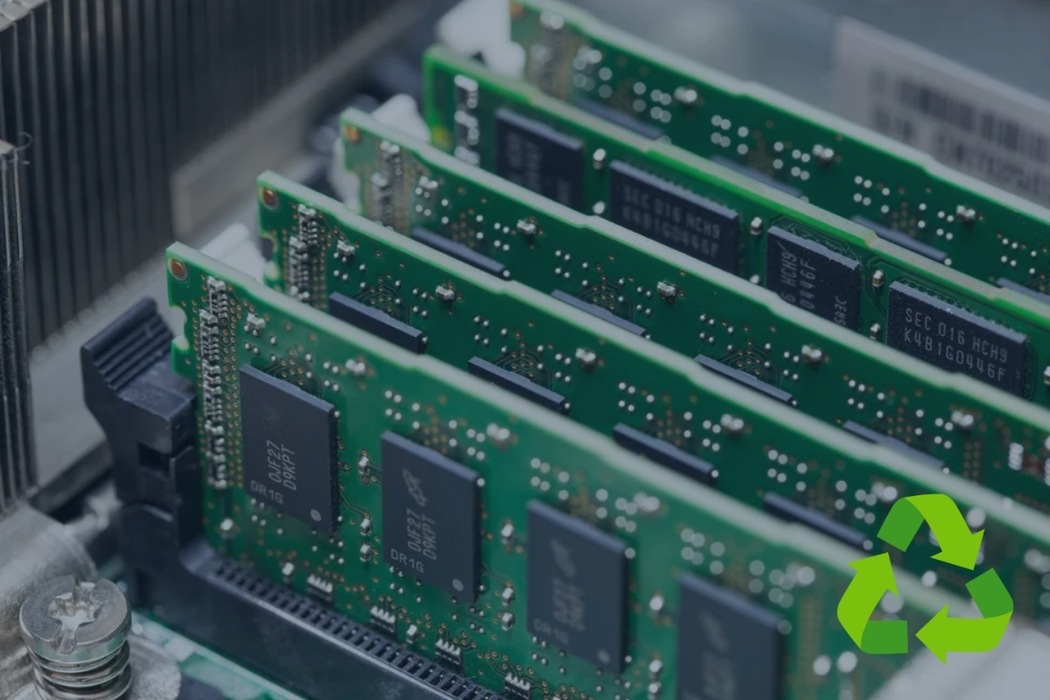
Random Access Memory (RAM) stores short-term data that computers need to run programs efficiently. Each stick is built on a printed circuit board with metals and electronic components. When disposed of improperly, those components can break down and leach into soil and water over time. Because of these risks, state and federal rules classify RAM as electronic waste—not regular trash.
Can RAM Sticks Be Recycled?
Yes. RAM sticks are recyclable through licensed electronics recycling programs designed to handle circuit boards safely. Desktop and laptop memory modules follow the same recycling pathways, regardless of brand. Accepted formats typically include:
- DDR3
- DDR4
- DDR5
How to Recycle RAM Sticks (Step-by-Step)
Step 1: Identify the RAM Type
Check whether the module is DDR3, DDR4, or DDR5. If you’re considering reuse or resale first, note the brand, capacity, and speed.
Step 2: Inspect Condition
Look for cracked chips, bent pins, corrosion, or burn marks. Working modules may be reused or redeployed, while non-functional sticks should go straight to recycling.
Step 3: Remove RAM Safely
Power down the device and ground yourself to prevent static discharge. Remove the modules carefully and store them in anti-static bags or protective containers.
Step 4: Place in an E-Waste Container or Recycling Stream
Use designated e-waste collection containers—never mix RAM with general trash or scrap metal. For businesses, store retired RAM in storage boxes until a pickup is scheduled
Where to Recycle RAM Sticks
RAM recycling is straightforward once you know the right channels—whether you’re clearing a desk drawer or managing an office-wide upgrade.
Local Electronics Recycling Drop-Off
Many municipal and private programs accept RAM alongside other computer components. This option works best for small quantities and one-off drop-offs. It keeps memory modules out of the trash and moves them into proper electronics processing streams.
Business Electronics Recycling
Built for offices, data centers, and large refresh cycles, these programs handle bulk RAM responsibly. They typically include secure handling, and environmental reporting—making them ideal for organizations that need structure and accountability.
Mail-In Electronics Recycling
For individuals or small volumes without nearby drop-off options, mail-in services are a practical choice. RAM is packaged securely and shipped to a licensed processor for proper handling.
What Happens to RAM After Recycling
Once collected, RAM modules are processed with other small electronics. Circuit boards are separated from plastics and metals, and materials are routed into approved recovery streams. Hazardous substances are kept out of landfills, reducing long-term environmental harm.
Recycling RAM in Bulk: Business & Institutional Use Cases
Common scenarios include office IT refreshes, data center upgrades, school and university replacements, and healthcare or municipal equipment turnover.
Why bulk recycling matters:
- Simplifies logistics
- Reduces storage risk
- Ensures compliant handling from pickup to processing
Common Mistakes to Avoid When Disposing of RAM
- Throwing RAM in the trash
- Mixing RAM with scrap metal
- Storing unused RAM indefinitely
- Using unlicensed haulers
- Ignoring electronics recycling container requirements
Does RAM Recycling Differ by Brand?
The recycling process itself is the same across manufacturers. Differences mainly affect reuse potential, volume handled, and deployment environment.
Consumer & Gaming RAM
Often removed during home upgrades. Some modules may still function for reuse, but all eventually require recycling.
Enterprise & Server RAM
Typically removed in large quantities during scheduled upgrades. Most are processed through structured ITAD programs due to volume and logistics.
Environmental Impact of Improper RAM Disposal
Printed circuit boards do not biodegrade. Over time, metals and electronic components can contaminate soil and groundwater. Improper disposal adds to long-term pollution that’s entirely preventable through responsible recycling.
Frequently Asked Questions About RAM Recycling
Can RAM go in the trash?
No. RAM qualifies as electronic waste and should never be disposed of with household garbage.
Can old RAM be reused in another computer?
Sometimes. Compatibility and condition matter, but non-usable modules should be recycled.
Do RAM sticks contain hazardous materials?
They contain electronic components and metals that require controlled handling at end of life.
Can businesses recycle large quantities at once?
Yes. Bulk recycling programs are designed specifically for large volumes from organizations.
Conclusion: Recycle RAM Sticks the Right Way
RAM sticks may be small, but they’re still regulated electronic waste. Proper recycling prevents contamination, supports responsible material handling, and avoids unnecessary environmental harm. Whether you’re recycling one module or thousands, doing it the right way matters. Contact a licensed electronics recycling company to recycle RAM sticks safely through approved e-waste programs and collection containers.