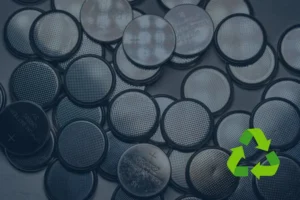
Lithium manganese dioxide battery recycling starts with knowing what you have. These batteries are commonly found in everyday electronics, medical equipment, security systems, and industrial devices, but because they’re small, they’re often forgotten once they’re dead.
Even though many lithium manganese dioxide batteries are the size of a coin, they still contain lithium metal and stored energy. They should never be thrown in the regular trash or mixed into curbside recycling, where they can create safety risks and complicate waste processing.
Whether you’re replacing a single watch battery or managing thousands of batteries across multiple facilities, understanding the right recycling process makes disposal safer and much easier.
This guide explains how to identify lithium manganese dioxide batteries, your recycling options, how to prepare them for collection, when commercial pickup makes sense, and what happens after they’re recycled. Contact EACR Inc. for bulk battery recycling services today.
Quick Answer: How to Recycle Lithium Manganese Dioxide Batteries
Lithium manganese dioxide batteries should be kept out of regular trash and curbside recycling. Instead, they should be separated from other waste, protected against short circuits, and taken to an approved battery recycling program, collection site, mail-back service, or commercial recycler.
Most people recycle these batteries using one of three methods:
- Local drop-off for a small number of household or office batteries.
- Mail-back or collection containers for businesses and organizations that generate batteries on a regular basis.
- Scheduled commercial pickup for larger quantities, multiple facilities, equipment replacement projects, or recurring battery recycling needs.
Choosing the right option depends on how many batteries you have, their condition, and whether you’re recycling them as an individual or as part of a business or organization.
What is a Lithium Manganese Dioxide Battery?
Lithium manganese dioxide (Li-MnO₂) batteries are primary lithium batteries designed to provide reliable, long-lasting power. Unlike rechargeable lithium-ion batteries, they are generally intended for a single use before being recycled and replaced.
They’re commonly chosen for devices that require a long shelf life, dependable performance, and low maintenance.
Common Names and Markings
Lithium manganese dioxide batteries may be labeled in several different ways depending on the manufacturer and battery size. Common markings include:
- Li-MnO₂
- Lithium manganese dioxide
- Lithium primary
- CR
- 3V lithium
Checking the battery label is usually the easiest way to identify the chemistry before recycling.
Common Battery Formats
Lithium manganese dioxide batteries are available in both coin-cell and cylindrical designs. Some of the most common examples include:
- CR2032
- CR2025
- CR2016
- CR123A
- CR2
These batteries are generally non-rechargeable lithium batteries. Although they contain lithium, they are different from rechargeable lithium-ion batteries found in products like smartphones, laptops, cordless tools, and electric vehicles.
Where Are These Batteries Commonly Used?
Lithium manganese dioxide batteries power thousands of products that rely on compact, dependable, long-lasting power. You may find them in:
- Watches
- Calculators
- Key fobs
- Remote controls
- Digital cameras
- Medical devices
- Security and alarm systems
- Utility meters
- Industrial sensors
- Computer memory backup systems
For businesses, these batteries often accumulate faster than expected. A hospital may replace batteries in hundreds of medical devices each year, while a property management company could collect spent batteries from access control systems across multiple buildings. Manufacturing facilities, schools, municipalities, and utility companies may generate similar battery waste through routine maintenance, equipment upgrades, or scheduled replacements.
Recycling Options for Lithium Manganese Dioxide Batteries
The best recycling method depends on how many batteries you have, where they’re located, and whether you’re recycling them as an individual or as part of an organization.
Local Drop-Off
Local drop-off programs are usually the best option when you only have a small number of intact batteries from your home or office.
Before making the trip, confirm that the collection site accepts primary lithium batteries, not just rechargeable batteries. Acceptance requirements can vary between locations, and some programs separate battery chemistries into different recycling streams.
Mail-Back or Collection Containers
Organizations that generate batteries on a regular basis often benefit from mail-back programs or dedicated battery collection containers.
These programs work well for:
- Offices
- Schools
- Healthcare facilities
- Retail stores
- Municipal buildings
- Businesses with ongoing battery replacement programs
A centralized collection container makes it easier to keep batteries organized, reduce loose storage throughout a facility, and simplify tracking before shipment.
Scheduled Commercial Pickup
For larger projects, scheduled pickup is often the most efficient solution.
Commercial pickup is ideal for:
- Large battery inventories
- Multiple facilities
- Equipment replacement projects
- Mixed battery inventories
- Recurring battery waste
Instead of transporting batteries yourself, a commercial recycling partner can coordinate collection, provide appropriate containers when needed, help sort battery types, and maintain documentation throughout the recycling process.
For organizations managing routine battery recycling or large-scale replacement projects, EACR Inc. provides battery collection services, scheduled pickups, container programs, sorting assistance, and recycling documentation to help simplify the entire process.
How to Prepare Li-MnO₂ Batteries for Recycling
Preparing lithium manganese dioxide batteries does not need to be complicated. The goal is to identify what you have, keep incompatible battery types separated, and reduce the chance of short circuits or damage before collection.
Inventory and Identify
Start by taking a basic inventory of the batteries at your facility. Record:
- Approximate quantity
- Battery sizes or model numbers
- Chemistry labels
- Battery condition
- Current storage location
Look for markings such as Li-MnO₂, CR, lithium primary, or 3V lithium. If the label is missing or difficult to read, keep the battery in a separate group for review rather than guessing.
For larger projects, an estimate is usually enough to begin planning. You can count by container, equipment type, department, or replacement batch instead of counting every coin cell individually.
Separate by Chemistry and Condition
Lithium manganese dioxide batteries should be kept separate from other common battery types, including:
- Alkaline batteries
- Lead-acid batteries
- Rechargeable lithium-ion batteries
- Nickel-based batteries
- Other coin-cell chemistries
This helps the recycler confirm the correct handling and processing route.
Battery condition matters too. Keep damaged, leaking, crushed, corroded, burned, or overheated batteries separate from intact batteries. Clearly identify them so they receive controlled handling from the beginning.
Protect and Package
Exposed battery terminals can come into contact with each other or nearby metal and create a short circuit. Protect the terminals as required by the collection or recycling program, often by applying nonconductive tape or individually bagging the batteries.
Use a sturdy, dry container that prevents batteries from shifting, spilling, or being crushed. Do not store loose coin cells alongside tools, screws, wires, or other conductive materials.
Label each container clearly with information such as:
- Battery chemistry
- Battery size or format
- Approximate quantity
- Site or department
- Condition notes
Good labeling makes collection faster and reduces sorting problems later.
Safety and Compliance Basics
Lithium manganese dioxide batteries may be small, but they still contain stored energy. Loose batteries can short circuit if their terminals touch each other or a conductive object, creating heat and potentially causing a fire.
Coin cells require particular care because their exposed surfaces can easily make contact when stored loosely in a container. They should not be piled into an unprotected box or mixed with scrap metal.
Damaged, leaking, crushed, punctured, or overheated batteries require controlled handling. Do not place them into the same container as intact batteries, and do not try to repair, dismantle, or force them back into shape.
Commercial quantities may also be subject to specific packaging, labeling, and transportation requirements. The exact requirements depend on battery type, quantity, condition, and how the shipment is being moved.
Working with a licensed battery recycler helps businesses determine the correct collection method, prepare batteries properly, and maintain a clear downstream recycling record.
Records Businesses Should Keep
Businesses should maintain a basic record of each battery recycling project, including:
- Pickup date
- Facility or site
- Approximate quantity
- Battery type
- Condition notes
- Certificates of recycling
These records can support internal reporting, vendor management, environmental goals, audits, and future recycling projects.
What Happens After Collection?
Once collected, lithium manganese dioxide batteries are transported to an appropriate receiving or processing facility.
The general process may include:
- Batteries are received and sorted.
- Chemistry and condition are confirmed.
- Batteries are routed through an appropriate processing system.
- Metals and other material fractions are separated.
- Recovered materials are prepared for further refining or reuse.
- Remaining materials are handled through approved downstream channels.
The exact process can vary based on battery format, condition, processor capabilities, and available recovery technology.
Not every component is necessarily recovered at the same rate or through the same method. A responsible recycler should avoid broad claims that every battery is fully recycled and instead provide clear information about approved downstream handling.
Frequently Asked Questions About Lithium Manganese Dioxide Battery Recycling
Can lithium manganese dioxide batteries go in the trash?
No. Lithium manganese dioxide batteries should be kept out of regular trash and mixed curbside recycling. They should be routed through an appropriate battery recycling or collection program.
Are lithium manganese dioxide batteries rechargeable?
Most Li-MnO₂ batteries are primary, non-rechargeable batteries. They should not be placed in a charger unless the manufacturer specifically identifies them as rechargeable.
Are CR2032 batteries lithium manganese dioxide batteries?
Many CR2032 batteries use lithium manganese dioxide chemistry. However, you should still check the battery label or manufacturer information before sorting it for recycling.
Should battery terminals be taped before recycling?
Terminal protection is commonly required or recommended to reduce the risk of short circuits. Follow the instructions provided by the collection program or recycler.
Can businesses schedule a battery recycling pickup?
Yes. Scheduled pickup is often the most practical option for larger quantities, multiple locations, equipment replacement projects, or recurring battery waste.
Conclusion
Lithium manganese dioxide battery recycling starts with a few simple steps: identify the battery chemistry, separate damaged batteries from intact ones, protect exposed terminals, and choose a recycling route that matches your quantity and situation.
Small quantities may fit a local drop-off program, while recurring or commercial volumes are often easier to manage through collection containers or scheduled pickup. Businesses should also keep clear records for each load.
Businesses, healthcare facilities, schools, municipalities, and other organizations can work with EACR Inc. for battery recycling, scheduled pickups, collection containers, and recycling documentation.