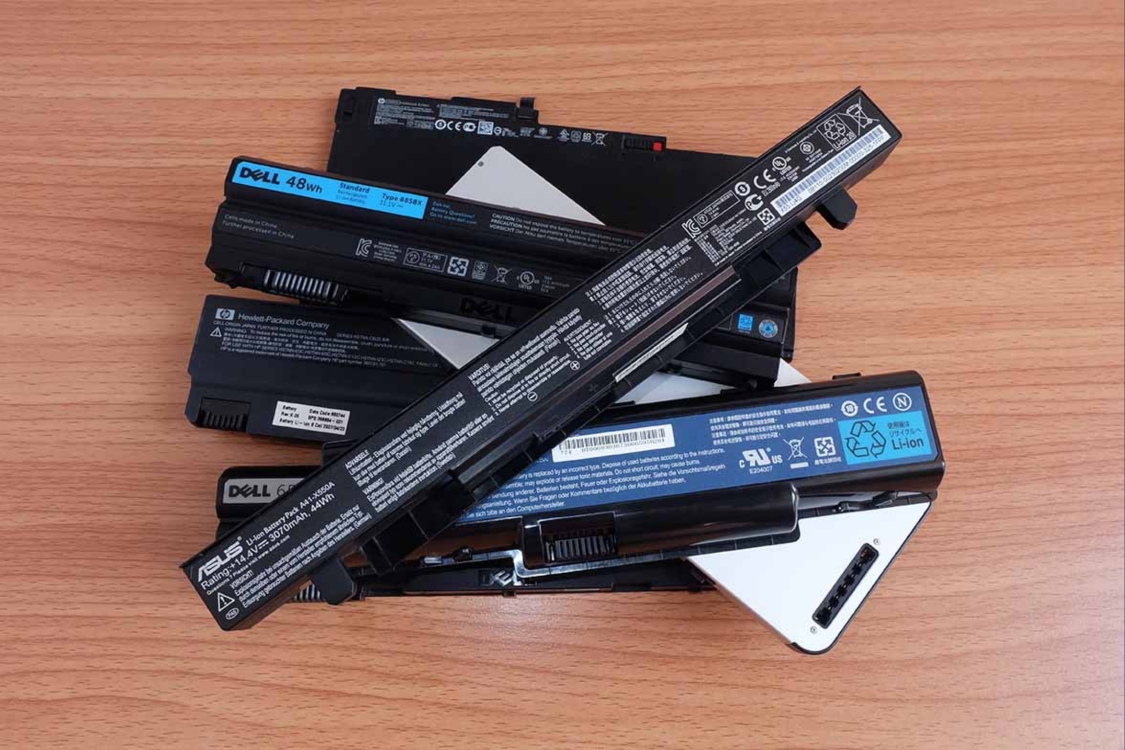
Laptop battery recycling is one of the most important yet overlooked parts of responsible electronics disposal. Every year, millions of laptops are replaced or upgraded, but their batteries often end up sitting in drawers or worse, tossed in the trash. Proper laptop battery recycling not only protects the environment from harmful chemicals but also allows reusable materials to be recovered and used again in new products.
Why Laptop Battery Recycling Matters
Laptop battery recycling is essential because it ensures these small but powerful energy sources are handled safely. Most modern laptops use lithium-ion batteries, which are lightweight, rechargeable, and efficient, but they also come with environmental risks if not recycled correctly.
When lithium-ion batteries end up in landfills, they can leak chemicals into the soil and water. Worse, if damaged or crushed, they can ignite and cause fires. These batteries contain materials like lithium, cobalt, and nickel that react when exposed to air or moisture, creating dangerous conditions for waste management workers and the environment alike.
Beyond safety, improper disposal contributes to unnecessary pollution. Mining for new metals used in batteries requires massive energy and causes habitat destruction. Recycling existing materials significantly reduces the need for new extraction and lowers carbon emissions.
In the United States, battery disposal is regulated under federal and state environmental laws. The EPA and agencies in states like California, New York, and New Jersey classify lithium-ion batteries as regulated waste, meaning they must be handled through approved recycling programs, not regular trash or curbside pickup. Violating these rules can result in fines and environmental penalties.
That’s where EACR Inc. plays a key role. As a licensed electronics recycling company, EACR Inc. specializes in handling batteries safely and responsibly. They ensure every laptop battery is collected, stored, and processed under strict environmental and safety standards, preventing fires, leaks, and contamination while recovering reusable materials.
What’s Inside a Laptop Battery (and Why It’s Recyclable)
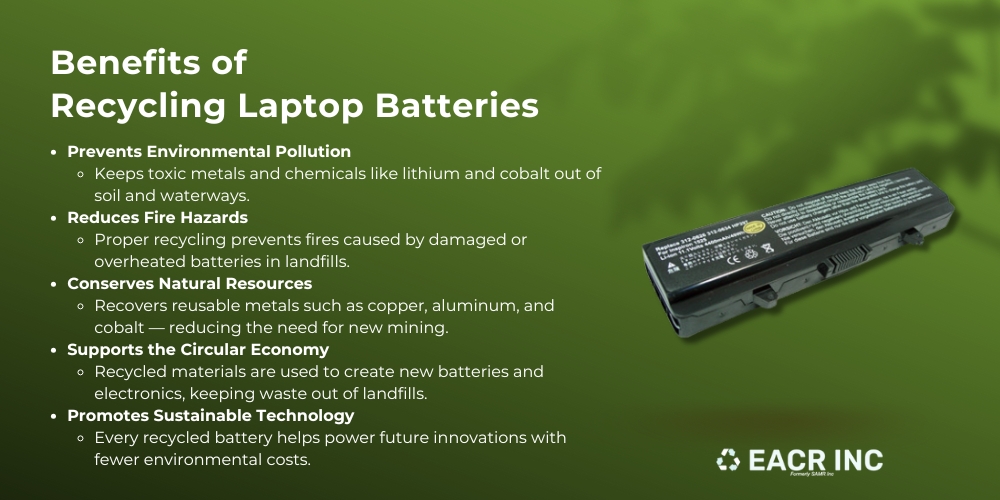
Laptop batteries may look simple on the outside, but inside they’re packed with a complex mix of materials, each with its own environmental impact and recycling potential.
Typical laptop batteries contain the following:
- Lithium: A lightweight metal essential for energy storage, but reactive and flammable when exposed.
- Cobalt and Nickel: Key components for energy density, often recovered for reuse in new batteries.
- Copper and Aluminum: Conductive metals used for wiring and casing.
- Plastic Casings: Durable enclosures that protect the internal cells.
These materials are reusable, meaning they can be recovered and reintroduced into the production of new batteries, electronics, or other industrial products, reducing the need for mining new resources. This process not only saves energy but also reduces pollution from raw material extraction.
However, mishandling these components can lead to serious safety hazards. Puncturing, crushing, or overheating a laptop battery can cause leaks or even fires. That’s why recycling must always be done through an electronics recycler like EACR Inc., which follows strict procedures to recycle lithium-ion batteries.
Recycling your old laptop batteries the right way keeps dangerous chemicals out of the environment and helps recover reusable materials that can power the next generation of technology.
What to Do with an Old Laptop Battery
When it comes to laptop battery recycling, proper handling is just as important as proper disposal. Batteries can be hazardous if damaged or stored incorrectly, so taking the right steps protects you, your home, and the environment. Here’s a simple, step-by-step guide to safely handle, store, and prepare your old laptop battery for recycling.
1. Identify Your Battery Type
Not all laptop batteries are created equal. Most modern laptops use lithium-ion batteries, known for their high energy density and lightweight design. However, some older or industrial models may use nickel-metal hydride (NiMH) or lead-acid batteries.
- Lithium-ion batteries: Found in nearly all current laptops. These must be handled carefully because they can overheat or catch fire if punctured or exposed to moisture.
- Nickel-metal hydride (NiMH): Less common today but still recyclable. These don’t pose the same fire risks but can leak if damaged.
- Lead-acid batteries: Typically used in older or specialty devices. Contain toxic materials and must always be recycled through a licensed facility.
Knowing what type of battery you have helps ensure it’s recycled safely and properly.
2. Prepare the Device for Recycling
If your laptop is no longer in use or has reached the end of its lifespan, there’s no need to take it apart. Simply bring the entire device to a professional electronics recycling company like EACR Inc.
Their team is trained to handle and process laptops that contain internal or external batteries safely. Attempting to open or disassemble the device yourself can cause short circuits or chemical leaks, so it’s best left to professionals who have the right tools and safety procedures.
3. Store It Correctly Before Recycling
Until you can recycle your laptop or battery, store it in a cool, dry place away from sunlight, moisture, or anything metallic. This helps prevent overheating or accidental shorting.
If you already have a detached or spare battery, cover its terminals with a small piece of electrical tape and keep it inside a non-metal container, such as a cardboard box or plastic storage bin. Avoid stacking batteries together or placing them near heat sources.
4. Never Throw It in the Trash
Tossing old laptop batteries in the trash is dangerous, and in many states, it’s illegal. Batteries that end up in landfills can leak toxic chemicals into the ground or start fires in garbage trucks and recycling facilities.
Several U.S. states, including California, New York, and New Jersey, have banned the disposal of rechargeable batteries in regular household waste. Proper battery recycling isn’t just environmentally responsible; it’s required by law.
5. Recycle It Through a Trusted E-Waste Recycler
The best way to dispose of an old laptop battery is through a trusted electronics recycling company that specializes in safe battery management.
EACR Inc. offers several convenient options for individuals and businesses, including drop-off and scheduled e-waste collection events. The team ensures every battery is handled with care, recovered for reusable materials, and processed according to guidelines.
By recycling with a professional e-waste recycler, you’re helping prevent pollution, reduce landfill waste, and support a circular economy where metals and plastics are reused rather than discarded.
How to Recycle Old Laptop Batteries (Step-by-Step)
Once your battery is safely removed and stored, it’s time to recycle it properly. Here’s how to do it efficiently and safely.
1. Find an Electronics Recycling Company
Start by finding an electronics recycling company that accepts laptop batteries. EACR Inc. offers convenient options for recycling, from local drop-off bins to bulk pickup services. With over two decades of experience in e-waste recycling, EACR ensures every battery is processed responsibly from collection to recovery.
2. Use Manufacturer or Retailer Programs
Many major tech brands and retailers now provide battery take-back programs:
- Apple and Dell offer mail-in recycling for old laptops and batteries.
- HP accepts batteries through its Planet Partners recycling initiative.
- Best Buy and Staples have collection bins for rechargeable batteries in most stores.
These programs are great for consumers, but specialized e-waste recyclers like EACR Inc. typically provide more complete solutions, especially for mixed e-waste, business equipment, or large battery quantities.
3. Participate in Local E-Waste Collection Events
Many towns host community recycling events that include laptop battery collection. These events make it easy for residents to recycle safely without extra effort.
EACR Inc. frequently partners with local governments and municipalities across the Northeast to organize e-waste collection drives. If your area hosts one, it’s a quick and environmentally friendly way to recycle your old batteries.
4. Bulk Battery Recycling for Businesses
For businesses, schools, and repair centers that collect multiple batteries, EACR Inc. provides customized bulk recycling programs.
These services include:
- On-site e-waste containers for safe storage of used batteries.
- Scheduled pickup or transport services.
- Certificates of recycling for documentation.
Whether you manage an IT department or an electronics repair shop, partnering with a professional battery recycling service like EACR helps you stay compliant, organized, and environmentally responsible, all while simplifying disposal for your entire operation.
The Laptop Battery Recycling Process
When it comes to laptop battery recycling, most people don’t realize how much happens behind the scenes once a battery is collected. The process involves several critical steps to ensure safety, material recovery, and environmental protection. Here’s what happens after you hand your old battery over to an electronics recycling company like EACR Inc.
1. Collection and Sorting
Every recycling process begins with collection and sorting. EACR Inc. receives batteries through drop-off bins and business pickup services. Once collected, each item is inspected and sorted by type, separating lithium-ion laptop batteries from other types like nickel-metal hydride or lead-based batteries.
This step is crucial for safety, since different battery chemistries require different handling methods. Lithium-ion batteries, for example, must be stored in specialized containers to prevent overheating or short-circuiting during transport.
2. Disassembly and Material Recovery
Next, the batteries go through a disassembly phase, where they’re safely dismantled by trained technicians. This process extracts reusable metals such as cobalt, copper, nickel, and aluminum from the battery cells.
These materials are sent to specialized refining facilities where they’re processed into raw components ready for reuse. By reclaiming these metals, recyclers dramatically reduce the demand for mining, one of the most resource-intensive and environmentally damaging industries on Earth.
3. Neutralization and Safe Disposal
Not every component of a battery can be reused. Some materials, like electrolytes and degraded casings, are neutralized and disposed of safely to prevent chemical leaks or environmental contamination.
EACR ensures that all non-recyclable elements are handled according to applicable standards, preventing toxic substances from entering soil or groundwater. This responsible approach keeps communities safe while maintaining compliance with state and federal environmental regulations.
4. Material Reuse
Finally, recovered metals are returned to manufacturers to create new batteries, electronics, and renewable energy products. This process completes what’s known as the circular economy, where old materials are given new life instead of being discarded.
Through efficient material recovery and reuse, laptop battery recycling not only conserves resources but also supports sustainable production for the tech industry.
How EACR Inc. Simplifies Laptop Battery Recycling
At EACR Inc., laptop battery recycling is made simple and worry-free. The company operates a licensed electronics recycling facility with a zero-landfill policy, ensuring no part of a battery ends up as waste.
Every step of the process is designed with safety, transparency, and environmental compliance in mind, giving both individuals and businesses confidence that their e-waste is being handled the right way.
Frequently Asked Questions About Laptop Battery Recycling
Can laptop batteries be recycled?
Yes. Nearly all laptop batteries can be recycled through a qualified electronics recycling company. The materials inside, including lithium, cobalt, and copper, can be recovered and reused.
Is it illegal to throw batteries in the trash?
In many states, yes. Lithium-ion batteries are considered hazardous materials and must be handled by professionals. Disposing of them improperly can lead to fines or environmental violations.
What happens to batteries after recycling?
Their reusable metals are extracted and repurposed to create new batteries, electronics, and power tools, keeping valuable resources in circulation and out of landfills.
Conclusion
Proper laptop battery recycling protects the environment, prevents fires, and conserves essential materials used in modern technology. Whether you’re an individual with a single battery or a business with hundreds, every action toward responsible recycling helps make a difference.
Ready to recycle your old laptop battery? Contact EACR Inc. today to schedule a pickup or drop it off at our Lakewood, NJ facility and take the first step toward a cleaner, safer planet.