Most people use iPhones every day without thinking about the battery inside them. But understanding what type of battery an iPhone uses actually matters, especially when the phone becomes damaged, overheats, swells, or reaches the end of its lifespan.
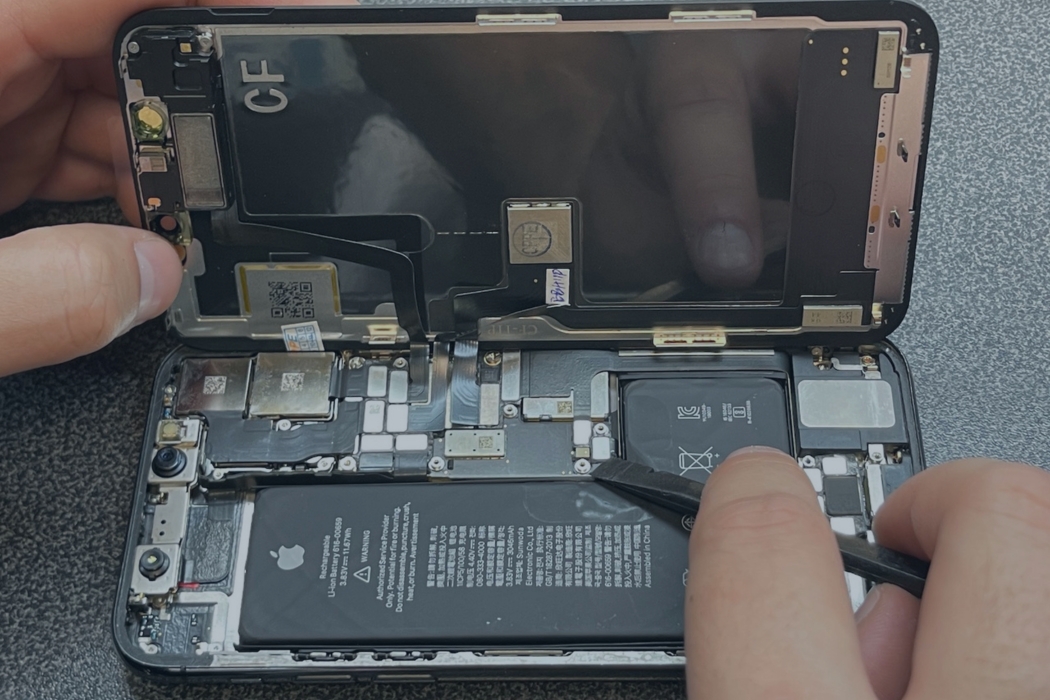
iPhones use rechargeable lithium-ion batteries. These batteries are lightweight, rechargeable, energy-dense, and used in most modern smartphones because they can store a lot of power in a small space.
If your business or organization needs cell phone recycling services for old iPhones, damaged phones, or bulk mobile device loads, our electronics recycling team can help safely manage collection and recycling.
Quick Answer: What Battery Does an iPhone Use?
All modern iPhones use rechargeable lithium-ion (Li-ion) batteries.
Lithium-ion battery technology is designed for portable electronics that need strong battery performance in a compact design. That is why lithium-ion batteries are used across smartphones, tablets, laptops, power tools, and many other rechargeable devices.
Inside the battery, lithium ions move between battery components during charging and discharging. That movement creates the electrical energy your iPhone uses throughout the day.
Lithium-ion batteries also support fast charging, lightweight phone designs, and longer battery life compared to many older rechargeable battery types.
Why Apple Uses Lithium-Ion Batteries
Lightweight and compact design
Modern smartphones need batteries that are slim, lightweight, and powerful enough to support heavy daily use.
Lithium-ion batteries store a large amount of energy in a relatively small space. That helps Apple balance battery life, charging speed, and overall phone size without making iPhones overly bulky.
As phones become thinner and more powerful, battery efficiency becomes even more important.
Fast charging capabilities
Modern iPhones support fast charging, and lithium-ion batteries make that possible.
Compared to older rechargeable battery technologies, lithium-ion batteries charge more efficiently and can handle higher charging speeds. Charging technology has also improved over time through better chargers, charging controls, and battery management systems.
That is one reason newer iPhones can charge significantly faster than older smartphone models.
Longer lifespan than older batteries
Lithium-ion batteries generally last longer than older battery types like nickel-cadmium (NiCad) or nickel-metal hydride (NiMH) batteries.
Every rechargeable battery slowly loses capacity over time, though. This happens through repeated charging cycles, heat exposure, aging, and normal use.
Eventually, battery health declines, daily battery life becomes shorter, and the phone may not perform as well as it once did.
What’s Inside an iPhone Battery?
Lithium-ion battery components
iPhone batteries contain more than just lithium.
A lithium-ion battery may include lithium compounds, electrolyte materials, graphite, metal compounds, protective battery layers, and other engineered battery components designed to safely store and move energy.
These batteries are carefully designed to fit into compact electronics while still supporting daily charging and high performance.
Batteries are more complex than most people realize
Even though an iPhone battery is small, it still stores a significant amount of energy.
That means damaged batteries can create real safety concerns. Punctures, crushing, overheating, manufacturing defects, or improper charging can all create conditions that increase fire or overheating risks.
Battery size does not automatically mean low risk.
Why damaged phone batteries matter
Damaged phone batteries should never be ignored.
A battery may swell, overheat, leak, become punctured, or stop charging correctly. Physical damage from drops, crushing, or water exposure can also create battery problems.
In some situations, damaged lithium-ion batteries can become unstable and create fire risks if they are improperly stored, transported, or thrown away.
How Long Do iPhone Batteries Last?
Battery lifespan depends on usage
iPhone battery lifespan depends heavily on how the phone is used.
Charging habits, heat exposure, heavy daily usage, gaming, video streaming, charging frequency, and the overall age of the device all affect battery lifespan.
Some users notice battery decline after a couple years, while others may get longer usable life depending on how the phone is treated.
Battery health naturally declines
All rechargeable batteries slowly lose capacity over time.
As battery health declines, users may notice shorter daily battery life, more frequent charging, slower performance, or reduced battery efficiency.
This is normal battery aging and happens with all lithium-ion devices eventually.
Signs an iPhone battery may be failing
Common signs of a failing iPhone battery may include:
- Swollen battery
- Rapid battery drain
- Overheating
- Unexpected shutdowns
- Slow charging
- Battery percentage jumping suddenly
If a battery becomes swollen or excessively hot, it should be handled carefully and recycled properly instead of continuing to use the device normally.
Best Practices for iPhone Battery Care
Avoid excessive heat
Heat is one of the biggest causes of lithium-ion battery wear.
Leaving phones in hot cars, direct sunlight, overheating them during charging, or exposing them to high temperatures regularly can damage battery health faster over time.
Keeping devices cooler generally helps batteries last longer.
Use quality chargers and cables
Using quality chargers and charging cables matters.
Certified charging accessories are generally safer and more reliable than extremely cheap or poorly made charging products. Poor charging equipment may create inconsistent charging conditions or additional battery stress over time.
Don’t ignore battery swelling or damage
A swollen battery should never be ignored.
If the phone casing begins separating, the screen lifts, the battery expands, or the device overheats, stop using the phone and handle it carefully.
Damaged lithium-ion devices may require controlled electronics recycling instead of normal disposal.
Can iPhone Batteries Be Recycled?
Yes, iPhone batteries should be recycled
Yes. iPhone batteries should be recycled through proper electronics or battery recycling programs.
Lithium-ion batteries should not go into the trash because they can create fire risks and contain materials that can often be recovered through recycling.
Proper recycling helps keep batteries out of landfills and supports safer material recovery.
Phones contain more than just batteries
Phones contain many recyclable materials besides the battery itself.
That can include circuit boards, copper, aluminum, rare metals, screens, wiring, and other electronic components.
Electronics recycling helps separate and process these materials through the proper downstream recycling streams.
Damaged phones may need extra handling
Some phones require additional handling before recycling.
Swollen batteries, broken phones, overheating devices, punctured batteries, and water-damaged electronics may create higher risks during storage and transport.
Separating damaged devices from intact phones is usually the safest approach.
Why Proper Cell Phone Recycling Matters
Phones can create fire risks when thrown away
Throwing phones into the trash creates unnecessary risk.
Lithium-ion batteries can ignite if crushed, punctured, overheated, or damaged inside garbage trucks, transfer stations, recycling facilities, or landfills.
Even small phone batteries can create serious fires under the wrong conditions.
Businesses often accumulate large device loads
Businesses often end up storing large quantities of old phones and mobile devices over time.
This may include schools, offices, IT departments, corporate electronics cleanouts, mobile device refresh projects, healthcare facilities, or warehouse operations.
Without a recycling plan, these devices can quickly pile up.
Recycling keeps electronics out of landfills
Proper electronics recycling helps recover reusable materials and keeps electronic waste out of landfills.
It also supports more responsible electronics handling and helps businesses manage old devices in a cleaner, safer, and more organized way.
What to Do With Old iPhones
Separate damaged phones from intact devices
If you are preparing phones for recycling, separate damaged devices from intact ones first.
That includes phones with swollen batteries, broken screens, water damage, overheating issues, or visible battery damage.
Damaged devices should be identified clearly before transport or pickup.
Back up and wipe data before recycling
Before recycling an iPhone, back up important files and wipe personal data.
This usually includes:
- iCloud backup
- Factory reset
- Removing personal accounts
- Signing out of Apple ID and Find My iPhone
Businesses may also have internal data handling policies that should be followed before recycling devices.
Use a proper electronics recycling company
Using a proper electronics recycling company helps improve battery handling and device management.
This is especially important for bulk device recycling projects, damaged phone loads, or business cleanouts involving large numbers of mobile devices.
Businesses may also need documentation confirming the recycling service was completed properly.
Frequently Asked Questions About iPhone Batteries
Do all iPhones use lithium-ion batteries?
Yes. All modern iPhones use rechargeable lithium-ion batteries.
Are iPhone batteries rechargeable?
Yes. iPhone batteries are designed to recharge through charging cables or wireless charging systems.
Can iPhone batteries catch fire?
Yes. Damaged or defective lithium-ion batteries can catch fire under certain conditions, especially if crushed, punctured, overheated, or improperly handled.
What happens if an iPhone battery swells?
A swollen battery can push against the screen or phone casing and may create safety risks. Swollen batteries should be handled carefully and recycled properly.
Can old iPhones be recycled?
Yes. Old iPhones can be recycled through electronics recycling programs or cell phone recycling services.
Can businesses recycle bulk cell phones?
Yes. Businesses often recycle bulk phones, tablets, and mobile devices through electronics recycling companies.
Should damaged iPhones go in the trash?
No. Damaged iPhones and lithium-ion batteries should not be thrown into regular trash because they may create fire risks.
Conclusion
iPhones use lithium-ion batteries because they are lightweight, rechargeable, efficient, and capable of fast charging. But like all lithium-ion batteries, they still require proper handling and recycling when damaged or no longer usable.
If you need cell phone recycling services for old iPhones, damaged mobile devices, or bulk electronics recycling projects, contact our team to safely recycle iPhones and lithium-ion battery devices through the proper recycling process.