

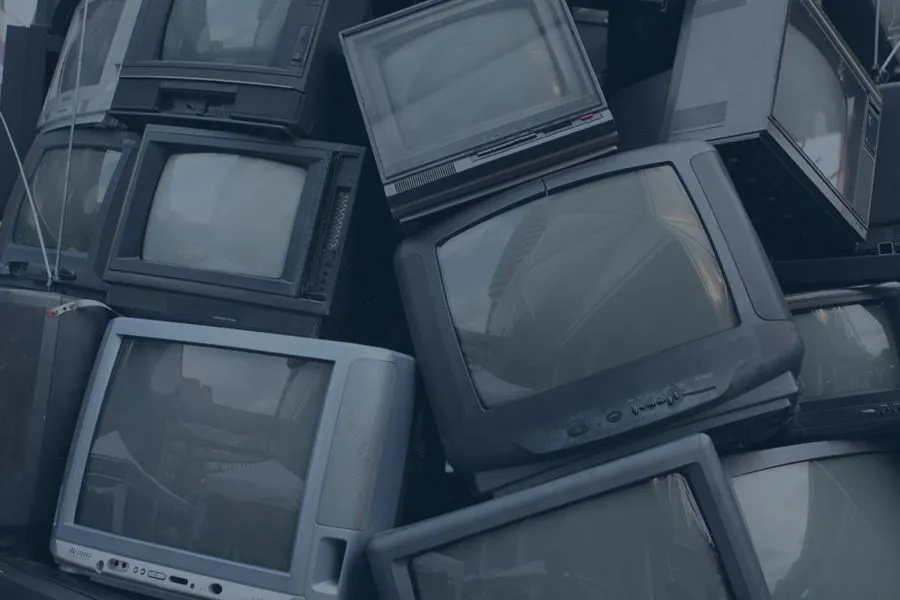
Most modern TVs last around 5 to 10 years, depending on the type of display, how often the TV is used, brightness settings, build quality, ventilation, and general maintenance. Many modern smart TVs fall closer to the five-to-seven-year range under regular use.
Usage matters. A TV running several hours every day will usually accumulate wear faster than one used only a few times per week, especially when brightness is kept high or airflow around the television is limited.
Smart TVs can also become outdated before the screen or internal hardware actually fails. Apps, firmware, and streaming-service support can eventually become limited even while the television still works. If your television is already at the end of its useful life, our guide on how to dispose of an old TV explains the recycling and disposal options available.
Quick Answer: How Long Do TVs Last?
Most modern TVs last about 5 to 10 years. Heavy daily use can put a television closer to the lower end of that range, while moderate use and proper care can help some models remain useful for considerably longer.
| TV Type | Typical Lifespan |
| LED / LCD | 5–7 years |
| QLED | 7–10 years |
| OLED | 7–10 years |
| Smart TV | Usually 5–10 years, depending on panel and software support |
These are general estimates, not guaranteed lifespans. Usage, heat, brightness, maintenance, and component quality can all make a major difference.
How Long Do Different Types of TVs Last?
Different display technologies age in different ways, so the expected lifespan can vary by TV type.
LED and LCD TVs
LED and LCD TVs commonly last around 5 to 7 years with regular use.
One of the more common long-term issues is backlight degradation. LED strips can gradually dim, flicker, or fail as they age, particularly when the television is used heavily or operated at high brightness for long periods.
QLED TVs
QLED TVs often last around 7 to 10 years.
They use LED backlighting along with a quantum-dot layer to produce color and brightness. Because the pixels themselves are not organic, QLED TVs are generally less susceptible to permanent burn-in than OLED displays.
Their ability to maintain strong brightness can also make them a practical option for heavier everyday use.
OLED TVs
OLED TVs can also last around 7 to 10 years, although their aging process is different.
Instead of using a separate backlight, OLED displays use self-emissive organic pixels. Those pixels gradually lose brightness as they accumulate use.
Static images left on screen for long periods can also increase the risk of permanent burn-in or uneven pixel wear over time.
What Affects How Long a TV Lasts?
The panel type matters, but how the television is actually used can have just as much influence on its lifespan.
Hours of Use
The more hours a television operates, the more wear its internal components accumulate.
A TV used five or six hours every day will generally age faster than one used only a few hours each week. Backlights, power components, and display hardware are all operating whenever the television is on.
Turning the TV off when it is not being watched is one of the simplest ways to reduce unnecessary operating hours.
Brightness Settings
Higher brightness can place additional stress on display components.
Running a television at maximum brightness all the time can accelerate wear, particularly on OLED displays and older backlit TVs.
You do not need to keep the screen unusually dim, but using a sensible brightness level can reduce unnecessary strain.
Heat and Ventilation
Heat is one of the biggest enemies of electronics.
Several common conditions can increase the temperature inside a TV:
- Blocked vents
- TVs mounted too close to a wall
- Dust buildup
- Hot rooms
- Poor airflow around the television
Excess heat can place additional stress on power boards, capacitors, backlights, and other internal components. The competitor material you provided specifically identifies heat, dust, humidity, and poor ventilation as factors that can accelerate component wear.
Build Quality
Not every television is built the same way.
Different models use different:
- Display panels
- Power supplies
- Main boards
- Backlights
- Capacitors
- Cooling designs
- Internal components
Better construction can contribute to a longer useful life, but price alone does not guarantee that a TV will last longer.
Maintenance
Basic care can help reduce unnecessary wear.
Good habits include:
- Keeping vents clear
- Removing dust around the television
- Avoiding excessive heat
- Using surge protection
- Keeping brightness at a reasonable level
- Installing available firmware updates
None of these steps can prevent every failure, but they can help reduce common sources of premature wear.
TV Hardware Lifespan vs. Software Lifespan
A smart TV can still work physically while its software begins falling behind.
Over time, you may notice:
- Apps stop receiving updates
- Streaming services drop support
- Firmware updates end
- Menus and interfaces become slower
- New apps no longer install
- Security updates stop
That does not automatically mean the television itself needs to be replaced.
If the screen, speakers, HDMI ports, and other hardware still work properly, an external streaming device can sometimes extend the useful life of the TV by replacing its outdated built-in smart platform.
Software obsolescence and hardware failure are two different things. A television that no longer runs the newest streaming apps may still have years of useful display life left.
Should You Repair or Replace an Old TV?
A TV reaching five or seven years old does not automatically mean it needs to be replaced. In many cases, one failing component is responsible for the problem.
Repair May Make Sense If:
Repair is worth considering when:
- The television is still relatively new
- The screen itself is in good condition
- The problem is limited to one component
- Repair costs are reasonable
- The TV still does everything you need it to do
Common repairable problems can involve:
- LED backlights
- Power supply boards
- Main boards
- Capacitors
For example, a TV with a dim screen may have failing LED strips rather than a failed display panel. Random shutdowns or startup problems can sometimes point to a power board or capacitor issue.
Replacing one component can sometimes extend the life of an otherwise functional television rather than sending the entire device to the end of its life.
Replacement May Make More Sense If:
Replacing the television may be more practical when:
- The screen or display panel is badly damaged
- Multiple internal components are failing
- Repair costs are close to the price of a replacement
- The television is already significantly outdated
- Software limitations make normal use difficult
The decision should come down to the condition of the entire television rather than its age alone. A seven-year-old TV that still works well may have plenty of life left, while a much newer television with major panel damage may not make financial sense to repair.
What Happens When a TV Reaches the End of Its Life?
When a television can no longer be reasonably repaired or reused, it becomes an electronic waste item.
Modern TVs can contain:
- Circuit boards
- Copper wiring
- Metals
- Plastics
- Glass
- Power supply components
- Speakers
- Electronic controls
- Display components
Older televisions can also contain materials that require more specialized handling, particularly older CRT televisions.
If the TV still works, continued use, resale, donation, or repair should generally be considered before recycling. Extending the useful life of existing electronics can delay the need to manufacture a replacement and keep another device out of the waste stream.
Once the television is genuinely finished, it should not automatically be treated like ordinary household trash. Electronics recycling provides an appropriate end-of-life option for separating the device into material streams and handling its electronic components.
Conclusion
Most TVs last somewhere around five to ten years, but there is no universal expiration date. Display technology, daily usage, brightness, heat, maintenance, component quality, and software support all influence how long a television remains useful.
If your television still works, repairing it or continuing to use it can extend its life. If the device has genuinely reached the end of its useful life, EACR can help with electronics recycling options. What do you do with an old TV once repair or reuse no longer makes sense? Recycling provides an appropriate end-of-life path for the device and its electronic components.