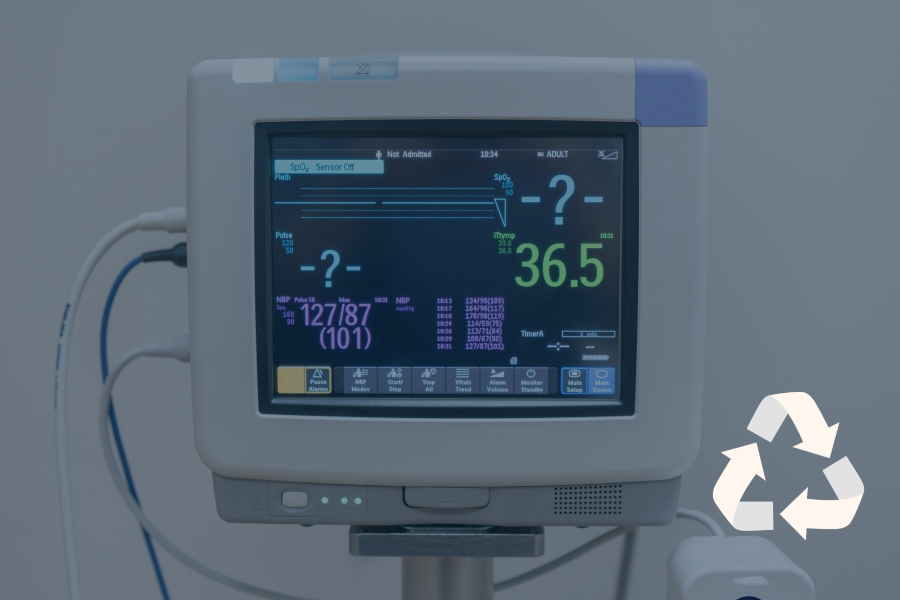
ECG machine recycling is not as simple as throwing away old medical equipment. Electrocardiogram machines contain circuit boards, wiring, batteries, display screens, data storage components, and other electronic parts that should be handled through proper e-waste recycling.
For hospitals, clinics, cardiology offices, urgent care centers, veterinary practices, and medical training facilities, disposal also raises questions about data privacy, documentation, and compliance. Even smaller portable ECG units can store patient information or connect to software systems.
Old ECG equipment should not end up in regular dumpsters or sit forgotten in storage rooms for years. These devices contain reusable materials, batteries, and electronics that require proper handling.
If your facility needs to recycle ECG machines, EACR Inc. provides electronics recycling services for medical equipment, including pickup options, e-waste containers, and documentation for healthcare and commercial generators.
What is Inside an ECG Machine?
ECG machines are compact medical devices, but internally they contain multiple electronic and battery-powered components that qualify as e-waste.
Circuit Boards and Internal Electronics
Inside most ECG machines are:
- Control boards
- Microprocessors
- Sensors
- Signal processing components
- Internal wiring
These systems work together to capture and process heart rhythm data. Like computers and other medical electronics, these boards contain metals, solder, and electronic materials that should be recycled properly instead of thrown away.
Display Screens and User Controls
Modern ECG systems often include:
- LCD screens
- Touchscreens
- Buttons and control panels
- Plastic outer housing
These mixed materials need proper separation during recycling. Screens, plastics, and electronics are processed differently, which is why medical devices should go through structured electronics recycling rather than general trash disposal.
Lead Wires and Patient Cables
ECG lead systems contain:
- Electrode leads
- Copper wiring
- Rubber or plastic insulation
Copper wiring is one of the reusable materials commonly recovered during electronics recycling. However, tangled medical cables should not be tossed into regular waste containers where they may create contamination or handling issues.
Batteries and Power Supplies
Many ECG machines contain:
- Rechargeable lithium-ion batteries
- Backup batteries
- External power adapters
- Capacitors and charging components
Lithium-ion batteries can become dangerous if crushed, punctured, or overheated during disposal. Proper battery handling helps reduce fire risk during transportation and recycling.
Data Storage and Connectivity Components
Some ECG systems include:
- Internal memory
- SD cards
- USB ports
- Network modules
- Wi-Fi or Bluetooth capability
In healthcare settings, these systems may retain patient readings, device history, or connected account information. Devices should be evaluated for stored data before recycling.
Are ECG Machines Considered E-Waste?
ECG Machines Are Electronic Medical Devices
Yes. ECG machines are generally considered electronic waste once they reach end-of-life status.
They contain powered electronic components, batteries, and circuit boards similar to many other regulated electronics. Because of this, many municipalities restrict electronics from regular trash disposal.
Healthcare facilities should treat ECG systems as regulated electronic equipment rather than ordinary waste.
Portable ECG Devices Still Count
Even small or handheld units qualify as e-waste.
This may include:
- Handheld ECG devices
- Mobile cardiac monitors
- Holter monitor accessories
- Tablet-connected ECG systems
- Battery-powered diagnostic devices
The size of the device does not change the need for proper recycling.
Why Regular Disposal Creates Problems
Throwing ECG machines into general trash creates several avoidable problems.
Electronics contain batteries, plastics, wiring, and metals that should not end up in landfills. Damaged lithium-ion batteries may also create fire risks during transportation or waste compaction.
There are also data privacy concerns. Some ECG systems store patient readings or device history that should be removed before disposal.
Finally, healthcare organizations often require documentation showing equipment was recycled properly. Standard trash disposal provides no tracking or recycling records.
Why ECG Machine Recycling Matters
Environmental Protection
ECG machines contain circuit boards, plastics, batteries, and metal components that should be processed responsibly instead of dumped into landfills.
Electronics recycling helps reduce waste while allowing reusable materials to move back into manufacturing supply chains.
Recovery of Reusable Materials
Several reusable materials can be recovered from ECG equipment, including:
- Copper wiring
- Aluminum
- Steel
- Circuit board metals
- Battery materials in some units
Proper recycling keeps these materials in circulation instead of wasting them.
Data Security
Data security is a major concern for healthcare equipment disposal.
Some ECG systems may store:
- Patient readings
- Device history
- Connected software information
- User settings
Before recycling, devices should be wiped or evaluated for storage media removal when necessary.
Donation, Resale, or Recycling?
When Reuse May Be Possible
Some ECG machines may still qualify for reuse or refurbishment if they are:
- Fully functional
- Supported by the manufacturer
- Complete with accessories
- Accepted by refurbishers or donation programs
Working equipment may sometimes be reused in training environments or secondary markets.
When Recycling Is the Better Option
Recycling is often the safer option for:
- Broken ECG machines
- Outdated systems
- Missing cables or accessories
- Unsupported software
- Damaged batteries
- Devices with unclear data history
Older equipment often becomes difficult to support or repair over time, making structured recycling the more practical solution.
Why Medical Equipment Resale Has Limits
Medical equipment resale comes with limitations that many people overlook.
Issues may include:
- Medical device regulations
- Calibration concerns
- Patient safety risks
- Manufacturer support limitations
- Liability concerns
Even if an ECG machine still powers on, unsupported software or inaccurate readings may make continued use unrealistic. That is why many healthcare facilities choose compliant electronics recycling instead of informal resale or disposal.
ECG Machine Recycling Process
A proper ECG machine recycling process should be organized from the start. These devices may look simple, but they can include stored data, lithium-ion batteries, circuit boards, wiring, screens, and accessories that all need different handling.
Step 1: Intake and Equipment Assessment
The first step is identifying what needs to be recycled.
This includes the device type, quantity, condition, accessories, and whether batteries are present. A single portable ECG unit is handled differently than a bulk cleanout from a hospital department, cardiology office, or medical training lab.
Facilities should also consider pickup needs. Larger quantities may require pallets, boxes, loading dock coordination, or an e-waste container for ongoing collection.
Step 2: Data Removal and Media Handling
Some ECG machines may store patient readings, device history, or connected software information. Before recycling, the device should be checked for internal memory, SD cards, USB drives, or other removable media.
Data handling may include a factory reset, storage media removal, internal memory clearing, or physical data destruction of media when needed.
Step 3: Battery and Power Component Separation
Many ECG machines use rechargeable batteries, backup batteries, external power adapters, and charging components.
Lithium-ion batteries should be removed and handled carefully because damaged batteries can create fire risks during transport or processing. Backup batteries and adapters should also be separated so they can move through the right recycling channels.
This step helps reduce short-circuit risks and keeps battery materials out of general e-waste streams.
Step 4: Dismantling and Material Separation
After the equipment is assessed and cleared, the ECG machine can be dismantled.
Common material streams include:
- Circuit boards
- Lead wires and cables
- Display screens
- Plastic housing
- Metal components
- Batteries and power supplies
Each material type follows a different recovery path. Circuit boards, screens, wires, plastics, and metals should not be treated as one mixed scrap pile.
Step 5: Downstream Electronics Recycling
Once separated, materials are routed to the appropriate recycling channels.
Circuit boards may go through board processing. Copper wiring and metal components may be directed to metal recovery. Batteries move through battery recycling streams. Plastics are sorted when recovery options are available.
The goal is to recover reusable materials responsibly while keeping electronic waste out of landfills.
Step 6: Documentation Issuance
Documentation matters, especially for healthcare organizations.
Depending on the project, facilities may receive:
- Certificates of recycling
- Pickup records
- Asset lists
These records help support internal compliance, and responsible disposal policies.
Step-by-Step: How to Recycle an ECG Machine
- Confirm the ECG machine is no longer needed.
- Remove patient information from the device if applicable.
- Remove SD cards, USB drives, or other storage media.
- Separate loose accessories, cables, adapters, and batteries.
- Do not place the device in regular trash.
- Contact a licensed electronics recycling company.
- Schedule pickup or drop-off based on volume.
- Request recycling documentation for your records.
Frequently Asked Questions About ECG Machine Recycling
Can ECG machines be recycled?
Yes. ECG machines can be recycled through electronics recycling programs that handle circuit boards, wiring, batteries, screens, and other e-waste components.
Can ECG machines go in the trash?
No. ECG machines should not be placed in regular trash because they contain electronic components and may include batteries or stored patient data.
Do ECG machines store patient data?
Some ECG machines can store patient readings, device history, or connected software information. Data should be cleared before recycling.
Are ECG leads recyclable?
Yes. ECG lead wires may contain copper and other reusable materials, but they should be handled through proper electronics recycling rather than curbside recycling.
Can old ECG machines be donated?
Sometimes. Working units may be accepted by refurbishers or donation programs, but outdated, broken, unsupported, or data-sensitive devices are usually better suited for recycling.
Do healthcare facilities need documentation?
Yes. Many healthcare facilities prefer or require documentation such as pickup records, asset lists, and certificates of recycling.
Conclusion
ECG machines are electronic medical devices, not ordinary trash. They contain circuit boards, wiring, batteries, screens, and possible patient data that should be managed carefully.
Structured ECG machine recycling helps protect patient information, reduce landfill waste, recover reusable materials, and support compliance for healthcare facilities.
If your facility needs to recycle ECG machines or other medical electronics, contact EACR Inc. to schedule electronics recycling services with proper handling and documentation.