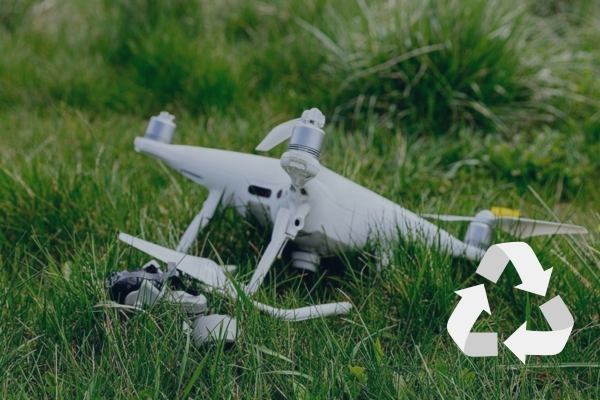
Drone recycling is simpler than most people think: remove the battery, protect it from shorting, and recycle the drone like the electronics device it is.
What Counts as a “Drone” for Recycling?
For recycling purposes, a drone is basically a compact bundle of standard e-waste parts: circuit boards, motors, wiring, plastics, and a lithium-based battery. That means the recycling path is usually straightforward—as long as the battery is handled correctly.
Why Drones Shouldn’t Go in the Trash
They contain lithium batteries
Most consumer drones use lithium-based packs (often lithium-ion or lithium polymer). These do not belong in household trash or curbside bins because they can spark fires and create safety issues during hauling, sorting, and disposal.
They’re still electronics
Even a “dead” drone still contains circuit boards, metals, and components that belong in an electronics recycling stream—not a landfill.
What Parts of a Drone Can Be Recycled?
Most drone components can go through a proper e-waste program, including:
- Drone body/frame (mixed plastics + internal hardware)
- Motors and wiring
- Circuit boards and sensors (flight controller, ESCs, GPS modules)
- Camera/gimbal assemblies (electronics + small motors)
- Remote controller
- Chargers and power supplies
- Spare parts (arms, props, landing gear—if your program accepts plastics)
- The Battery
Before You Recycle: Quick Checklist
Step 1 Decide if it should be reused instead
If the drone still flies (or is close), reuse may be the smarter move:
- Reuse inside your organization (training unit, parts donor)
- Donation (only if it’s safe, complete, and functional)
- Trade-in or manufacturer take-back (if offered)
Reuse is usually better than recycling—but only when it’s realistic and safe.
Step 2 Remove the battery
If the battery is removable, take it out.
If it’s embedded and you can’t safely remove it, treat the whole drone as a battery-containing device and recycle it through a program that accepts those devices. EACR Inc accepts complete drones as well as their batteries under their battery recycling program.
Step 3 Remove storage and “personal data”
Many drones store data in a few places:
- A removable SD card
- Internal memory (less common, but it happens)
- The paired phone/tablet app (flight logs, media)
Pull the SD card and wipe anything you don’t want retained. Our recycling process includes data destruction which will ensure there is no remaining data on the drone.
Safety First: How to Store Drone Batteries for Recycling
Drone batteries deserve extra attention because they can short-circuit if the contacts touch metal or other batteries.
Do this
- Store batteries in a cool, dry place in a non-metal container until drop-off.
- Keep damaged batteries separated from intact ones.
Avoid this
- Don’t toss loose packs into a box with tools, screws, coins, or other batteries.
- Don’t crush, puncture, or try to open packs.
If a battery is swollen, damaged, or leaking
Treat it as a controlled handling issue:
- Isolate it
- Keep it in a sealed, non-metal container
- Arrange recycling promptly through a program that can handle damaged units
How Drone Recycling Works
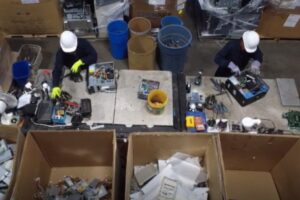
Drone recycling follows the same basic lifecycle as most electronics—collection, sorting, processing, and recovery—with one key difference: the lithium battery needs its own safe pathway.
Step 1: Collection
- Individuals: Drop-off is usually the cleanest option—especially when lithium batteries are involved. It reduces shipping risk and keeps handling simple.
- Organizations: Bulk pickup or on-site e-waste collection container (where applicable) keeps batteries and devices staged safely, reduces internal handling, and makes periodic cleanouts less of a headache.
Step 2: Sorting
- Batteries are separated from the drone hardware. This is the safety step that matters most.
- Drone hardware is separated into electronics and material streams based on the recycler’s process—think boards, wires, motors (electronics stream) and metals/plastics (material streams).
Step 3: Processing
- Electronics are processed to recover metal fractions and manage residues responsibly.
- Batteries follow a battery-specific pathway designed for lithium-based packs (different equipment, different controls).
Step 4: Recovery
- Metals are recovered and routed into reuse streams.
- Plastics are managed based on type and condition.
- Battery materials are processed through appropriate downstream channels.
Drone Recycling Rules and Compliance Basics
You don’t need to memorize regulations—you just need a safe default that keeps people and facilities protected.
- Do not trash lithium batteries (or devices containing them). This is where fires and safety issues start.
- For businesses, proper handling reduces risk and supports internal controls—especially during cleanouts, refreshes, or equipment swaps.
- Keep basic records: what was recycled, when, and the receiving recycler. It’s simple, but it helps with sustainability reporting, audits, and internal tracking. EACR Inc. offers certificates of recycling that make this even easier.
How EACR Inc. Helps With Drone Recycling
EACR Inc. supports drone recycling for:
- Businesses and facilities
- Schools and municipalities
- Organizations managing periodic tech refreshes
- Households (through the appropriate options)
Program options (as applicable) include:
- Drop-off guidance for smaller quantities
- Scheduled pickups for bulk volumes
- Site containers for ongoing collection programs (where applicable)
Batteries are handled with a safety-first approach (terminal protection and segregation), and documentation is available to support compliance and internal reporting.
FAQs About Drone Recycling
Can I throw a drone in the trash?
No. Drones are electronics, and most contain lithium batteries that should not go in household garbage or curbside recycling bins.
Do I need to remove the battery before recycling a drone?
If it’s removable, yes—remove it and recycle it through the proper battery stream. If it’s not removable, recycle the drone through a program that accepts battery-containing devices.
Should I tape drone battery terminals?
Yes. Taping terminals and/or bagging batteries individually helps prevent short-circuiting and reduces fire risk.
What if the drone battery is swollen?
Isolate it, avoid handling it more than necessary, and arrange recycling promptly through a program equipped to handle damaged lithium batteries.
Conclusion: Recycle Drones the Right Way
Drones are small electronics with a big safety catch: the battery. Remove it, prevent shorting, keep damaged packs isolated, and recycle through a responsible program—not the trash.
If you want to set up drone recycling for a business, school, municipality, or facility, contact EACR Inc. to coordinate the right drop-off or pickup approach.