CRT TV recycling isn’t “old electronics” recycling — it’s a different disposal category with different risks. The reason tube TVs are such a pain is the same reason they’re risky: they’re heavy, glass-based, and built with materials that don’t belong in normal trash or curbside streams.
This guide gives you the safest, simplest path: how to recycle a CRT TV without breakage, and how to choose the right option based on your situation (working vs. broken, one unit vs. bulk). It’s written for homeowners, landlords, schools, facilities teams, and municipalities who need a clean, defensible way to get CRTs out of buildings without creating a bigger problem.
What Counts as a CRT TV (and why it matters)
CRT vs flat screen
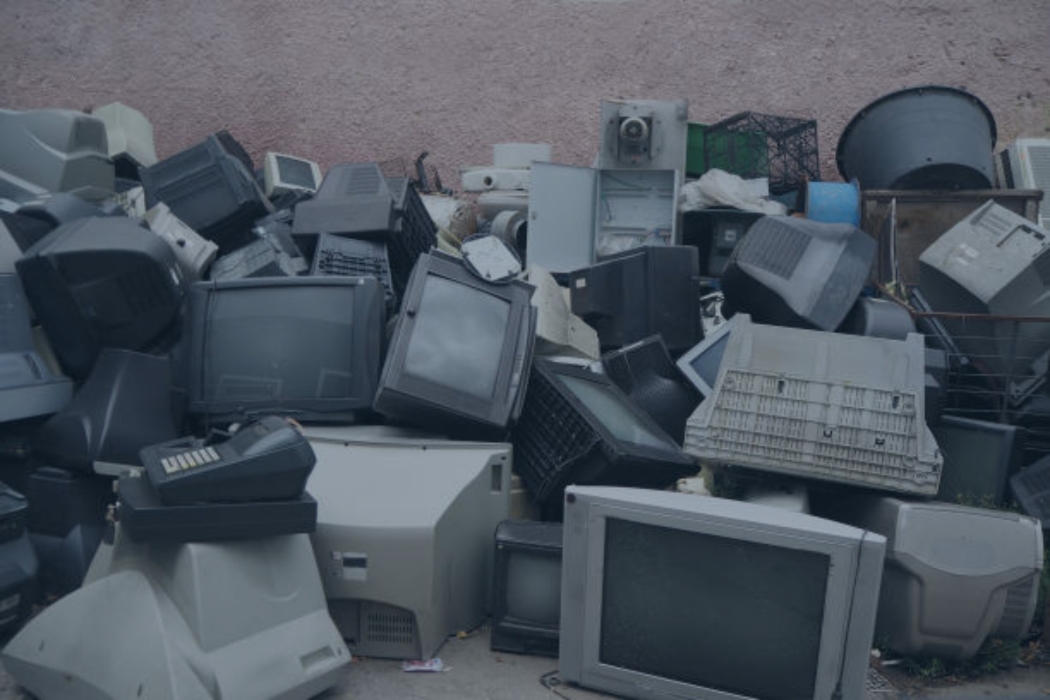
A “tube TV” is a CRT: a deep, heavy set built around a big glass tube — not a thin panel.
Fast tells:
- Depth: CRTs are thick (big back hump), not slim.
- Weight: they’re awkwardly heavy for their screen size.
- Screen shape: often slightly curved.
- Inputs: older connections show up a lot (coax, RCA, S-Video, sometimes component).
Why it matters: the recycling route, handling, and processing requirements for CRTs are different than flatscreens.
CRT TVs vs CRT monitors
CRT monitors have the same core hazard profile as CRT TVs because the underlying technology is basically the same: heavy glass tube + older electronics.
The difference is logistics:
- Monitors are usually smaller, but still heavy for their size.
- Businesses often have more of them (office cleanouts, schools, old labs), so “small” turns into bulk fast.
Why You Can’t Trash a CRT TV
Hazard content: leaded glass + other problematic components
In plain terms: CRTs contain leaded glass and other components that don’t belong in landfill streams. Even when they look harmless, they’re not built for trash compaction, weather exposure, or uncontrolled handling.
The real-world risk: breakage, weather exposure, and “curb dump” outcomes
“Leave it on the curb” is how CRTs get smashed. Once a tube TV breaks, cleanup gets harder, contamination risk goes up, and it becomes a bigger handling issue for whoever touches it next.
Illegal dumping happens because CRTs are bulky, inconvenient, and people don’t want to pay or haul them. The fix is boring but effective:
- Plan the route first (drop-off vs. pickup).
- Keep it indoors and intact until it’s moving.
- Don’t set it out “just to get it out of the way.” That’s how damage happens.
Your Best Recycling Option Depends on Condition + Volume
If the CRT TV still works: reuse first (when it’s realistic)
If it’s functional and you’re not dealing with a deadline, reuse can be the cleanest outcome — but only if it’s actually wanted.
Before you load it up:
- Screen works (no major flicker, no distortion)
- No cracks in the glass
- No buzzing, burning smell, or smoke (don’t transport a suspect unit)
Who might want it:
- Retro gaming buyers (classic consoles look better on CRTs)
- Niche orgs or community groups (sometimes)
Reality check: plenty of donation outlets won’t take CRTs anymore. Call first so you don’t waste a trip and end up stuck with it again.
If it’s broken or you just want it gone: recycling is the correct default
If it’s cracked, dead, or you just want it out of your building, recycling is the right move — not scrap and not trash.
Why scrap isn’t the right stream:
- CRTs are not “just metal.” The glass and internal components require controlled handling.
- Tossing them into general scrap bins increases breakage and creates downstream problems.
CRT TV recycling gets a lot easier in 2026 once you stop treating it like garbage and pick the right route based on volume and logistics.
CRT TV Recycling Options in 2026
Option 1: Drop-off at an electronics recycler
Best for: 1 TV (or a couple), and you can transport it safely.
Drop-off is the simplest path when you’ve got one unit and a vehicle that can handle the weight without you playing Tetris on the way there.
What to confirm before you drive:
- They actually accept CRT TVs
- Accepted condition (intact only vs. broken allowed)
For organizations: EACR Inc offers e-waste containers for businesses and municipalities, which can be a cleaner way to standardize collection instead of ad-hoc drop-offs.
Option 2: Scheduled pickup
Best for: property managers, schools, municipalities, warehouses, multi-site cleanouts, and anyone staring at a storage room full of tube TVs.
Pickup is the most practical option when volume and liability exist in the same sentence. Electronics recycling companies commonly offer pickups for high volumes of e-waste.
Why it’s worth it:
- Safer handling (less dragging, less dropping, fewer break events)
- Fewer “hallway staging disasters” (CRTs sitting around is how they get smashed)
- Documentation (service records, certificates of recycling — the stuff facilities actually need)
If you’re trying to run this like a real program (not a one-time scramble), pickup is usually the cleanest operational move.
Option 3: Manufacturer / retailer take-back
Sometimes available. Often limited. Size, age, and location can make this a non-starter.
Treat it as a backup option:
- It can work for specific brands or specific regions
- It can also be restricted to certain models or require pre-approval
Bottom line: never assume. Confirm eligibility before you plan around it.
How to Prepare a CRT TV for Recycling
Step 1: Don’t open it
CRTs are not a DIY teardown item. The moment you start “taking it apart,” you increase the chance of glass breakage and a mess you don’t want.
If it’s already cracked:
- Treat it as higher risk
- Minimize movement
- Keep it intact, contained, and controlled until it’s handed off
Step 2: Move it safely
Most CRT problems happen during the move, not during recycling.
Do this instead:
- Two-person carry for larger sets (don’t hero-lift a 27” tube TV)
- Keep it upright
- Don’t toss it loose in a truck bed
- Don’t stack heavy items on top of it (glass + pressure = break)
Your goal is simple: no impact, no tipping, no crushing.
Step 3: Basic “safe staging” if it’s waiting for pickup
If the TV is waiting for removal, stage it like you actually want it to stay intact.
- Store in a dry area, away from traffic and edges
- Don’t store outside or anywhere it can tip over
- Protect the screen from impact (cardboard or a blanket is fine)
- Keep it out of “temporary” hallways (temporary becomes permanent fast)
What Happens After Collection (high-level, no hand-waving)
Intake + sorting
First step is basic but critical:
- CRTs get separated from flatscreens and general electronics
- Condition matters: intact vs. broken units get handled differently
This is where controlled programs reduce headaches — fewer surprises, fewer damaged units, cleaner routing.
Controlled processing + material routing
The goal is straightforward:
- Manage leaded glass appropriately
- Separate and route metals/plastics into proper recovery channels
Why downstream matters: you want controlled routing, not “it disappeared into a mystery stream.” If you’re a business, school, or municipality, that matters for risk management, audits, and internal reporting.
CRT TV recycling is manageable in 2026 if you treat it like a controlled waste stream—not a “drag it to the curb and hope” situation.
CRT TV Recycling for Businesses, Schools, and Municipalities
The three scenarios that trip people up
These are the situations where CRTs turn into a problem fast:
- “We found 40 in storage.” Nobody owns them, nobody planned for them, and now they’re blocking a project.
- Building cleanouts / renovations. CRTs get moved last minute, stacked wrong, and broken.
- Multi-site collections. TVs appear in waves—one site this month, three sites next month—until you’re suddenly sitting on a pile.
Common Mistakes (that create damage and liability)
These are the big ones to avoid:
- Curb placement / weather exposure (this is how they get smashed)
- Tossing into scrap bins or dumpsters
- Stacking TVs on pallets without stabilization (wobble = breakage)
- Mixing CRTs with other breakable electronics (glass-on-glass is a loss)
Frequently Asked Questions About CRT TV Recycling
Can I throw a CRT TV in the trash?
No. CRT TVs don’t belong in trash or dumpsters. They’re heavy, breakable, and contain materials that require controlled recycling.
Do CRT TVs contain lead?
Yes—CRT glass is typically leaded glass, which is a big reason these units are handled differently than “regular e-waste.”
Can I recycle a broken CRT TV?
Usually yes. Treat broken/cracked CRTs as higher-risk, minimize movement, and confirm acceptance rules before transport or pickup.
Is a CRT monitor handled the same way?
Generally yes. CRT monitors have a similar hazard profile and are routed through the same controlled CRT processing stream—just usually smaller units.
Do I need to remove anything before recycling?
No. Don’t open the unit. Don’t try to disassemble it. Keep it intact and focus on safe handling and staging.
Do you offer pickup for bulk CRTs?
Yes—pickup is often the best option for bulk quantities, schools, property cleanouts, and municipalities because it reduces breakage risk and supports documentation.
What documentation can businesses request?
At minimum: a service/pickup record (date, site, quantities). Many programs can also provide certificates of recycling for compliance and internal reporting.
Conclusion: Make CRT recycling boring and controlled
Don’t trash CRTs, don’t curb-dump them, and don’t treat them like scrap. Use drop-off for one unit if you can transport safely, and use scheduled pickup when you have volume or multiple sites.If you’re dealing with multiple CRT TVs (schools, properties, municipalities, cleanouts), EACR Inc., an electronics recycling company in NJ can coordinate pickup, safe staging guidance, and documentation so the project stays controlled.