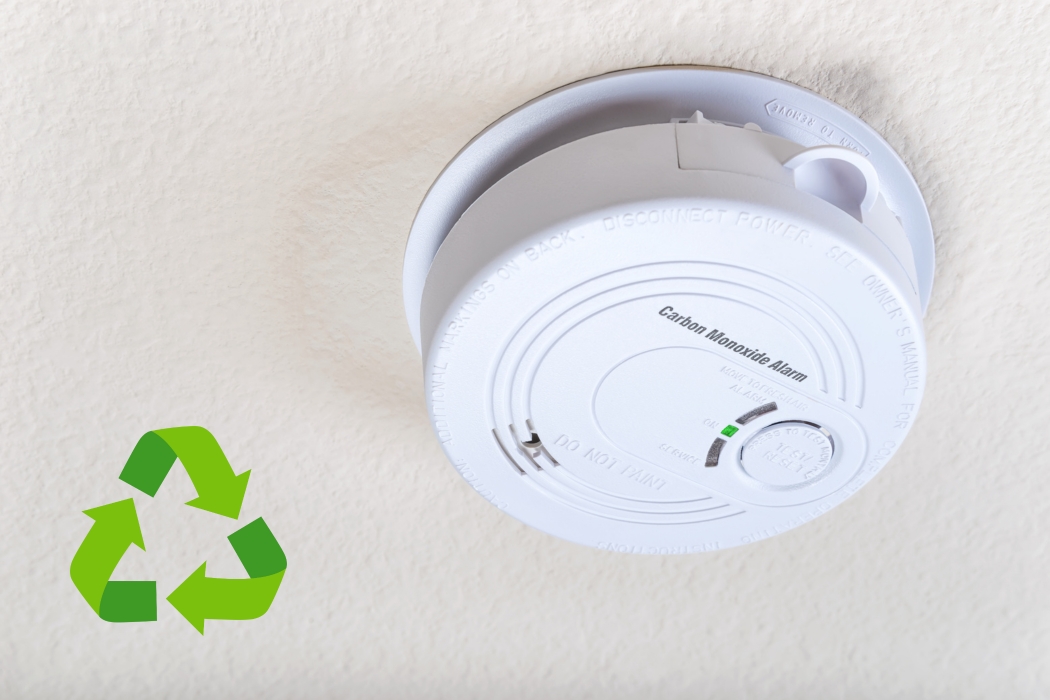
Carbon monoxide detector recycling matters because these devices save lives—but they don’t last forever. Most carbon monoxide (CO) detectors contain electronic components and batteries that do not belong in the trash, even though many people treat them like disposable household items.
Conflicting disposal advice from manufacturers, municipalities, and retailers leads to confusion and improper disposal. This guide clears that up by explaining what carbon monoxide detectors are made of, when they should be replaced, why recycling is the safest option, and how to recycle them properly and compliantly.
What is a Carbon Monoxide (CO) Detector?
Carbon monoxide detectors are safety devices designed to alert occupants when dangerous levels of carbon monoxide are present in a space. CO is colorless, odorless, and potentially fatal, which is why many states legally require CO detectors in residential and commercial buildings.
Unlike smoke detectors, which sense particles from combustion, CO detectors monitor gas concentration. They serve a different function—but both rely on electronic sensors and internal power sources.
Common Types of Carbon Monoxide Detectors
- Battery-powered
Standalone units that rely entirely on replaceable or sealed batteries. - Plug-in with battery backup
Powered by an outlet, with batteries to keep the unit working during outages. - Hardwired with battery backup
Integrated into a building’s electrical system with backup power. - Combination smoke + CO detectors
Dual-function devices that include both smoke detection and CO sensing electronics.
What’s Inside a Carbon Monoxide Detector?
Core Components
Although small, carbon monoxide detectors are complex electronic devices. Inside, you’ll typically find:
- Circuit boards and electronic sensors
- Plastic housings
- Copper wiring and metal contacts
- Batteries, including alkaline, lithium, or sealed 10-year batteries
Why These Materials Matter
These components are the reason carbon monoxide detectors require special handling at end of life.
- Electronics qualify as regulated electronic waste
- Batteries create fire and contamination risks if crushed or compacted
- Plastics and metals are recoverable when processed through proper recycling channels
Throwing these materials away wastes resources and increases safety risks across the waste stream.
When Should Carbon Monoxide Detectors Be Replaced?
Carbon monoxide detectors are not lifetime devices. Most models are designed to function reliably for 5 to 10 years, depending on the manufacturer and sensor type.
Understanding Expiration Dates
Manufacturers typically print an expiration date on the back of the unit. Once that date is reached, the sensor can no longer be trusted to detect CO accurately—even if the device still powers on.
Warning Signs a Detector Has Reached End of Life
- Repeated chirping or error codes
- Frequent false alarms
- End-of-life alerts or indicator lights
Expired detectors should be recycled, not stored in drawers or closets. Aging electronics and batteries continue to degrade over time, increasing fire risk and making proper carbon monoxide detector recycling even more important.
Why Carbon Monoxide Detectors Should Never Be Thrown in the Trash
Carbon monoxide detector recycling is critical because these devices create real safety and environmental risks when tossed into regular trash.
Fire & Safety Risks
Carbon monoxide detectors almost always contain batteries. When those batteries are crushed, compacted, or damaged during trash collection, they can ignite. Fires in garbage trucks, transfer stations, and waste facilities are increasingly linked to small electronics like detectors, remotes, and sensors—items that people assume are harmless because of their size.
Environmental Impact
When detectors end up in landfills, their internal electronics and batteries can break down over time. Metals and battery chemicals can leach into soil and groundwater, while plastic housings persist indefinitely. Once buried, these materials are difficult or impossible to recover safely.
Compliance & Liability Concerns
Many municipalities restrict or prohibit disposal of battery-containing electronics in household trash. Improper disposal can create liability issues for homeowners, landlords, property managers, schools, and commercial building operators—especially when recycling options are readily available.
Carbon Monoxide Detector Recycling vs. Conflicting Disposal Advice
If you’ve researched carbon monoxide detector disposal, you’ve probably seen mixed messages.
Why Guidance Often Appears Inconsistent
Some manufacturers and agencies suggest removing batteries and placing detectors in household trash. Others recommend hazardous waste programs, mail-back services, or electronics recycling. The inconsistency comes from how detectors are classified and how local waste systems differ.
The Problem With “Trash It After Removing Batteries”
Removing the battery does not eliminate risk. The detector still contains circuit boards, wiring, and electronic components that qualify as e-waste. Trashing the device simply shifts the environmental and safety burden downstream to waste workers and landfills.
Why Recycling Is the Lowest-Risk Option
Regardless of detector type, carbon monoxide detector recycling through a licensed electronics recycler is the safest and most responsible option. It avoids guesswork, prevents fires, and ensures materials are handled properly instead of discarded.
How Carbon Monoxide Detector Recycling Works
Step 1: Collection
Detectors are collected through individual drop-off programs or bulk collection for apartments, schools, offices, and commercial buildings. Bulk recycling is especially common during unit replacements or safety upgrades.
Step 2: Battery Handling
Batteries—whether alkaline, lithium, or sealed 10-year units—are isolated and handled using fire-risk controls.
Step 3: Processing & Material Separation
Devices are processed in controlled environments. Circuit boards are separated from plastic housings, metals are sorted, and batteries are routed to appropriate recycling streams based on chemistry.
Step 4: Responsible Material Recovery
Recovered metals are sent for reuse, electronics are processed through licensed recycling partners, and recyclable materials are kept out of landfills whenever possible. The goal is safe recovery—not disposal.
Can Carbon Monoxide Detectors Be Recycled With Smoke Detectors?
Yes—but with important considerations.
Combination Units Explained
Many modern devices combine smoke and carbon monoxide detection into a single unit. These should always be treated as electronic waste, regardless of which sensor type is inside.
Key Differences Between Detector Types
- Photoelectric smoke detectors
Use optical sensors and contain electronics and batteries. - Ionization smoke detectors
Contain electronic components and a small radioactive source that requires careful handling. - CO-only detectors
Rely on electronic sensors and batteries similar to other e-waste devices.
Why Mixed Devices Still Require Electronics Recycling
Even when guidance varies by detector type, combination units and CO detectors all contain electronics and power sources. That makes electronics recycling the correct end-of-life path across the board.
How to Prepare a Carbon Monoxide Detector for Recycling
Preparing detectors for recycling is simple and safe:
- Leave sealed 10-year units intact
- Do not attempt to disassemble the device
- Store detectors in a cool, dry place until recycling
Following these steps helps ensure safe handling and efficient carbon monoxide detector recycling without creating unnecessary risks.
Recycling Options Available Through EACR Inc.
Carbon monoxide detector recycling through EACR Inc. gives individuals and organizations a clear, compliant way to dispose of expired or unwanted detectors without risking fires, pollution, or regulatory issues.
For Individuals
EACR Inc. offers simple drop-off options for carbon monoxide detector recycling. Expired, broken, and sealed 10-year units are accepted, with batteries and electronic components handled safely. There’s no need to disassemble devices or guess about proper disposal—everything is processed through licensed electronics recycling channels.
For Property Managers & Institutions
For larger replacements or safety upgrades, EACR Inc. supports bulk detector recycling. This includes secure collection containers, coordinated pickups, and proper handling of battery-powered devices. Certificates of recycling are provided to support compliance, and internal records for property managers, schools, healthcare facilities, and commercial buildings.
Why Work With a Licensed Electronics Recycling Company
Choosing a licensed recycler matters when dealing with carbon monoxide detectors.
Proper Handling of Batteries and Electronics
Licensed facilities are equipped to manage alkaline, lithium, and sealed batteries alongside electronic components without creating fire or contamination risks.
Fire-Risk Mitigation
Controlled handling and processing prevent battery ignition during transport and recycling—one of the biggest dangers associated with detector disposal.
Environmental Protection
Electronics, plastics, and metals are recovered responsibly instead of being buried in landfills where they can cause long-term harm.
Reduced Liability
Proper recycling reduces risk for homeowners, landlords, and organizations by ensuring detectors are handled in line with environmental and safety expectations.
Carbon Monoxide Detector Recycling FAQs
Can I throw away a carbon monoxide detector?
No. Carbon monoxide detectors contain electronic components and batteries that do not belong in household trash. Throwing them away increases fire risk in garbage trucks and landfills and can violate local disposal rules. Recycling is the safest option.
How often do carbon monoxide detectors go off?
A properly working detector should only alarm when elevated carbon monoxide levels are detected or when the unit reaches end of life. Chirping or intermittent beeps usually indicate low batteries, a fault, or that the detector has expired and needs replacement and recycling.
What’s inside a carbon monoxide detector?
Most carbon monoxide detectors contain circuit boards, electronic sensors, copper wiring, plastic housings, and batteries (alkaline, lithium, or sealed 10-year batteries). These materials qualify as electronic waste and require proper recycling.
Why should I recycle my carbon monoxide detector?
Recycling prevents battery fires, keeps electronics out of landfills, reduces environmental contamination, and ensures materials like metals and plastics are recovered responsibly. It’s the lowest-risk and most compliant way to dispose of expired detectors.
Conclusion: Recycle Carbon Monoxide Detectors the Right Way
Carbon monoxide detectors save lives—but they’re also regulated electronic waste once they expire. Improper disposal creates real safety, environmental, and liability risks that are easy to avoid. Responsible carbon monoxide detector recycling protects people, property, and infrastructure while keeping hazardous materials out of the waste stream. Contact EACR Inc. to recycle carbon monoxide detectors safely, responsibly, and compliantly.