9V batteries are used in a wide range of devices, from smoke and carbon monoxide detectors to security systems, medical equipment, wireless microphones, testing devices, and consumer electronics. While they are small and familiar, they require more careful handling than many people realize.
Unlike most household batteries, a 9V battery has both terminals located next to each other on the top of the battery. If loose batteries come into contact with metal objects or other batteries, they can short circuit, generate heat, and create a fire hazard.
Recycling 9V batteries helps recover reusable materials while ensuring they are handled safely and responsibly. Whether you are replacing a single smoke detector battery or managing battery replacements across multiple facilities, understanding the proper recycling process is important.
This guide explains the most common types of 9V batteries, how to identify their chemistry, available recycling options, safe preparation practices, commercial battery collection programs, and what happens after batteries are recycled.
If your business also needs to recycle other battery types, electronics, or industrial equipment, learn more about EACR Inc.’s battery recycling services.
Quick Answer: How to Recycle 9V Batteries
9V battery recycling begins by identifying the battery chemistry, checking for damage, protecting the terminals, separating damaged batteries, and choosing an approved recycling program.
Small household quantities may be suitable for a local battery drop-off location. Businesses that generate larger quantities often benefit from collection containers or scheduled pickup services.
Before recycling, inspect each battery for leaks, swelling, corrosion, or other damage. Protect the terminals to reduce the risk of short circuits during storage and transportation, and keep damaged batteries separate from intact ones until they can be evaluated by a qualified recycler.
Working with a licensed battery recycler helps ensure batteries are collected, transported, and processed appropriately based on their chemistry and condition.
What is a 9V Battery?
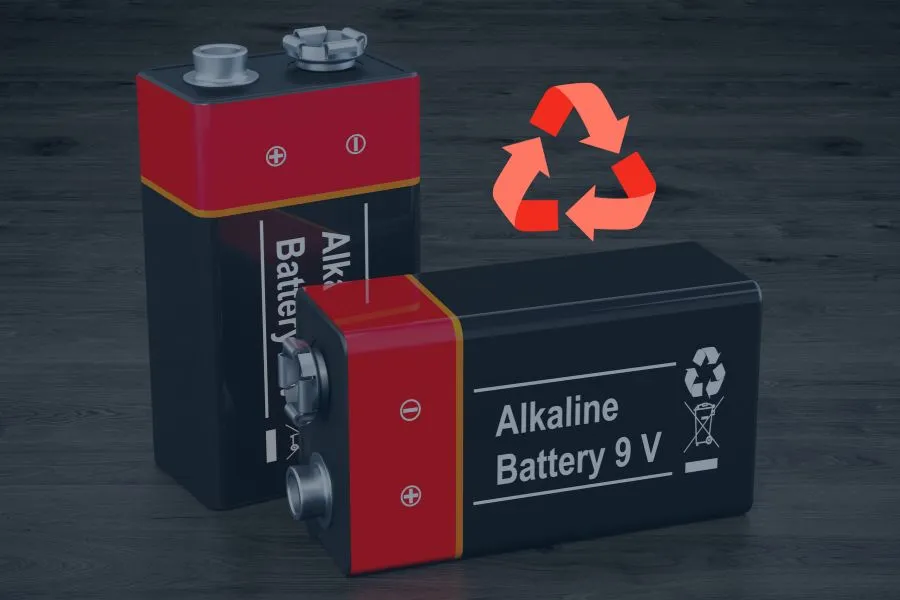
A 9V battery is a rectangular battery that provides approximately nine volts of electrical power. While the shape and size are fairly consistent, the internal chemistry can vary depending on the manufacturer and intended application.
One feature that makes 9V batteries unique is the pair of snap-style terminals located on the top of the battery. Because the positive and negative terminals sit close together, loose batteries can short circuit if they come into contact with metal objects or other batteries. This is one of the main reasons proper storage and preparation are recommended before recycling.
Common Types of 9V Batteries
Several different battery chemistries are manufactured in the 9V format.
Common examples include:
- Alkaline
- Zinc-carbon
- Primary lithium
- Lithium-ion
- Nickel-metal hydride (NiMH)
- Nickel-cadmium (Ni-Cd)
Some of these batteries are designed for a single use, while others are rechargeable. Although they may look nearly identical on the outside, each chemistry may have different recycling, storage, and transportation requirements.
How to Identify the Chemistry
The easiest way to identify a 9V battery is by reading the label.
Look for terms such as:
- Alkaline
- Lithium
- Li-ion
- NiMH
- Ni-Cd
- Rechargeable
The battery label or manufacturer information usually identifies the chemistry. If the battery type is unclear, businesses should keep unidentified batteries separate until a recycler can evaluate them and determine the appropriate recycling method.
Where Are 9V Batteries Commonly Used?
9V batteries are commonly chosen for devices that require a compact power source capable of delivering reliable performance over extended periods.
Common applications include:
- Smoke detectors
- Carbon monoxide detectors
- Security systems
- Wireless microphones
- Medical devices
- Multimeters and testing equipment
- Communication devices
- Toys
- Guitar pedals
- Industrial sensors
- Backup systems
While individual households may replace only a few 9V batteries each year, many organizations generate much larger quantities through routine maintenance and battery replacement programs.
Businesses and organizations that commonly recycle 9V batteries include:
- Schools
- Hospitals
- Property management companies
- Hotels
- Entertainment venues
- Laboratories
- Municipal buildings
- Manufacturers
- Security companies
Replacing batteries across multiple buildings or hundreds of devices can quickly create a significant battery recycling stream that benefits from an organized collection program.
9V Battery Recycling Options
The best recycling option depends on the battery chemistry, quantity, condition, location, and how often batteries are generated.
Small amounts may be appropriate for local drop-off programs, while larger commercial quantities are often easier to manage through collection containers or scheduled pickup.
Local Drop-Off
Drop-off recycling is often a practical option for:
- Small household quantities
- Occasional battery replacements
- Small local businesses
Before bringing batteries to a collection site, confirm that the facility accepts your battery chemistry and ask about any preparation requirements.
You should also verify:
- Accepted battery chemistries
- Quantity limits
- Terminal-taping requirements
- Whether damaged batteries are accepted
Following these requirements helps make the recycling process safer and more efficient.
Collection and Mail-Back Programs
Collection and mail-back programs work well for:
- Offices
- Schools
- Retail locations
- Property managers
- Healthcare facilities
Approved collection containers provide employees with a designated place to store used batteries until they are shipped or picked up. This helps keep batteries organized, reduces the chance of improper disposal, and simplifies ongoing recycling efforts.
Scheduled Commercial Pickup
Scheduled pickup is often the best choice for:
- Larger battery quantities
- Mixed battery inventories
- Multiple facilities
- Recurring battery replacement programs
- Facility cleanouts
Businesses may schedule one-time pickups for large projects or establish recurring service as batteries accumulate.
For organizations managing battery recycling across multiple locations, EACR Inc. can help coordinate collection containers, transportation, recycling, and documentation to simplify the process and keep battery waste moving through an organized recycling program.
How to Prepare 9V Batteries for Recycling
Preparing 9V batteries correctly helps reduce short-circuit risks and makes collection easier for both your team and the recycler.
Inspect and Identify the Batteries
Start by reviewing the batteries and gathering a few basic details.
Record information such as:
- Approximate quantity
- Battery chemistry
- Rechargeable or single-use
- Condition
- Storage location
This does not need to be overly complicated. Even a basic count and chemistry estimate can help the recycler determine the right container, pickup method, and handling requirements.
If the chemistry is unclear, keep those batteries separate until they can be identified.
Protect the Terminals
The two terminals on a 9V battery sit close together. If they touch a conductive object, the battery can short circuit.
Common items that may bridge the terminals include:
- Other batteries
- Keys
- Coins
- Tools
- Metal containers
When required by the recycling program, cover both terminals with non conductive tape. Some programs may also allow or require each battery to be placed in an individual plastic bag.
Do not use metal tape, and do not place loose 9V batteries in a container where the terminals can contact one another.
Separate Batteries by Type and Condition
Keep different battery chemistries separated whenever possible.
For example, keep alkaline batteries apart from lithium, lithium-ion, nickel-metal hydride, and nickel-cadmium batteries.
Damaged batteries should also be separated from intact batteries. Watch for:
- Leaks
- Swelling
- Corrosion
- Cracked casings
- Unusual warmth
- Burn marks
- Strong odors
Do not mix damaged batteries into a general collection container unless the recycler has provided specific instructions.
Package and Label the Batteries
Use sturdy, dry containers that protect batteries from movement, impact, and crushing.
Avoid overfilling the container or stacking heavy items on top of the batteries.
Labels may identify:
- Used batteries
- Battery chemistry
- Collection location
- Damaged batteries, when applicable
Clear labeling helps employees use the correct container and gives the recycler useful information before pickup.
Safety and Commercial Handling
A battery may no longer power a device and still retain enough energy to create heat, sparks, or a short circuit.
Avoid storing loose 9V batteries in drawers, bags, toolboxes, or metal buckets. Keep them away from heat, moisture, combustible materials, and high-traffic areas where they could be crushed or damaged.
Do not:
- Crush the battery
- Puncture or open the casing
- Bend or modify the terminals
- Attempt to recharge a single-use battery
- Mix damaged batteries with intact batteries
- Move leaking or overheated batteries without guidance
Contact a qualified recycler before transporting damaged batteries or large commercial quantities.
Commercial transportation requirements may vary based on the battery chemistry, quantity, condition, packaging, and transportation method. Lithium and damaged batteries may require additional preparation compared with intact alkaline batteries.
Records for Commercial Loads
Businesses may benefit from keeping basic records for each battery collection or pickup.
Useful information includes:
- Pickup dates
- Facility locations
- Battery types
- Approximate quantity or weight
- Condition notes
- Certificates of recycling
These records can support internal waste tracking, sustainability reporting, compliance programs, and multi-location battery management.
What Happens After Collection?
After collection, 9V batteries are transported to an appropriate receiving or processing facility.
The general process may include:
- Batteries are received and inspected.
- They are sorted by chemistry and condition.
- Damaged batteries are separated.
- Each chemistry is sent through an appropriate processing system.
- Metal and other material fractions may be recovered.
- Remaining materials are managed through approved downstream channels.
The exact process depends on the battery chemistry.
Alkaline, lithium, lithium-ion, nickel-metal hydride, and nickel-cadmium batteries do not all contain the same materials or follow the same recycling route. Sorting batteries before processing helps ensure each type is handled through the correct system.
Recovered material may be refined or prepared for use in future manufacturing. However, not every component is recovered at the same rate, and not every material returns directly to new battery production.
Frequently Asked Questions About 9V Battery Recycling
Can 9V batteries be recycled?
Yes. Most common 9V battery chemistries can be collected through an appropriate battery recycling program.
The correct recycling method depends on whether the battery is alkaline, lithium, lithium-ion, nickel-metal hydride, nickel-cadmium, or another chemistry.
Can 9V batteries go in the trash?
Rules vary by location and battery chemistry.
Rechargeable and lithium batteries should be recycled rather than placed in ordinary trash. Even when local rules allow certain single-use batteries in the trash, recycling is often the safer and more responsible option.
Do 9V battery terminals need to be taped?
Terminal protection is commonly required or recommended because both terminals are located close together.
Covering the terminals with nonconductive tape or individually bagging the battery helps reduce the risk of a short circuit during storage and transportation.
Are all 9V batteries alkaline?
No. The 9V format is available in several chemistries, including:
- Alkaline
- Zinc-carbon
- Primary lithium
- Lithium-ion
- Nickel-metal hydride
- Nickel-cadmium
Always check the label before preparing the battery for recycling.
Can rechargeable 9V batteries be recycled?
Yes. Rechargeable 9V batteries should be identified by chemistry and sent through an approved battery recycling program.
Do not mix all rechargeable batteries together unless the recycler allows it.
What should I do with a leaking 9V battery?
Keep it separate from intact batteries and avoid direct contact with the leaking material.
Do not place it in a standard collection container without guidance. Contact a qualified recycler for handling, packaging, and transportation instructions.
Can businesses schedule 9V battery pickup?
Yes. Businesses can arrange one-time or recurring collection for 9V batteries and other battery types.
Scheduled pickup is often the most practical option for schools, hospitals, property managers, municipalities, industrial facilities, and organizations managing batteries across multiple locations.
Conclusion
Recycling 9V batteries starts with a few practical steps:
- Identify the battery chemistry
- Protect the terminals
- Separate batteries by type
- Isolate damaged batteries
- Choose an approved recycling option
- Maintain records for commercial loads
Because both terminals are positioned next to each other, proper storage and terminal protection are especially important for 9V batteries.
If your business, school, healthcare facility, property portfolio, municipality, or industrial operation generates used 9V batteries, EACR Inc. can help coordinate licensed battery recycling, collection containers, scheduled pickup, transportation, and recycling documentation.