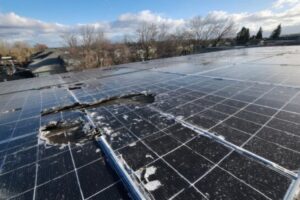

EACR Inc. offers licensed and environmentally sound solar panel recycling services for businesses, municipalities, and solar providers—ensuring compliance, sustainability, and safe disposal of end-of-life systems.

As solar energy continues to grow, so does the volume of panels reaching the end of their useful life.
These panels often contain hazardous materials like cadmium, lead, and silicon that can pose environmental risks if improperly discarded.
With landfill bans in place and stricter environmental laws emerging, responsible recycling has never been more important.
By 2030, the U.S. is expected to retire more than one million tons of solar panels (EPA, 2025).
Without proper disposal, these materials could contaminate land and water. EACR Inc. ensures these systems are recycled safely, protecting both the environment and your organization’s compliance.
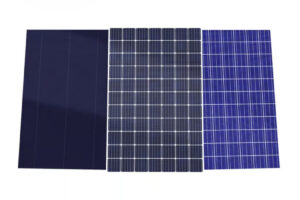
These are one of the most common solar panels used today. The panels are safely accepted and processed to recover the materials within them.
Often found in commercial systems, these panels require special handling to prevent environmental harm.
Inverters and converters used in solar installations must be properly recycled to comply with regulations and ensure environmental protection.
We recycle the metal framing, brackets, and mounting hardware used to install solar panels, helping you clear entire solar installations responsibly.
All peripheral components—like wiring and electrical boxes—are safely collected, processed, and recycled in accordance with regulations.
At EACR Inc., we enforce a strict zero-landfill policy for all solar-related waste. Our facility complies with all applicable regulations and guidelines for processing e-waste and solar panels.
We ensure every panel is processed in a way that meets environmental and regulatory standards.
Solar panels pose recycling challenges due to their complex makeup and toxic content. Without proper handling, materials contaminate soil and water. Nationwide infrastructure is limited, but EACR Inc. addresses this with expert processing, compliant logistics, and scalable recycling programs built for real-world demands.
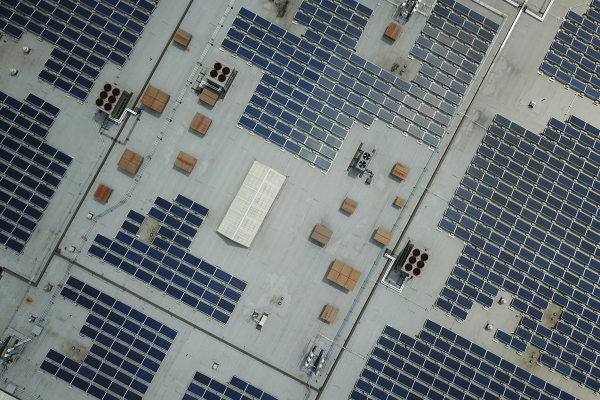
EACR Inc. proudly works with solar providers, municipal programs, and construction firms to ensure the responsible disposal of solar equipment. Our services are tailored to meet the needs of both large-scale operations and local projects.
We support corporate facilities, schools, universities, and utility-scale solar farms with secure recycling solutions. Whether you’re upgrading, decommissioning, or managing e-waste, we make the process seamless.

With over 25 years of experience, EACR Inc. leads the way in sustainable solar panel recycling. Our in-house transportation, processing, and reporting ensure transparency at every step. We proudly serve solar developers, municipalities, schools, and corporate energy users—delivering fast quotes, flexible logistics, and total regulatory compliance.
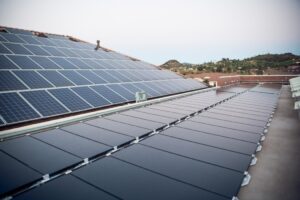



Photovoltaic (PV) panels, commonly known as solar panels, currently generate close to 3% of the world’s electricity. Because solar energy is considered a renewable and environmentally friendly source, it’s essential that the end-of-life management of these systems doesn’t compromise their reputation as a green technology.
Most of today’s global solar infrastructure has been installed over the past two to three decades. By 2030, many of those systems will reach their end-of-life (EOL) stage, creating an estimated 8 million metric tons of material that will need proper handling. Experts predict that by 2050, that number could increase tenfold, making used PV materials account for nearly 10% of all global electronic waste.
No technology is entirely without impact, but sustainability is about minimizing harm. In that regard, solar and wind power remain cleaner and more sustainable alternatives to fossil fuels.
The encouraging news is that nearly 80% of a solar panel’s weight is composed of recyclable materials like aluminum and glass. The challenge, however, lies in the complex process of separating the glass from the remaining materials. The other 20% of the components—such as silicon, plastics, and rare metals—require advanced methods to recover safely.
By 2024, an estimated 2.5% of all U.S. homes will include solar installations. Many new homes are built with photovoltaic systems already integrated, and large solar farms now feed directly into the nation’s power grid. Solar panels are also increasingly used to power electronics, vehicles, industrial equipment, and commercial facilities.
EACR Inc. offers secure, licensed recovery, transportation, and recycling of photovoltaic (PV) equipment, ensuring that each stage—from pickup to processing—is managed safely and in compliance with all environmental regulations.
Solar energy has rapidly become one of the most cost-effective power sources on the planet. With sunlight constantly delivering over 173,000 terawatts of potential energy to Earth, even a fraction of this capacity can power the global grid for years to come.
Since the invention of the first solar cell in the 1950s, solar technology has expanded from niche applications to mainstream adoption. Residential rooftops, commercial buildings, and vast solar farms now contribute to reducing global dependence on fossil fuels.
However, this growth introduces a new environmental challenge: end-of-life solar waste. Analysts estimate that by 2050, the U.S. and China will account for the largest volumes of decommissioned panels worldwide. Within the next 25–30 years, millions of panels installed in the early 2000s will reach retirement age.
Recycling is not optional—it’s the only sustainable path forward. As one of the nation’s leaders in electronic waste recycling, EACR Inc. provides scalable, fully compliant solar recycling solutions that meet both environmental goals and corporate sustainability requirements.
Whether you’re a homeowner, contractor, or solar developer managing end-of-life photovoltaic systems, EACR Inc. is your trusted partner for complete solar panel recycling services.
At first glance, solar panels may seem straightforward—glass layers containing photovoltaic (PV) cells that capture sunlight—but their construction is highly engineered. Each panel consists of multiple layers designed to maximize efficiency and durability.
All panels begin with glass or plexiglass sheets layered with photovoltaic cells. These cells, made from silicon, convert sunlight into electricity. The silicon is treated with boron and phosphorus to create an electrical imbalance, allowing energy to flow when exposed to sunlight.
Once the cells are assembled, they are wired together and placed within an aluminum frame to create a PV module. A single module produces limited power; therefore, multiple modules are connected to form a solar array. This array captures and channels sunlight into usable electricity.
Solar panels produce direct current (DC) power, which must be converted into alternating current (AC) for home and commercial use. Electrical wiring carries the DC output to an inverter, where it is converted and distributed to power appliances, devices, or even fed back into the utility grid.
Inverters contain capacitors, printed circuit boards, and wiring assemblies, all housed within durable plastic and metal casings that require responsible recycling once retired.
Solar panel recycling requires specialized handling and disassembly. Each component—glass, silicon, metal, and plastic—is separated and processed for reuse wherever possible. This careful dismantling prevents contamination and allows raw materials to re-enter manufacturing.
While most panels appear to be simple combinations of glass, metal, and silicon cells, their recycling process is complex. Glass accounts for the majority of a panel’s weight, followed by aluminum, silicon, and plastics. During recycling:
This closed-loop process ensures that nearly all panel materials are recycled, keeping them out of landfills where they could otherwise remain intact for centuries.
Whether you are a homeowner replacing a rooftop solar array or a solar manufacturer seeking responsible recycling methods, EACR Inc. provides the expertise and infrastructure to manage every step of the recycling process efficiently and safely.
Common Questions
Solar panels are recycled for their raw components like glass, silicon wafers, aluminum frames, and electronic parts, or they are tested and reused if they’re in good condition.
Absolutely. We provide full-service logistics, including scheduled pickups and safe transport from remote locations, solar farms, or dispersed installations. Our team handles every detail, including loading, manifesting, and transport compliance.
Yes. Every recycling project includes a Certificate of Recycling. These documents help satisfy audits, internal sustainability goals, and legal compliance requirements.
Solar inverters and converters are either tested for reusability or recycled into their raw components. The raw components will then be reintroduced into the economy for manufacturing or for the metal content.
By 2030, the U.S. is expected to retire more than one million tons of solar panels (EPA, 2025). Without proper infrastructure in place, many of these could end up in landfills. Our goal is to provide scalable, compliant solutions that keep this material out of the waste stream.
Yes. We support both residential and commercial solar customers. Whether you’re a homeowner replacing rooftop panels or a solar company decommissioning utility-scale arrays, we tailor our recycling services to fit the size and scope of your needs.
"*" indicates required fields
Ready to Recycle Electronics?