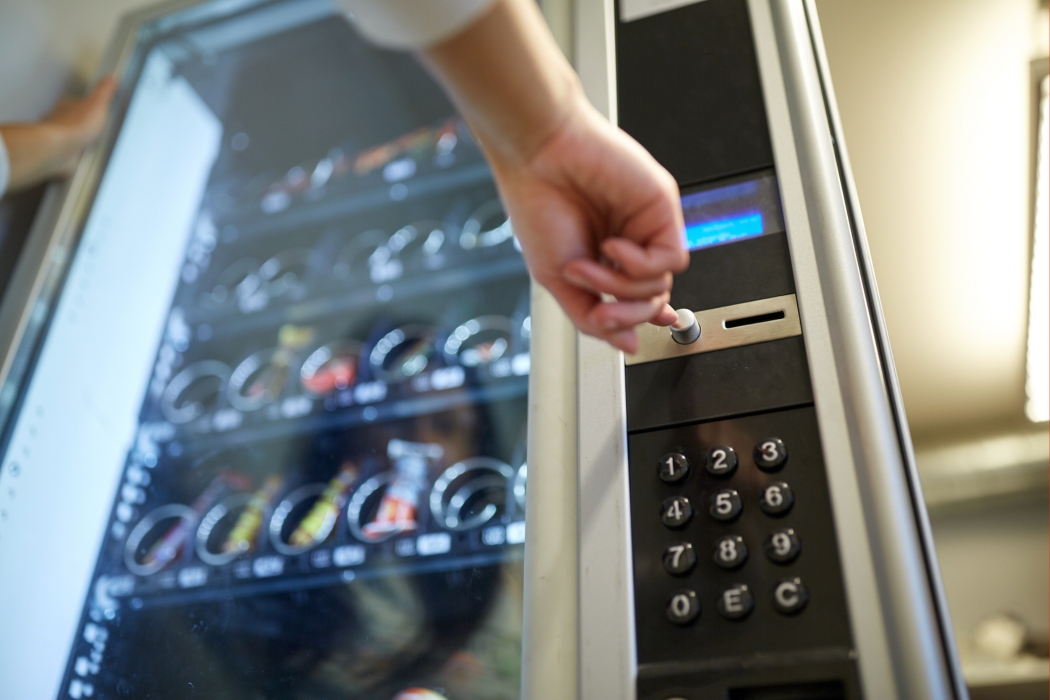
Vending machine recycling is essential because these machines are large, heavy, and filled with electronics, metals, refrigerants, wiring, and high-powered components that can’t just be tossed in a dumpster. Whether it’s a refrigerated drink machine or a modern smart vending unit, each one contains materials that require regulated handling to protect both the environment and your organization.
Many states also enforce strict landfill bans on appliances containing refrigerant, and cold beverage vending machines fall directly under those rules. That means dumping one illegally can lead to fines or violations.
If your business, school, gym, hospital, or commercial facility is replacing old machines, EACR Inc. offers a convenient electronics recycling service with scheduled pickups and bulk removal options.
Why Vending Machines Can’t Be Thrown Away
Vending machines are classified as regulated appliances and electronic equipment, which means they must be disposed of through licensed recycling channels. There are several reasons for this.
First, refrigerated beverage machines contain refrigerants—substances that can damage the environment if leaked and must be properly managed.
Second, every vending machine is packed with electronics, wiring, motors, compressors, lighting systems, and payment modules, all of which qualify as regulated e-waste.
Third, these machines contain heavy metals, plastics, capacitors, and internal components that require careful processing to avoid environmental contamination.
Types of Vending Machines That Can Be Recycled
Most people are surprised at how many types of vending machines qualify for recycling. Nearly every style, size, and configuration contains materials that can be recovered.
Beverage Vending Machines (Refrigerated)
These full-size machines contain refrigerant, compressors, coils, and cooling systems that require licensed recovery and specialized processing.
Snack Vending Machines
Although they aren’t refrigerated, snack machines still have motors, rotating coils, electronics, lighting systems, and internal wiring that must be recycled properly.
Combo Vending Machines
These hybrid machines include both cooling systems and snack components, making them a mix of refrigeration equipment + electronic waste.
Smart/Modern Cashless Vending Machines
Newer vending machines often include touchscreens, credit card readers, NFC payment modules, IoT software, and internal circuit boards, all of which must be recycled through licensed electronic waste facilities.
What’s Inside a Vending Machine?
Vending machine recycling works because these machines are packed with reusable metals, electronics, and regulated materials. Understanding what’s inside helps explain why proper disposal isn’t optional.
Common Recyclable Materials
Every vending machine contains materials that can be recovered and reused, including:
- Steel, aluminum, and copper wiring from the frame and internal systems
- Compressors, motors, and pumps found in refrigerated beverage units
- Shelving, coils, and refrigeration components that can be broken down for material recovery
These metals are incredibly resource-rich and ideal for sustainable recycling.
Electronic Components
Modern vending machines contain a surprising amount of electronics, such as:
- Control boards that manage temperature, rotation, and internal systems
- Card readers and payment modules, especially in cashless units
- LCD screens and keypads
- Wiring harnesses throughout the machine
All of these fall under regulated electronic waste and must be processed through licensed facilities.
Hazardous or Regulated Materials
In addition to recyclable parts, vending machines often contain components that require special handling:
- Refrigerant in cold beverage machines
- Capacitors and electrical components that must be depolluted
- Oils within compressors or pumps
- Fluorescent lighting used in older snack machines
These materials make proper vending machine recycling essential for safety and compliance.
How Vending Machine Recycling Works
The vending machine recycling process is structured to safely remove hazards and recover as many materials as possible.
Step 1 — Pickup or On-Site Removal
EACR Inc. provides bulk removal for businesses, schools, gyms, hotels, and facilities that need to replace multiple units at once. For single machines, scheduled pickups are available depending on location.
Step 2 — Disassembly
The machine is taken apart piece by piece so recyclers can separate:
- Electronics
- Motors
- Plastics
- Metals
This creates clean material streams for the recovery stage.
Step 3 — Material Recovery
Finally, each component is processed:
- Steel is processed for reuse
- Compressors are fully recycled
- Copper is extracted from wiring and motors
- Circuit boards are processed for metal recovery
This is how vending machine recycling keeps reusable resources in circulation.
Benefits of Recycling Vending Machines
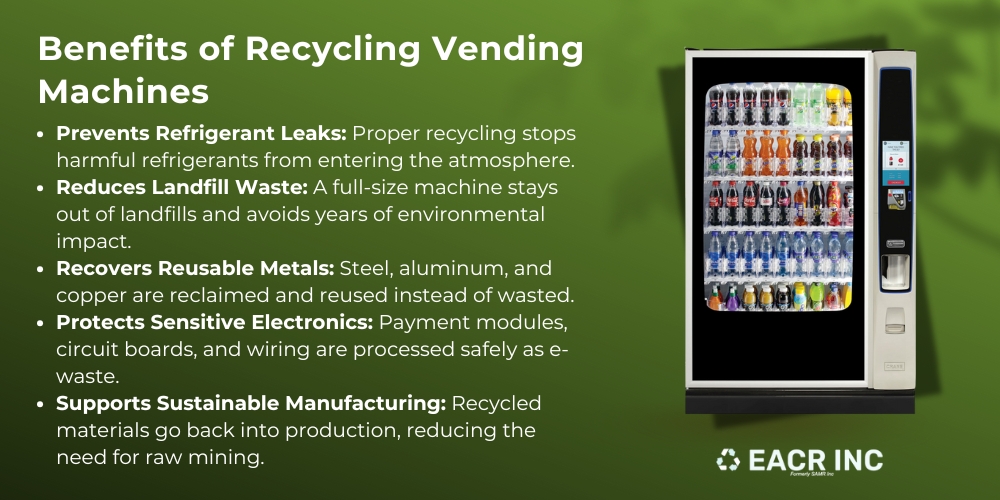
Recycling a vending machine does more than meet disposal rules—it helps protect the environment and conserve essential resources.
Prevents Refrigerant Leaks
Improperly discarded beverage machines can leak refrigerant into the atmosphere. Recycling prevents that.
Reduces Landfill Waste
A full-size vending machine takes up enormous space. Recycling eliminates that burden entirely.
Recovers Reusable Metals
Steel, aluminum, copper, and electronic components all get reused instead of wasted.
Supports Sustainable Manufacturing
Recycled materials reduce the need for new mining and help manufacturers lower their environmental impact.
Can You Recycle Broken or Older Vending Machines?
Yes—every vending machine can be recycled, regardless of age or condition.
Rusted units, vandalized machines, missing parts, and non-working systems still contain:
- Metals
- Wiring
- Compressors
- Electronic boards
All of these components are recyclable and recoverable.
Commercial Vending Machine Recycling
Vending machine recycling is especially important for commercial environments, where machines are replaced more frequently.
Recycling services are ideal for:
- Office buildings
- Schools and universities
- Gyms and fitness centers
- Hotels and hospitality
- Warehouses
- Vending service companies
EACR Inc. also supports multi-location pickups and offers e-waste container programs for facilities that regularly rotate machines.
How to Prepare a Vending Machine for Recycling
Preparation is simple and takes just a few minutes.
- Unplug and disconnect the machine from power
- Remove all products and empty cash drawers or coin mechanisms
- Secure doors and internal trays so nothing shifts during transport
Vending Machine Recycling FAQs
Do vending machines contain refrigerants?
Yes. Beverage vending machines contain refrigerants, which must be properly handled.
Can card readers and payment modules be recycled?
Absolutely. Payment systems, boards, and cashless modules are processed as electronic waste.
Do you pick up full-size commercial machines?
Yes. EACR Inc. can remove full-size units from commercial facilities.
Can vending companies schedule bulk removal?
Yes. Bulk pickup and multi-unit removal programs are available.
What if a machine is missing parts?
It can still be recycled. Missing or damaged components do not affect recyclability.
Schedule Vending Machine Recycling With EACR Inc.
Scheduling vending machine recycling is quick and straightforward. You can book a pickup online or contact EACR Inc. directly to discuss your location and disposal needs. If you’re upgrading equipment or clearing out old machines, schedule your vending machine recycling with EACR Inc. It’s the safest, most compliant, and most efficient way to handle commercial vending machine disposal.