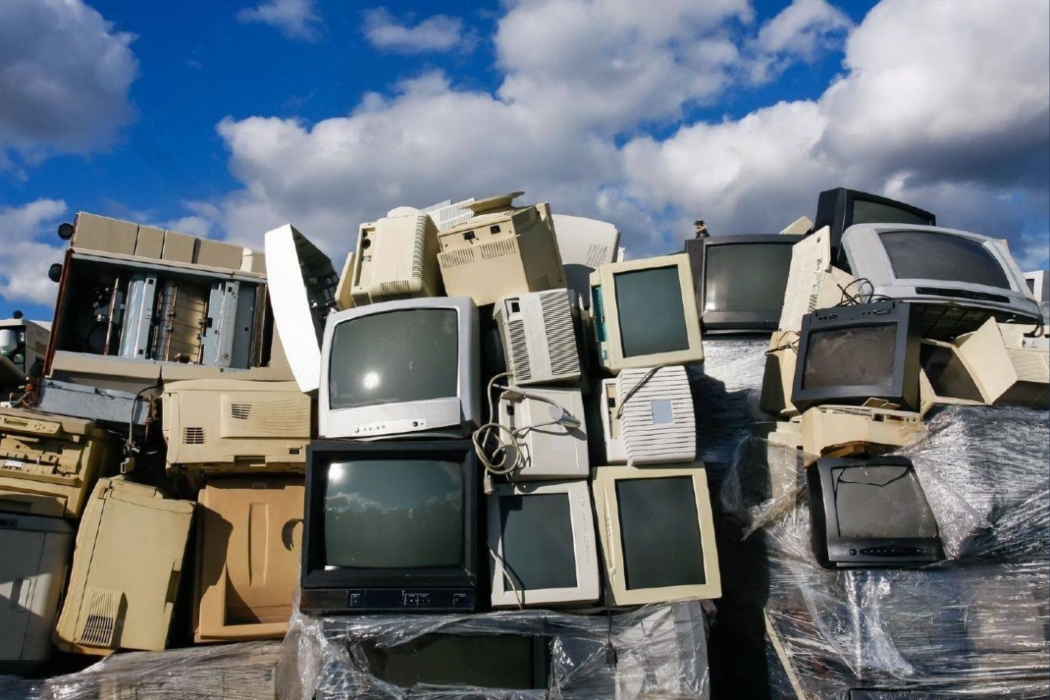
TV recycling has become essential as old televisions pile up in homes, apartments, offices, schools, and commercial buildings. In many states, you cannot throw away a TV because these devices contain hazardous materials, fire risks, and components that require regulated handling.
Improper disposal can lead to environmental damage, toxic leaks, and legal consequences. Different types of TVs—flat-screen TVs, LCD TVs, LED TVs, plasma TVs, and CRT televisions—all require different processing methods due to their internal components and construction.
Because of these risks, licensed electronics recycling is the safest, most compliant, and responsible way to dispose of any television.
Why TV Recycling Matters
TVs Contain Hazardous Components
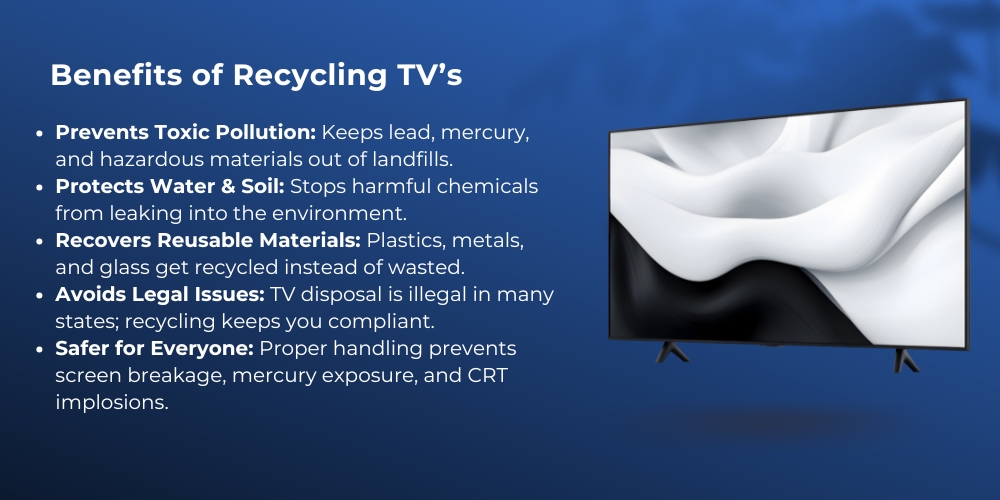
CRT tubes contain heavy, leaded glass that must be managed through licensed recycling channels. Flat-screen TVs can contain mercury (in older LCD models), circuit boards, wiring, and other electronic parts that require regulated handling. Some TVs also contain internal batteries or capacitors that must be processed safely.
Landfilling Electronics Is Illegal in Many States
Many states classify televisions as regulated electronic waste, meaning they cannot be placed in household trash or left for curbside pickup. Sanitation companies are prohibited from accepting them because TVs contain materials that can contaminate soil and groundwater. Proper disposal ensures environmental compliance and avoids potential fines.
Environmental Benefits of TV Recycling
Recycling prevents toxic materials from entering landfills, protects water sources, and reduces environmental damage. It also allows recyclers to recover plastics, metals, wiring, and glass—materials that support a more sustainable and circular economy.
Safety Risks of Improper Disposal
CRT televisions can implode if damaged due to their vacuum-sealed glass tubes. Flat-screen panels contain fragile layers that can shatter and expose sharp components. Older LCDs with mercury backlights pose additional exposure risks if broken. Safe recycling eliminates these hazards entirely.
Types of TVs & How Each Is Recycled
CRT TV Recycling
Cathode-ray tube (CRT) TVs contain leaded glass, phosphorus coatings, and vacuum-sealed tubes that require licensed processing. These older models hold several pounds of lead, making curbside disposal illegal in most states. During tv recycling, CRTs are carefully dismantled by separating the plastic housing, copper wiring, circuit boards, and the heavy picture tube. The tube is then processed in a controlled environment to safely manage the leaded glass and recover reusable materials.
LCD TV Recycling
LCD TVs use liquid crystal screens layered between thin sheets of glass. Many older LCD models contain mercury in their fluorescent backlights, which is why they must be handled through regulated recycling channels. The recycling process includes removing the backlight assembly, isolating mercury-containing components, and separating circuit boards, plastics, and wiring. Modern LCDs without mercury still require careful dismantling due to fragile screen layers.
LED & Modern Flat-Screen TV Recycling
LED TVs do not contain mercury but still include multiple circuit boards, wiring, aluminum frames, and plastic panels. During recycling, technicians remove the LED backlight panels, extract the boards, recover copper and other metals, and process plastics for reuse. These models are lighter than CRTs but contain more complex electronics that require safe handling.
Plasma TV Recycling
Plasma televisions contain large, heavy glass panels and a circuit-heavy internal design. Because the screens are fragile and can shatter, plasma TVs require careful disassembly. Recycling focuses on separating the thick glass layers, recovering metals from circuit boards, and managing internal components without breakage.
Smart TV Recycling
Smart TVs include data-bearing components such as memory chips, Wi-Fi modules, and user login information. Before recycling, it’s helpful to reset the TV to factory settings if possible. During professional tv recycling, licensed recyclers remove all circuit boards and handle them through secure electronics processing to ensure data is fully destroyed.
What’s Inside a TV?
Plastics & Metal Housing
Most TVs include ABS plastic housings, aluminum frames, and internal steel supports. These materials are recyclable once separated, helping reduce waste and support material recovery.
Circuit Boards & Wiring
Inside every TV are motherboards, power supply boards, wiring harnesses, chips, and connectors. These components contain recoverable metals such as copper, gold, and silver. They must be processed through licensed electronics recycling channels.
Screens, Tubes & Glass Components
CRTs contain thick leaded glass that requires specialized dismantling to handle safely. LCDs include multiple layers of liquid crystal material and thin glass sheets. Each type of screen has its own recycling method to prevent breakage and ensure safe material recovery.
Hazardous Elements
Depending on the model, TVs may contain mercury (in older LCDs), lead (in CRTs), capacitors, fluorescent lamps, and other components that require licensed handling. Proper electronics recycling prevents these materials from entering landfills or causing environmental harm.
How TV Recycling Works
Collection & Transport
TV recycling starts with safe collection, since modern flat screens are fragile and CRTs are extremely heavy. Businesses can schedule pickups directly with a licensed recycler, while homeowners often rely on drop-off programs or municipal events. Proper transport prevents screen breakage, mercury lamp damage, and circuit board exposure.
Safe Disassembly
At the recycling facility, technicians carefully remove screens, circuit boards, wiring, metal frames, and fluorescent backlights. CRT TVs require a controlled dismantling process because of their leaded glass and pressurized tubes. Older LCD models contain mercury lamps that must be removed and handled through specialized hazardous-materials channels.
Material Sorting & Recovery
After disassembly, the components are sorted into categories such as plastics, metal housings, wiring, circuit boards, and glass. Hazardous materials—including leaded glass from CRTs and mercury lamps from older LCDs—are isolated and routed to approved processing partners. This ensures materials are handled safely and legally.
Downstream Processing
Recovered materials are then processed for reuse. Metals are melted and recycled into new products, plastics are shredded and pelletized, and circuit boards are sent to specialized smelting facilities that recover copper, gold, and other reusable metals. This step keeps reusable resources in circulation and reduces the need for raw material extraction.
Where to Recycle a TV
Retailer Take-Back Programs
Some major retailers offer haul-away, drop-off, or trade-in programs for TVs. These programs can be convenient, but they may have limitations on size, type, or condition. Many do not accept CRTs, broken TVs, or older models with mercury components.
Municipal E-Waste Events
Town and county e-waste recycling days are ideal for homeowners getting rid of a single TV. These events typically accept CRTs, flat screens, and monitors—but availability varies by location and schedule.
Licensed Electronics Recyclers
Licensed electronics recyclers are the safest option for all TV types, especially devices containing hazardous materials. EACR Inc. accepts CRT, LCD, LED, plasma, and smart TVs for compliant, responsible processing.
Bulk TV Pickups for Businesses
Businesses—such as universities, hotels, property managers, offices, retail stores, and contractors—can schedule bulk pickups. Many recyclers also offer on-site containers and routine collection for ongoing disposal needs.
Can You Throw Away a TV?
Legal Restrictions
In many states, it is illegal to throw a TV in the trash or put it curbside. Sanitation companies cannot accept TVs due to the hazardous components inside them, especially CRTs and mercury-containing LCDs.
Environmental Consequences
Improper disposal leads to toxic runoff, groundwater contamination, and landfill fires caused by damaged electronics. TVs contain materials that must be processed in a controlled environment to avoid environmental harm.
Safer Alternatives
Instead of throwing a TV away, use a local drop-off location, a retailer take-back program, or a licensed electronics recycler. These options ensure safe handling and legal compliance.
How to Prepare a TV for Recycling
Unplug & Remove Cables
Remove the power cord, HDMI cables, and any accessories. These can be recycled separately and should not remain attached to the TV.
Check for Stored Data
Smart TVs may store login information, Wi-Fi details, and app preferences. A quick factory reset helps wipe accounts before recycling.
Handle Carefully
Modern flat screens and LCD panels shatter easily, while CRTs are extremely heavy and can be dangerous if dropped. Move TVs slowly and with proper support.
Why Businesses Choose EACR Inc. for TV Recycling
Licensed Electronics Handling
TVs contain circuit boards, wiring, lamps, and other components that require licensed processing. EACR Inc. follows strict state and federal guidelines for safe dismantling and downstream management.
Bulk Collection & Container Programs
For schools, hotels, warehouses, universities, and corporate campuses, EACR Inc. offers scalable collection solutions, including on-site e-waste containers and scheduled pickups.
Documentation
Businesses receive Certificates of Recycling to support audits, and proof of recycling.
Zero-Landfill Policy for Reusable Materials
Plastics, metals, glass, and electronic components are directed into responsible recycling streams, ensuring nothing reusable ends up in landfills.
Frequently Asked Questions
Can you throw away a TV?
No. TVs contain hazardous components and are banned from curbside disposal in many states.
Does my state allow curbside TV disposal?
Most states prohibit it. Always check local regulations.
Do all TVs have hazardous materials?
Yes. CRTs contain leaded glass, and older LCDs may contain mercury. All TVs include circuit boards and wiring that require licensed recycling.
How do I recycle a broken or cracked TV?
Broken TVs should always go to a licensed electronics recycler—never the trash.
What about old CRT televisions?
CRTs require specialized handling due to their leaded glass and vacuum-sealed tubes.
Does EACR Inc. recycle flat-screen TVs?
Yes. EACR Inc. accepts LCD, LED, plasma, and smart TVs.
Can businesses schedule bulk TV pickups?
Absolutely. EACR Inc. offers scheduled pickups and container programs.
Are smart TVs recycled differently?
The recycling process is similar, but smart TVs may contain data that should be cleared before disposal.
Do smart TVs store personal data?
Yes. They may store accounts, apps, and Wi-Fi profiles. A factory reset is recommended.
What if the TV contains mercury?
Older LCDs with mercury backlights must be processed by a licensed recycler. EACR Inc. handles these safely.
Do you accept wall-mounted TVs?
Yes. Just remove them from the mount before recycling.
Final Thoughts on TV Recycling
TV recycling protects the environment, reduces e-waste, and prevents hazardous materials from entering landfills. Televisions should never be thrown in the trash—licensed electronics recycling is the safest and most compliant solution.
For commercial, institutional, and municipal customers seeking responsible TV recycling services, contact EACR Inc. to schedule a pickup or request a customized recycling program.