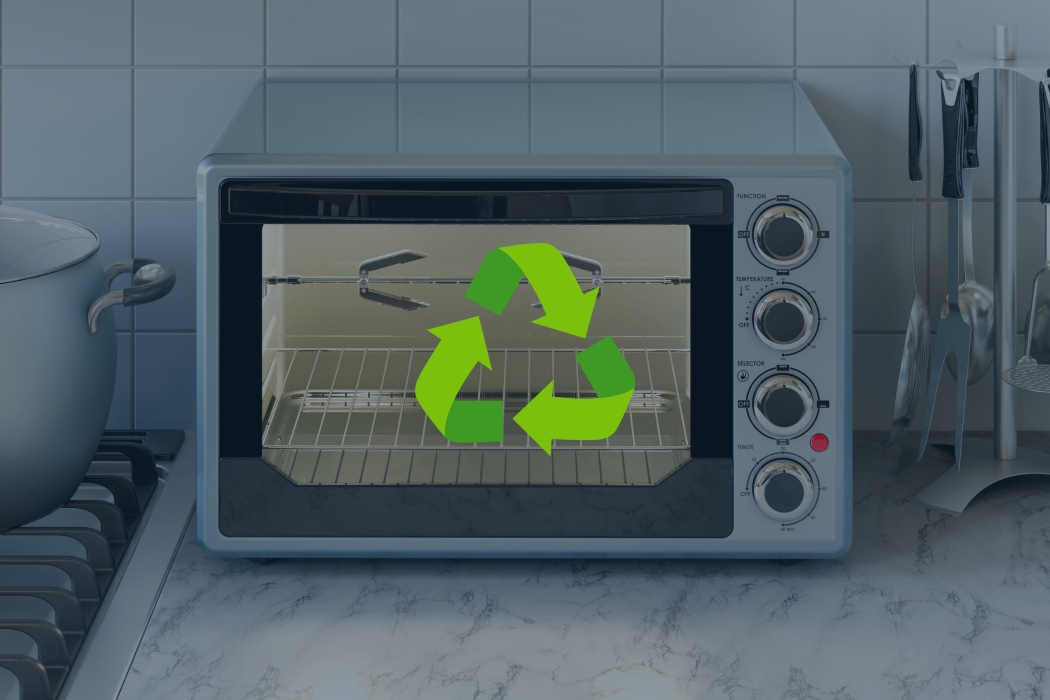
Toaster oven recycling is one of those things people don’t think about until the unit dies and it’s sitting on the counter like junk. But a toaster oven isn’t just “metal”—it’s a mix of wiring, small electronics, and sometimes glass and insulation, which means it doesn’t belong in the trash where it gets crushed and mishandled.
In this guide, you’ll learn what parts of a toaster oven are actually recyclable, how to prep it so it’s accepted, and the best ways to recycle it (drop-off vs. pickup). If you want an easy, documented option, EACR Inc. is an electronics recycling company in New Jersey—reach out for drop-off or pickup planning.
Can You Recycle a Toaster Oven?
Yes. Treat a toaster oven like a small appliance that qualifies as e-waste—it should go through an electronics/appliance recycling program, not the trash.
And while it’s tempting to think “this is mostly metal, I’ll just scrap it,” scrap yards aren’t always the right fit. Toaster ovens are mixed-material items: cords, internal wiring, small circuit boards, and sometimes glass and insulation. A proper recycling program is designed to break those materials down safely and recover what’s reusable without creating a mess (or a safety issue).
What’s Inside a Toaster Oven? (What Gets Recycled)
Toaster ovens are basically a metal shell wrapped around wiring, heating parts, and sometimes digital controls. Here’s what typically gets recovered.
Common recyclable materials
Most toaster ovens contain a lot of recyclable material once they’re processed correctly:
- Steel housing + internal brackets (the outer shell and internal frame)
- Copper wiring + power cord (copper is one of the biggest material recoveries)
- Small circuit boards (especially on units with timers, displays, or digital controls)
- Heating elements (metal components that can be recovered through the right stream)
Parts that may need special handling
A few parts can complicate recycling, but it’s manageable when you prep it right:
- Glass doors (often tempered; acceptance varies by processor)
- Insulation/liners (depends on model; may be treated differently downstream)
- Grease/food residue (contamination is the #1 reason small appliances get rejected—clean it out first)
Why You Shouldn’t Throw a Toaster Oven in the Trash
A toaster oven looks like “just a small appliance,” but trash is the worst place for it. In a landfill, you’re wasting metals and wiring that can be recovered, and when units get crushed, cords and internal components can create avoidable handling issues.
Recycling is simply safer and cleaner because the unit gets routed through an appliance/electronics process designed for mixed materials. Best case, the toaster oven (or parts of it) is still reusable. If not, the goal is material recovery—metals, wiring, and electronics separated responsibly instead of tossed.
How to Prepare a Toaster Oven for Recycling
Do these quick steps and your toaster oven is way more likely to be accepted and processed smoothly:
- Unplug it, let it cool, and empty it out. Remove crumbs and pull out the grease tray.
- Wipe out heavy residue. You don’t need it spotless—just not greasy. Food buildup can contaminate other materials.
- Remove loose accessories. Take out racks and trays and keep them with the unit.
- Bundle the cord if it detaches. If the power cord is detachable, keep it with the toaster oven (don’t separate it unless the program tells you to).
Where to Recycle a Toaster Oven in New Jersey
You’ve got a few solid options in NJ. The “best” one depends on how much you’re recycling and how often you do it.
Best option for businesses (and bulk): pickup
If you’re recycling multiple items—kitchen appliances, office electronics, or a full cleanout—pickup is the easiest route. It keeps everything consolidated and reduces the chance of someone tossing items in the wrong stream.
Best option for residents/small loads: drop-off
For one toaster oven (or a small batch), drop-off is typically the fastest. Just make sure you’re going to a program that actually accepts small appliances and e-waste.
If you’re doing ongoing cleanouts: container program
If you regularly generate electronics and small appliances (offices, property managers, schools, facilities), a container program is the most practical long-term setup. You get a consistent place to put items, and it keeps the recycling workflow organized.
Quick tip: always call ahead. What’s accepted can vary by location and program rules, especially for small appliances and anything with glass.
Appliance Recycling Services
Appliance recycling gets much easier when you bundle items together. Instead of making separate trips for a toaster oven, a microwave, and other small kitchen appliances, you can recycle them in one planned pickup or drop-off—cleaner for you, cleaner for processing.
EACR Inc. can help with guidance, sorting, safer handling, and documentation when it matters (especially for businesses and facility cleanouts). Need to recycle multiple small appliances at once? Use EACR Inc.’s appliance recycling services for straightforward pickup or drop-off planning.
Reuse vs Recycling (When Each Makes Sense)
Reuse
If the toaster oven still works safely, is clean, and has no electrical issues (sparking, burning smell, damaged cord), reuse is the best outcome. Someone else can use it, and you avoid manufacturing a replacement.
Recycle
If it’s broken, unsafe, or not worth repairing, recycle it for material recovery. The metal housing, wiring, heating components, and electronics can still be processed so those materials can be reused.
What Happens After Recycling? (Simple Process Overview)
After collection, toaster ovens are sorted with other small appliances and electronics. From there they’re disassembled and separated into material streams—metals, wires, circuit boards, and other components—so each material can be recycled through the right downstream path.
For business recycling, documentation is often part of the process. If you need proof of recycling for internal records, EACR Inc. can provide it as part of the service.
Frequently Asked Questions About Toaster Oven Recycling
Can I put a toaster oven in curbside recycling?
No. Curbside programs aren’t built for small appliances with wiring and electronics.
Is a toaster oven considered e-waste?
Yes—it’s a small appliance with electronic components and should be handled through appliance/electronics recycling.
Should I remove the cord?
Usually no. If the cord detaches easily, bundle it with the unit. Otherwise, leave it intact unless you’re instructed differently.
What if it still works?
Reuse comes first. If it’s safe and functional, donate or pass it along. If not, recycle it.
Can you recycle toaster ovens with glass doors?
Often yes, but glass handling varies by processor. Call ahead or use a program that consistently accepts small appliances.
Do toaster ovens contain batteries?
Most basic toaster ovens do not. Some higher-end units with clocks/memory may have small internal components—when in doubt, treat it as e-waste.
What about air fryers and toaster oven combos?
Same idea: mixed materials + electronics. Recycle them through a proper appliance/electronics program.
Can businesses schedule pickup for small appliances?
Yes—pickup is typically the easiest for bulk loads or facility cleanouts.
What should I do if it smells like burning or has damaged wiring?
Stop using it, unplug it, and recycle it. Don’t “test it one more time.”
Do I get documentation for business recycling?
Yes, documentation is provided for any item you recycle with EACR Inc. We provide every client of ours with certificates of recycling.
Conclusion — Easy Toaster Oven Recycling
Toaster oven recycling is simple when you treat it like what it is: a small appliance with wiring and electronics. Clean it out, keep the accessories together, and choose a recycling option that’s actually set up for small appliances—pickup for bulk loads, drop-off for one-offs, and containers for ongoing cleanouts.
If you’re ready to recycle a toaster oven (or a full batch of small appliances), EACR Inc. can help with electronics recycling in New Jersey—reach out for pickup, drop-off, or container options.