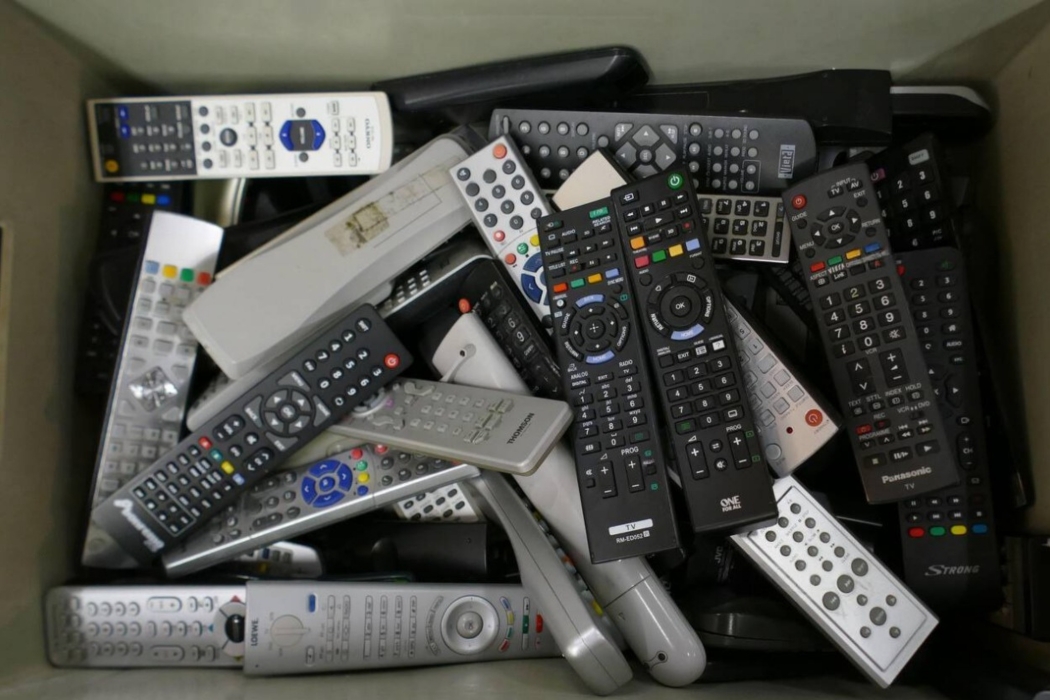
Remote control recycling matters because these small devices are common household electronics that are frequently overlooked. Most remote controls contain batteries and electronic components that qualify as e-waste, and improper disposal contributes to landfill waste, fire risk, and environmental contamination. This guide explains what remote controls are made of, why they should be recycled, and where and how to recycle them safely.
Are Remote Controls Recyclable?
Yes—remote controls are recyclable. They do not belong in household trash or curbside recycling bins because they contain batteries and electronic components. Those batteries are the key reason remotes are classified as electronic waste and require proper handling.
What Are Remote Controls Made Of?
Core Materials Inside Remote Controls
- ABS and mixed plastics
- Rubber keypads and membranes
- Circuit boards and electronic components
- Copper wiring and metal contacts
- Batteries (alkaline, lithium, or button cells)
Why These Materials Require Recycling
Batteries pose fire and leakage risks when crushed or compacted. Electronics contain reusable metals that shouldn’t be wasted. Plastics persist indefinitely in landfills if not properly recycled.
Why You Should Recycle Remote Controls
Environmental Reasons
Recycling reduces electronic waste in landfills, prevents battery leakage into soil and water, and conserves raw materials through reuse.
Resource & Sustainability Benefits
Recovered plastics and metals reduce the need for mining and manufacturing, lowering the overall environmental footprint of new electronics.
Why Remote Controls Should Never Be Thrown Away
Fire & Safety Risks
Batteries can ignite when crushed or compacted, and fires in garbage trucks are increasingly linked to small electronics like remotes.
Environmental Impact
Heavy metals and battery chemicals contaminate ecosystems, and plastic housings do not biodegrade.
Compliance Considerations
Many municipalities restrict disposal of battery-containing devices, and businesses may carry liability for improper disposal.
How to Prepare Remote Controls for Recycling
- Keep devices dry and intact
- Do not dismantle or crush units
How Remote Control Recycling Works
Step 1: Collection
Remote controls are collected through individual drop-off options or bulk collection for offices and facilities. EACR Inc offers electronics recycling containers for businesses, municipalities and more which make bulk recycling easy.
Step 2: Battery Handling
Batteries are isolated and routed to proper recycling streams with fire-risk controls in place.
Step 3: Disassembly & Material Separation
Plastics, metals, rubber, and electronics are separated, and circuit boards are processed through licensed recyclers.
Step 4: Responsible Material Recovery
Metals are recovered for reuse, plastics are processed where viable, and a zero-landfill approach is followed whenever possible. Remote control recycling is straightforward once you know where to take these small but regulated electronic devices and how they should be handled.
Where Can Remote Controls Be Recycled?
Electronics Recycling Facilities
This is the best option for full material recovery. Licensed electronics recyclers are equipped to handle batteries and electronic components safely and ensure materials are processed properly instead of landfilled.
Municipal Recycling Programs
Acceptance varies by location. Some municipalities accept small electronics, while others restrict battery-containing devices entirely. Always check local rules before dropping remotes in any municipal program.
Retail Take-Back Programs
Some electronics retailers accept small devices like remote controls. Policies vary by brand and location, and not all programs accept items with batteries or damage.
Donation (If Working)
Fully functional remote controls can be donated to community centers, nonprofits, or thrift stores. Donation is only appropriate if the unit works properly and is safe to reuse.
Remote Control Recycling for Businesses
Businesses often accumulate remotes during office cleanouts, equipment upgrades, or facility moves. Licensed recyclers support bulk accessory recycling and can provide documentation for compliance and internal reporting.
Why Work With a Licensed Electronics Recycler
Licensed electronics recyclers ensure proper battery and electronics handling, reduce fire risk during transport and processing, protect the environment, and provide clear accountability—significantly reducing liability for individuals and organizations.
FAQs About Remote Control Recycling
Can remote controls go in the trash?
No. Remote controls contain batteries and electronics that create fire and environmental risks when disposed of in regular trash.
Do I need to remove the batteries first?
If the batteries are easily removable, yes. If not, leave the device intact and let the recycler handle it safely.
Are universal remotes recyclable?
Yes. Universal remotes are recycled the same way as brand-specific remotes.
Can broken or cracked remotes still be recycled?
Yes. Condition does not matter. Broken or damaged remotes still qualify as electronic waste.
Are remote controls accepted with other small electronics?
In most cases, yes. Licensed recyclers typically process remotes alongside other small electronic devices.
Conclusion: Recycle Remote Controls the Right Way
Remote controls may be small, but they are regulated electronic waste. Improper disposal creates real safety and environmental risks. Responsible remote control recycling keeps batteries and electronics out of landfills and out of waste-system fires. Contact EACR Inc, a licensed electronics recycler to recycle remote controls safely and responsibly.