Power cord recycling matters because cords pile up fast and add to the e-waste problem most homes, schools, and offices create. This guide explains how, where, and why to recycle power cords properly so you can keep them out of landfills and put their materials back to use.
Why Power Cord Recycling Is Important
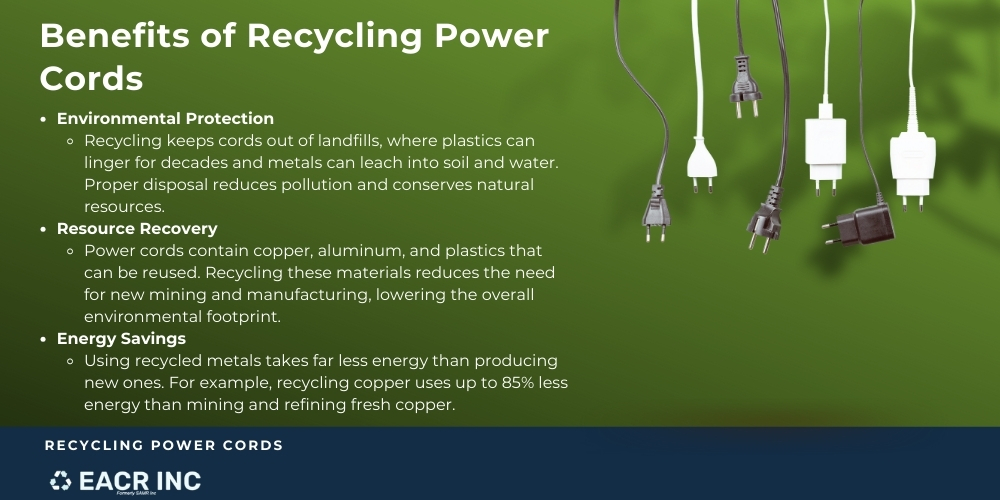
- Trash creates problems: Tossed cords end up in landfills, where plastics persist and metal resources are lost.
- Cords contain materials such as copper, aluminum, and plastics: These can be recovered and reused in manufacturing instead of mining new resources.
- Recycling conserves resources: Processing recovered metals and plastics reduces energy use, lowers emissions, and supports a more circular economy.
What Power Cords Are Made Of
Copper and Aluminum Wires
Conductive strands are typically copper (sometimes aluminum). Recyclers separate and refine these metals so they can be reintroduced into new products.
Plastic and Rubber Insulation
The outer jackets protect the wires. Facilities shred and sort this material; compatible plastics can be processed for secondary uses.
Connectors and Metal Ends
Plugs, prongs, and ferrules contain small amounts of metals. During disassembly, these are separated and sent to downstream processors for metal recovery.
How Power Cord Recycling Works
Collection and Sorting
Cords are gathered from homes, businesses, schools, and municipal drop-offs. They’re then sorted by type and condition to make the recycling process smoother.
Safe Stripping and Shredding
Specialized equipment breaks cords into smaller pieces and exposes the inner materials. This helps recyclers access the metals inside while keeping the process safe and controlled.
Material Recovery
After processing, the different components are separated:
- Copper and aluminum wires can be recycled into new electrical products.
- Plastic or rubber insulation may be processed for secondary uses.
- Connectors and metal ends are collected for metal recycling.
Final Processing and Reuse
These recovered materials are then prepared for reuse. Metals are sent back into manufacturing, while plastics and other parts are processed for recycling programs. This keeps old cords out of landfills and puts their materials back into circulation.
Where to Recycle Power Cords
Licensed Electronics Recycling Facilities
The most reliable option is a licensed electronics recycler. These facilities have the equipment to safely recycle power cords by stripping cords, recovering metals, and processing plastics. They make sure materials are handled responsibly and don’t end up in landfills.
Municipal E-Waste Programs
Many towns and cities run municipal e-waste programs where residents can drop off old electronics, including power cords. Check with your local public works or sanitation department for details on scheduled collection days.
Drop-Off Events and Collection Containers
Community collection events are another easy way to recycle cords. Some schools, nonprofits, or businesses host e-waste drives. Electronics recyclers like EACR Inc. also provide containers and pickup services to make recycling simple.
Retail Take-Back Programs (where available)
A few big-box retailers and office supply chains accept cords and cables for recycling. Availability varies, so it’s always best to call ahead before bringing your items.
Power Cord Recycling for Businesses
For offices, schools, and data centers, cords add up fast. When IT equipment is decommissioned, dozens or even hundreds of cords come out of service at once. Handling that volume is a challenge. Partnering with a licensed recycler ensures those cords are collected, processed, and recycled properly. Businesses that work with providers like EACR Inc. not only clear out clutter but also stay compliant with all applicable regulations.
Common Questions About Power Cord Recycling
Yes. Nearly all cords—whether for computers, appliances, or electronics—contain copper, aluminum, and plastics that can be recovered.
It’s best to leave processing to professionals. Cutting cords may expose wires and cause safety hazards. Recycling facilities use specialized equipment to strip and separate materials.
While cords don’t usually contain toxins like lead or mercury, improper disposal can still harm the environment. Recycling ensures plastics and metals are managed safely.
Absolutely. Extension cords, phone chargers, and device cables are all recyclable and go through the same process as standard power cords.
Final Thoughts on Power Cord Recycling
Recycling power cords is one of those simple actions that makes a big impact. Instead of letting cords sit around or sending them to landfills, recycling keeps materials in circulation and out of the waste stream.
The benefits reach every level: environmentally, it reduces pollution and resource use; economically, it supports industries that reuse metals and plastics; and for communities, it means less clutter and cleaner recycling programs. When it’s time to get rid of cords, don’t just toss them—recycle them the right way. For safe, responsible recycling, reach out to a licensed electronics recycling provider like EACR Inc. to handle your power cords and other electronics properly.