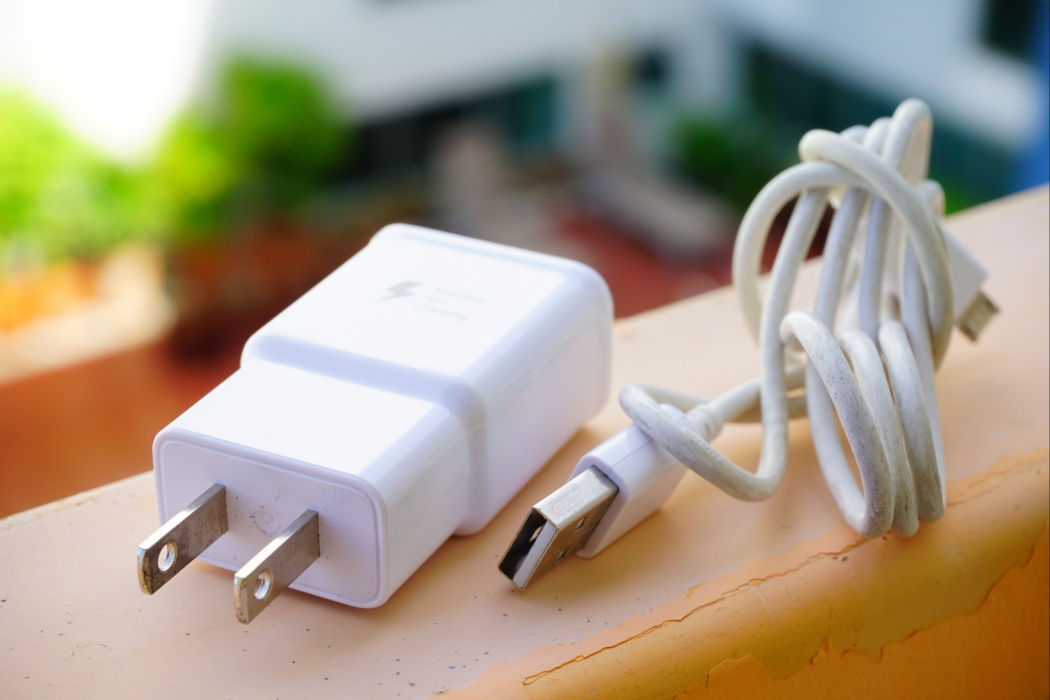
Phone charger recycling is something most people don’t think about until they open a drawer and see a tangled mess of old cords and adapters. These chargers pile up in homes, offices, and junk drawers everywhere — and while they might look harmless, they contain plastics, copper wiring, and sometimes hazardous materials that don’t belong in the trash.
The good news? Recycling chargers isn’t complicated. This guide explains why it matters, what’s actually inside a charger, how to recycle them responsibly, and where to take them — with EACR Inc. as your trusted recycling partner.
Why Phone Charger Recycling Matters
Every year, billions of new chargers are manufactured worldwide. With constant upgrades to phones and devices, old chargers quickly become outdated, leaving households and businesses with piles of unused cords.
Throwing these items in the trash isn’t just wasteful — it’s harmful. Plastics and metals can linger in landfills for decades, while circuit boards and coatings can release toxins into soil and water. By recycling, materials like copper, aluminum, and steel can be recovered and reused, reducing the need for new resource extraction and cutting down on e-waste pollution.
In short, phone charger recycling is one small step with big environmental benefits.
What’s Inside a Phone Charger?
At first glance, a charger seems simple. But inside, it’s made up of several different parts and materials — many of which can be recycled or reused.
Plastics
Durable shells and casings protect the internal components. These plastics often include flame retardants and must be handled properly to prevent environmental harm.
Copper Wiring
The copper wiring inside cords is highly recyclable and one of the most sought-after materials in e-waste recovery.
Circuit Boards & Chips
Chargers aren’t just wires — most include small circuit boards that regulate power flow. These contain trace metals like copper, silver, or even gold.
Plugs & Connectors
The ends of chargers are made from aluminum, steel, and sometimes gold plating to improve conductivity.
Adapters / Power Bricks
Bulkier charging blocks combine plastics, wiring, and circuit boards. Because they mix different materials, they require specialized recycling methods.
The Environmental Risks of Improper Disposal
Phone charger recycling is important because tossing chargers in the trash creates more problems than most people realize. These small items add up quickly and cause a surprisingly large impact when handled the wrong way.
Landfill Impact
The plastic casings on chargers don’t break down, and the copper inside wires can leach into soil and water. Over time, these materials pollute the environment and contribute to long-term waste problems.
Hazardous Materials
Chargers contain small circuit boards, coatings, and flame-retardant casings. When dumped in landfills, these materials can release chemicals that contaminate soil and groundwater.
Tangled Waste
When chargers end up in regular recycling bins, the cords tangle in sorting machinery. This causes costly breakdowns and slows down proper recycling of other materials.
Scale of the Problem
Chargers are one of the most commonly stockpiled types of e-waste. Millions of people have drawers full of old cords and adapters, and when those eventually get trashed, they create a massive wave of preventable waste.
How to Recycle Phone Chargers Responsibly
Recycling chargers the right way makes a real difference. Here are the safest and most effective options.
Use Licensed E-Waste Recyclers
The most reliable option is working with a licensed electronics recycler. They have the equipment and expertise to recover metals and plastics while keeping toxins out of the environment. This is the best choice for both small households and businesses with bulk loads.
Retail Drop-Off Programs
Major retailers like Best Buy and Staples often accept small electronics, including chargers. These programs are convenient, but they sometimes charge fees and aren’t always practical for larger volumes of e-waste.
Community E-Waste Events
Many towns and counties host seasonal or municipal e-waste collection events. These events are designed for residents to safely dispose of small electronics and are ideal for people with just a handful of chargers to recycle.
Mail-In Recycling Options
Some recyclers provide prepaid mail-in boxes that let you ship old chargers directly for processing. This option works well if you’ve been saving cords and adapters at home and want a simple way to recycle them without leaving the house.
Creative Ways to Reuse or Repurpose Old Chargers
Phone charger recycling isn’t always the first step — sometimes chargers can be reused if they’re still safe and intact. Here are a few smart ways to give them a second life before sending them to a recycler.
Donation
Schools, STEM programs, and nonprofits often accept old electronics, including chargers. These groups may use them for projects, experiments, or as backups for older devices still in circulation.
Backups
Keep extra chargers in your car, office, or emergency kit. If they still work, having spares on hand can save you in a pinch.
Why Proper Phone Charger Recycling Protects Resources
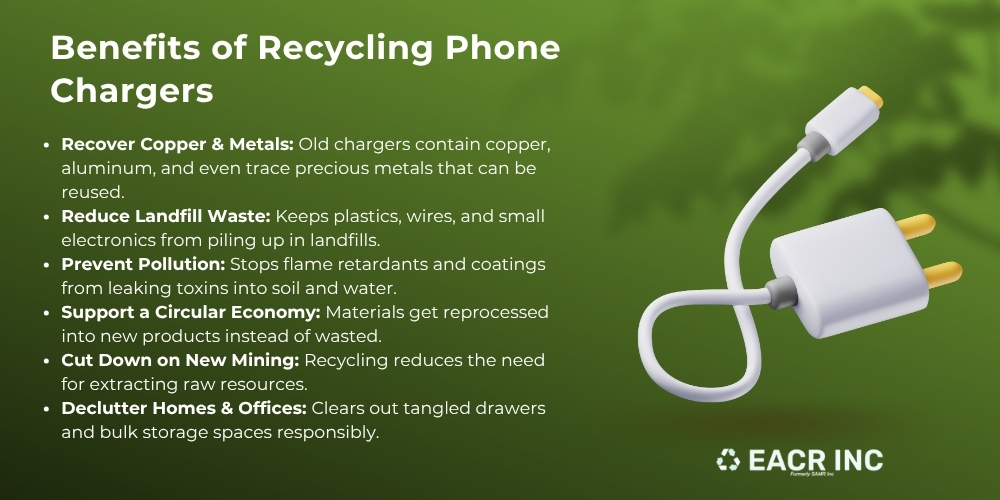
Recycling chargers isn’t just about keeping clutter out of your drawers — it’s about protecting the planet.
- Recovering Copper: Recycling recaptures copper from wiring, reducing the need for new mining.
- Recycled Plastics: Charger casings can be reprocessed into new products instead of ending up in landfills.
- Preventing Toxins: Proper processing keeps flame retardants, coatings, and chemicals from polluting soil and water.
- Supporting a Circular Economy: Recycling keeps materials in use instead of wasting them, lowering the demand for raw resources and supporting a circular economy.
EACR Inc. and Phone Charger Recycling
At EACR Inc., we make phone charger recycling easy and responsible. Whether you’re a household with a handful of old cords or a business managing bulk e-waste, we provide drop-off, pickup, and container services. Our licensed facility ensures copper, plastics, and metals are recovered while hazardous components are handled safely — all with a zero-landfill commitment.
Step-by-Step Guide: How to Recycle Your Old Phone Chargers
- Gather Old Chargers
Collect cords, adapters, and any related items like power banks. - Check for Batteries
Some charging docks or power banks contain rechargeable batteries that need special handling. - Separate Reusable Items
Set aside any chargers that still work. These can be donated, reused, or kept as spares. - Choose Your Recycling Option
Decide between retailer drop-off programs, community e-waste events, or a licensed electronics recycler like EACR Inc. - Get Proof of Recycling
For businesses, request a Certificate of Recycling to keep proof of recycling on file.
Frequently Asked Questions
No. They tangle machinery and aren’t processed correctly in curbside recycling.
Yes. They’re classified as small electronic waste and require specialized recycling.
Nearly all charging cables have copper wiring inside, making them recoverable for reuse.
Yes. They contain circuit boards, plastics, and wiring that should be processed by an e-waste recycler.
Absolutely. We offer bulk pickups and recycling container programs for businesses and organizations.
Final Thoughts on Phone Charger Recycling
Chargers may be small, but they add up fast — and they’re one of the most common types of e-waste piling up in homes and offices. Phone charger recycling protects the environment, recovers reusable materials, and reduces the strain on landfills.
Ready to clear out those old cords? Contact EACR Inc. today for safe, licensed, and reliable cell phone recycling as well as phone charger recycling solutions.