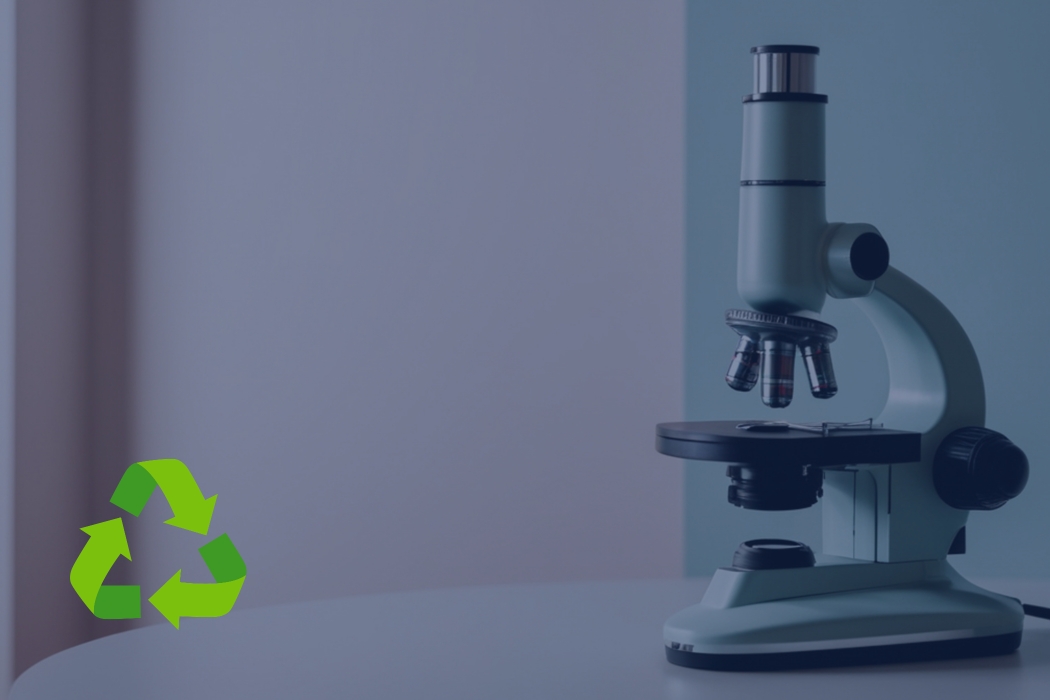
Microscopes are precision optical instruments — not standard office equipment. They contain metals, glass optics, electronic components, and sometimes digital imaging systems that require structured handling at end of life.
Improper disposal creates environmental and compliance risk. Schools, labs, hospitals, and biotech facilities upgrade equipment regularly, which means older microscopes must be retired responsibly.
EACR Inc. provides electronics recycling and lab equipment disposal services. This guide explains what’s inside microscopes, how to retire them properly, recycling options, bulk pickup services, and frequently asked questions.
What is a Microscope?
A microscope is a scientific instrument designed to magnify objects too small to see with the naked eye. While they may look simple, many modern units combine precision optics with electrical and digital systems.
Standard Optical Microscopes
These are common in classrooms and labs:
- Compound microscopes
- Stereo microscopes
- Educational lab microscopes
Even basic models often include lighting systems and internal wiring.
Digital Microscopes
More advanced systems include:
- Integrated camera systems (EACR Inc. provides complete camera recycling)
- USB microscopes
- Imaging software-connected systems
These models qualify as electronic devices and must be handled as regulated equipment.
Industrial & Research Microscopes
Used in specialized environments such as:
- Metallurgical inspection
- Advanced research laboratories
- Fluorescence imaging
Electron microscopes require specialized handling and removal due to their size and complexity.
Modern microscopes are often hybrid optical-electronic devices, which means structured recycling is necessary.
What’s Inside a Microscope?
Microscopes are built from multiple material categories, many of which are recoverable.
Structural Components
- Aluminum or steel frames
- Mechanical focus assemblies
- Stage platforms
These provide stability and precision alignment.
Optical Components
- Glass lenses
- Prism systems
- Condensers
These components are delicate and must be removed carefully during dismantling.
Electrical Components
- Power supplies
- LED or halogen lighting systems
- Internal wiring
Even non-digital microscopes rely on electrical systems.
Electronic & Digital Systems
- Circuit boards
- Digital camera modules
- USB or HDMI outputs
- Imaging processors
Digital microscopes contain regulated electronic waste components.
Accessories
- Microscope slides
- Glass cover slips
- Immersion oil bottles
- External camera attachments
Accessories may require separate routing depending on contamination status.
Even non-digital microscopes contain regulated electrical components and should not be discarded casually.
Why You Should Recycle Microscopes
Environmental Impact
Recycling allows recovery of:
- Aluminum and steel
- Copper wiring
- Glass optics
- Circuit boards in digital units
Material recovery reduces landfill waste and supports responsible reuse.
Data & Imaging Concerns
Some digital microscopes store images internally or through connected systems.
Secure data removal may be necessary before recycling, especially in medical or research environments.
Types of Microscopes That Can Be Recycled
Most microscopes qualify for structured recycling, whether they are basic classroom units or advanced research systems.
Common recyclable types include:
- Educational classroom microscopes
- Laboratory compound microscopes
- Stereo dissecting microscopes
- Digital imaging microscopes
- Microscope camera attachments
- Industrial inspection microscopes
- Retired hospital lab microscopes
If it plugs in, contains lighting, or includes digital components, it should not go in the trash.
Microscope Slides & Lab Accessories
Slides and accessories require special attention because contamination status changes everything.
Glass Slides
Clean, uncontaminated glass slides may be recyclable depending on facility policy.
They must follow proper lab waste separation protocols and should never be mixed with general trash if they’ve been used for testing.
Contaminated Slides
Slides exposed to biological material or chemicals require biohazard disposal procedures.
They cannot enter standard recycling streams and must follow regulated lab waste handling rules.
Plastic Slide Boxes & Storage Units
Recyclability depends on material type and cleanliness.
If clean and made of recyclable plastic, they may qualify for plastics recycling.
Contamination status determines the disposal route. Always separate clean materials from regulated waste.
Microscope Recycling Options
Choosing the right recycling pathway protects your organization.
1. Licensed Electronics Recycling Facility
An electronics recycling company will provide:
- Proper dismantling
- Optical and metal separation
- Regulated electronic routing
- Certificates of recycling
This ensures compliance and proper material recovery.
2. Bulk Pickup for Institutions
Ideal for:
- Schools
- Universities
- Research labs
- Hospitals
- Biotech companies
Benefits include:
- Scheduled pickup
- Documentation for audits
This is especially useful during lab upgrades or equipment standardization projects.
3. E-Waste Container Programs
These e-waste container programs provide:
- On-site collection
- Controlled retirement planning
- Centralized disposal for campuses or lab networks
They simplify ongoing compliance.
4. Refurbishment & Donation Pathways
Working microscopes may qualify for:
- Professional evaluation
- Controlled resale or donation
- Responsible asset reassignment
Licensed electronics recycling offers stronger compliance control than informal resale or scrap disposal.
How Microscope Recycling Works
Recycling is structured and documented.
Step 1: Intake & Asset Logging
The process begins with:
- Serial number logging
- Identification of digital vs non-digital units
- Confirmation of contamination status
This creates accountability from the start.
Step 2: Disassembly
Units are carefully separated into components:
- Frame separation
- Optical removal
- Electronic extraction
This protects delicate materials and ensures proper routing.
Step 3: Material Recovery
Recovered materials typically include:
- Aluminum and steel
- Copper wiring
- Circuit boards
- Glass components
Each material stream is routed appropriately.
Step 4: Documentation
For institutions and businesses:
- Pickup records
- Asset removal logs
- Certificates of recycling
Documentation protects against compliance risk.
Special Considerations for Schools & Labs
Bulk Retirement During Upgrades
Many institutions retire microscopes during:
- Grant-funded replacement programs
- Lab modernization projects
Structured pickup helps manage volume efficiently.
Biohazard & Chemical Exposure Risk
Before recycling:
- Ensure slides are properly separated
- Confirm no residual contamination
Clean equipment should never be mixed with regulated waste streams.
Audit & Grant Reporting
Maintain:
- Retirement records
- Equipment tracking logs
- Certificates of recycling
Proper documentation supports inspection readiness.
Frequently Asked Questions About Microscope Recycling
Can microscopes be recycled?
Yes. Most microscopes can be dismantled and routed through proper metal and electronics recycling channels.
Are digital microscopes considered e-waste?
Yes. Digital models contain circuit boards and imaging systems that qualify as electronic waste.
Can microscope slides be recycled?
Only if they are clean and uncontaminated. Used or biohazard slides require regulated disposal.
Do microscope cameras need special handling?
Yes. Camera modules and imaging devices contain electronic components that must be processed properly.
Is bulk pickup available for schools?
Yes. Bulk pickup services are available for institutions retiring multiple units.
Does EACR Inc. provide documentation?
Yes. Certificates of recycling and asset tracking documentation are provided for compliant disposal.
Conclusion
Microscopes are precision instruments made of metals, optics, and electronics. Proper recycling ensures material recovery, protects compliance, and prevents unsafe disposal.
Contact EACR Inc. for licensed microscope recycling and laboratory equipment disposal services.