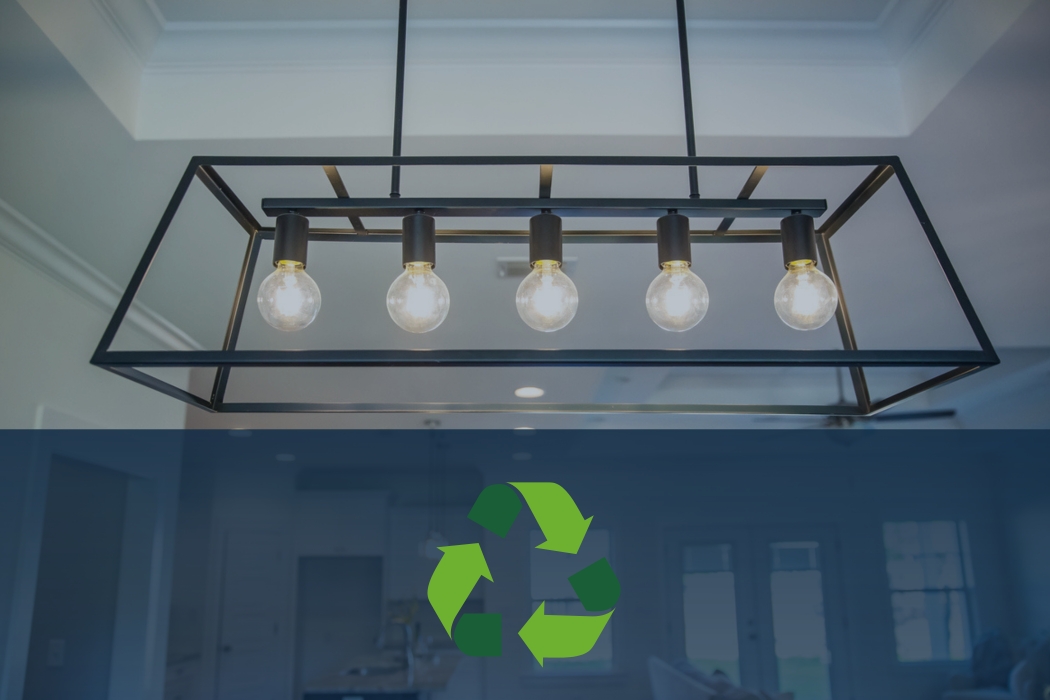
Light fixture recycling is important because light fixtures are common household and commercial electronics that are frequently replaced during renovations and upgrades. Despite their size and appearance, fixtures contain metals, wiring, electronics, and sometimes regulated components that should never be tossed in the trash. Improper disposal creates environmental risk, safety hazards, and potential compliance issues. This guide explains what light fixtures are made of, when they should be recycled, and how to dispose of them responsibly.
Are Light Fixtures Recyclable?
Yes—most light fixtures are recyclable when handled correctly. Fixtures that contain wiring, sockets, or electronic components qualify as regulated electronic waste and require proper processing. That’s why light fixtures don’t belong in household trash or curbside recycling bins. Using a licensed electronics recycler ensures metals, wiring, and electronics are handled safely instead of ending up in landfills or scrap streams that don’t manage these materials properly.
What Are Light Fixtures Made Of?
Common Materials Inside Light Fixtures
- Steel, aluminum, brass, and other metals used for frames and structural components
- Copper wiring and internal conductors that carry electricity
- Plastic housings, sockets, and insulation around wiring and bulbs
- Glass components such as shades, covers, and lenses
- Ballasts and electronic drivers found in fluorescent and LED fixtures
Why These Materials Require Proper Recycling
Metals are reusable when separated correctly, but wiring and electronics require controlled processing. Glass and plastics vary in recyclability and often need to be sorted separately. Some internal components—especially ballasts and electronic drivers—are regulated and cannot be landfilled, making licensed recycling essential.
Types of Light Fixtures That Can Be Recycled
Ceiling-Mounted Light Fixtures
Flush mounts, semi-flush fixtures, and decorative ceiling lights are commonly recycled during remodels and upgrades. These fixtures usually contain metal housings and internal wiring that qualify as e-waste.
Wall Sconces and Vanity Lights
Wall-mounted fixtures and bathroom vanity lights contain wiring, sockets, and metal frames, placing them squarely in the electronic waste category.
Outdoor and Landscape Lighting
Outdoor fixtures often include weather-resistant metals, sealed wiring, and sometimes electronics. These materials should be recycled to prevent environmental exposure.
Commercial Light Fixtures
Troffers, high-bay lights, LED panels, and suspended fixtures used in offices and warehouses are designed for large spaces and typically include electronic drivers that require licensed handling.
Fluorescent and LED Fixtures
Many fluorescent and LED fixtures contain ballasts or drivers that must be managed carefully. These components are regulated and should always be recycled through a licensed facility.
What About Light Bulbs Inside Fixtures?
Light bulbs should always be removed before recycling fixtures. Fluorescent bulbs and tubes must be recycled separately due to their internal contents. LED bulbs and incandescent bulbs follow different disposal rules depending on local programs. Fixtures and bulbs should not be recycled together.
Why Light Fixtures Should Never Be Thrown Away
Light fixture recycling matters because fixtures contain far more than metal shells—they include wiring, electronics, and regulated components that don’t belong in the trash.
Environmental Risks
Metals and plastics inside fixtures do not biodegrade. When landfilled, electronics can contaminate soil and groundwater over time. Ballasts and electronic drivers may also contain regulated materials that require controlled handling to avoid environmental harm.
Fire & Safety Hazards
Wiring and electronic components can spark or short when crushed in garbage trucks or waste facilities. Improper handling increases fire risk during collection, transport, and processing.
Compliance & Liability Concerns
Many states restrict disposal of electronics and components containing wiring or ballasts. For businesses, improper disposal doesn’t make the liability disappear—the generator remains responsible.
Light Fixture Recycling vs. Scrap Yards
Why Scrap Yards Aren’t Enough
Scrap yards focus almost entirely on metal recovery. Wiring, electronics, and ballasts are often mishandled or ignored. There’s no compliance documentation, and liability stays with the generator if something goes wrong.
How Licensed Recycling Is Different
Licensed recyclers process the entire fixture—not just the metal. Wiring and electronics are recycled correctly, reusable materials are recovered, and a zero-landfill approach is used whenever possible. Documentation is available for records and audits, which matters for both businesses and contractors.
How Light Fixture Recycling Works
Step 1: Collection
Individuals can use drop-off options, while renovations and commercial projects typically use bulk pickup services.
Step 2: Disassembly
Fixtures are dismantled to remove wiring, sockets, ballasts, and electronic drivers. Materials are separated into metals, electronics, glass, plastics, and non-recyclables.
Step 3: Material Processing
Metals are routed for reuse. Electronics are processed through licensed channels. Glass and plastics are sorted where viable based on material type and condition.
Step 4: Responsible Material Recovery
Reusable materials are returned to manufacturing streams, with zero-landfill handling whenever possible.
Light Fixture Recycling for Businesses & Contractors
Who Commonly Recycles Light Fixtures
- Electrical contractors
- Property managers
- Commercial building owners
- Facilities teams
- Municipal and government operations
Business Recycling Benefits
Bulk fixture replacement support simplifies large projects. E-waste container programs help keep renovations organized. Scheduled pickups reduce downtime, and clear compliance documentation supports internal records and reporting.
Common Mistakes to Avoid When Recycling Light Fixtures
Throwing fixtures in the trash after removing bulbs is a common mistake. Mixing fixtures with general construction debris causes contamination. Using unlicensed scrap haulers creates compliance risk. Leaving wiring or ballasts unhandled can lead to improper disposal. Assuming curbside pickup accepts fixtures often leads to illegal disposal.
How to Prepare Light Fixtures for Recycling
Turn off power and disconnect fixtures safely. Remove all bulbs before recycling. Leave wiring intact—don’t cut or strip it. Never dismantle ballasts or electronic drivers. Store fixtures dry and intact until they’re recycled.
Frequently Asked Questions About Recycling Light Fixtures
Can light fixtures be recycled?
Yes. Most light fixtures are recyclable and should be processed through a licensed electronics recycler.
Do light fixtures count as electronic waste?
If they contain wiring, sockets, ballasts, or drivers, they qualify as electronic waste.
Should I remove bulbs before recycling fixtures?
Yes. Bulbs should always be removed and recycled separately.
Are fluorescent fixtures handled differently?
Yes. Fluorescent fixtures often contain ballasts that require licensed handling.
Can businesses recycle large volumes of fixtures?
Yes. Bulk programs are available for renovations, upgrades, and facility-wide replacements.
Will I receive documentation for recycling?
EACR Inc. provides certificates of recycling for records and compliance needs.
Conclusion: Recycle Light Fixtures the Right Way
Light fixtures contain reusable metals and regulated electronics that shouldn’t be discarded. Improper disposal creates real environmental and safety risks. Responsible light fixture recycling keeps materials in circulation, reduces liability, and ensures compliance from start to finish. Contact a licensed electronics recycler like EACR Inc to recycle light fixtures safely and responsibly.