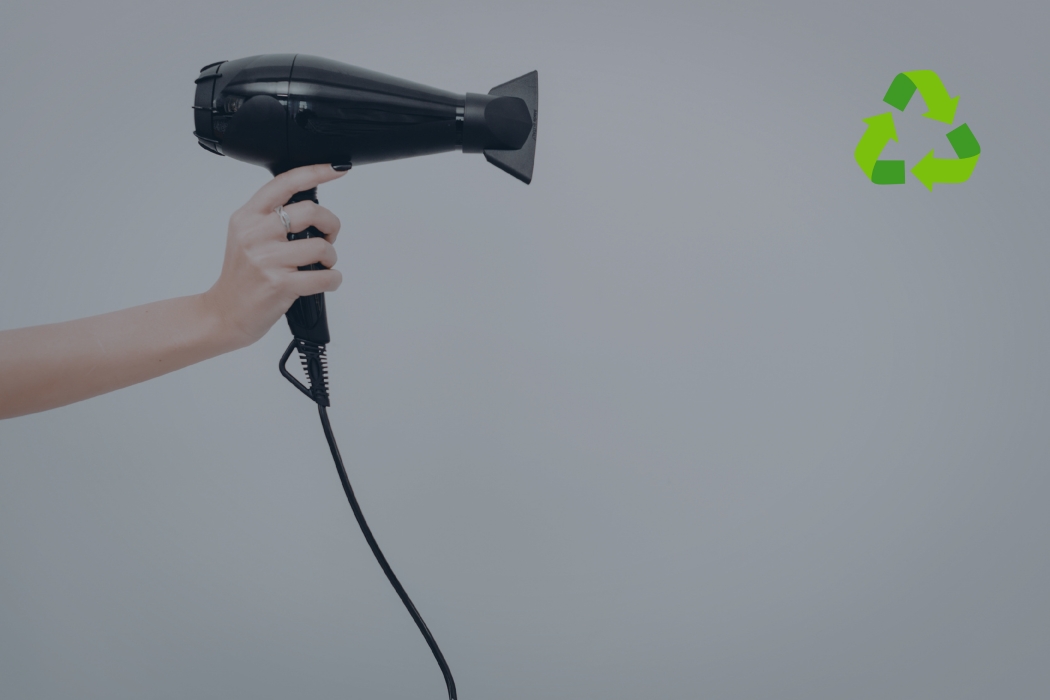
Hair dryer recycling matters because a hair dryer isn’t “just plastic.” It’s wiring, a motor, a heating element, and (in many models) electronics that don’t belong in curbside bins.
Here’s what you’ll get from this guide: what’s inside a typical dryer, why curbside recycling doesn’t take them, and the best route for one unit vs salon bulk.
This is for homeowners, renters, salons, barbershops, property managers, schools, and facilities that want a simple, correct way to get these out of the waste stream.
What Counts as a Hair Dryer (and what’s usually inside)
Hair dryer basics in plain English
A hair dryer is a handheld appliance that converts electricity into heat + airflow to dry hair.
Most dryers are basically a motor-driven fan pushing air across a heating coil—plus controls and safety components.
What’s inside a typical hair dryer
Inside most hair dryers you’ll find:
- Copper wiring + power cord
- Electric motor (often with brushes)
- Heating element (coil/resistance wire; sometimes ceramic components)
- Switches/control board (especially ionic/digital models)
- Plastics (housing) + small metal parts/screws
Why “ionic” and “smart” dryers change the recycling story
“Ionic,” “digital,” and “smart” dryers usually have more electronics inside, which is exactly why they should be routed as electronics recycling.
More electronics also means a higher chance of internal boards/sensors that need controlled downstream handling—not random bins and wishful thinking.
Why You Shouldn’t Throw a Hair Dryer in the Trash
It’s not curbside recyclable (and here’s why)
Hair dryers are mixed-material items—plastic + metal + wiring + components—and that mix doesn’t belong in single-stream curbside recycling.
In trash or dumpsters, these units get crushed, cords snag, and parts break, which just turns it into a messy waste problem instead of a recyclable one.
Safety + compliance risk
Damaged cords, cracked housings, and exposed wiring create real handling hazards—especially when units are tossed into a pile with other equipment.
For businesses, there’s also the documentation reality: clean vendor records matter for audits, vendor oversight, and sustainability reporting.
Hair Dryer Recycling Options
Option 1: Drop-off at an electronics recycler
Best for: 1–3 units, small household batches. Before you go, confirm acceptance rules—some sites only accept complete devices, not a box of loose parts. Also ask if cords should stay attached (most programs accept them attached, and it’s usually safer that way).
Option 2: Retail take-back (case-dependent)
Best for: when a retailer program clearly accepts small appliances. These programs vary a lot by location and current policy, so don’t assume—confirm first. If you can’t verify acceptance, skip the wasted trip and use a recycler route instead.
Option 3: E-waste containers + scheduled service (best for businesses)
Best for: salons, barbershops, hotels, gyms, schools, facilities. E-waste containers make it simple to route hair dryers, cords, and small electronics consistently—no “we’ll deal with it later” pile building up in a back room.
EACR Inc. is an electronics recycling company in New Jersey that can place e-waste containers at businesses, schools, and municipalities and coordinate service based on your volume. They also run electronics recycling events, which can be a clean option for communities and organizations.
How to Prepare a Hair Dryer for Recycling
Step 1: Unplug + let it cool
Hair dryer recycling starts with the basics: unplug it and let it fully cool down. Sounds obvious, but it prevents “hot element” handling issues.
If a unit is actively warm, recently overheated, or smells like it just cooked itself, don’t toss it straight into a bin—let it cool and treat it as higher-risk.
Step 2: Quick condition check (intact vs damaged)
Do a 10-second check so you route it safely.
- Intact: normal wear, cord insulation looks solid, no exposed wires.
- Damaged: frayed cord, cracked housing, burned smell, scorch marks, melting, exposed wiring → handle separately and flag it.
Step 3: Keep it intact (don’t disassemble)
Don’t take hair dryers apart. Disassembly creates loose sharp parts, mixed materials, and extra handling risk.
Leave the cord attached unless your recycler specifically asks you to remove it (most programs accept it attached).
Step 4: Simple packaging
Keep it from bouncing around and cracking.
- Single unit: put it in a box or sturdy tote.
- Bulk: stage in lidded bins or totes, and don’t overpack—crushed housings and kinked cords create avoidable problems.
Bulk Hair Dryer Recycling for Salons and Multi-Site Businesses
The three scenarios that cause most salon e-waste headaches
These are the patterns that turn “a few old tools” into a mess:
- “We replaced all dryers at once.”
- Back-room storage quietly grows into a surprise pile.
- Multiple locations swap equipment on different timelines, so nothing gets handled consistently.
A clean bulk procedure
This keeps it simple, safe, and repeatable:
- Count units (by location if you’re multi-site).
- Stage indoors, dry, in containers/totes.
- Separate intact vs damaged (frayed cords/burned units get their own bin).
- Schedule pickup or container service before staging becomes a safety issue.
- Request documentation for vendor management and recordkeeping.
What else salons usually bundle with hair dryers
Most salons do better when they build one consistent “small appliances + electronics” stream. Common add-ons:
- Flat irons, curling irons
- Clippers/trimmers
- Small chargers and cords
- LED mirrors/fixtures (case-dependent—confirm acceptance)
Bundling like-with-like reduces random bins and makes pickups cleaner.
What Happens After Collection (high-level, no hand-waving)
Intake + sorting
Hair dryers are routed as small appliances/electronics, not curbside recycling. They’re kept separate from batteries and other incompatible items.
Condition matters: intact units and damaged/burned units may be handled differently based on safety and processing requirements.
Disassembly + material routing
Processors separate and recover what they can:
- Metals recovered (including copper wiring)
- Components separated and routed to appropriate downstream processors
- Plastics and mixed fractions managed through the right channels (not “mystery disposal”)
Common Mistakes
- Tossing hair dryers into curbside recycling
- Mixing small appliances with loose batteries (big incident risk)
- Stockpiling broken units with exposed wiring
Frequently Asked Questions about Hair Dryer Recycling
Can I put a hair dryer in curbside recycling?
No. Curbside programs aren’t designed for small appliances with wiring, motors, and mixed materials.
Is a hair dryer considered e-waste?
Yes. It’s a small appliance with electronic components and should be routed through electronics recycling.
Should I remove the cord before recycling?
Usually no. Keep it intact unless your recycler specifically requests cord removal.
Can I recycle a hair dryer that smells burned or is damaged?
Often yes—but treat it as higher-risk. Keep it separate, don’t crush it into a bin, and flag it for controlled handling.
Do salons need bulk electronics recycling for old tools and devices?
If you’re replacing tools in batches or across multiple locations, bulk service is usually the cleanest option. It prevents stockpiles and keeps routing consistent.
Can businesses get documentation for recycling?
Yes. Businesses should keep service records and recycling documentation for vendor oversight, audits, and sustainability reporting.
Conclusion: Make hair dryer recycling boring and consistent
Route hair dryers as electronics, keep units intact, separate damaged items, and use a repeatable program for bulk. That’s what keeps this safe, clean, and easy to manage.
If you’re managing salon or facility volume, EACR Inc. can support bulk electronics recycling, e-waste containers, and (when available) electronics recycling events to keep your program clean, safe, and documented.