Electric car batteries are recyclable, but the real answer is: it depends on the pack, the chemistry, the condition, and the program. That’s why two “EV batteries” can require totally different handling and recycling paths.
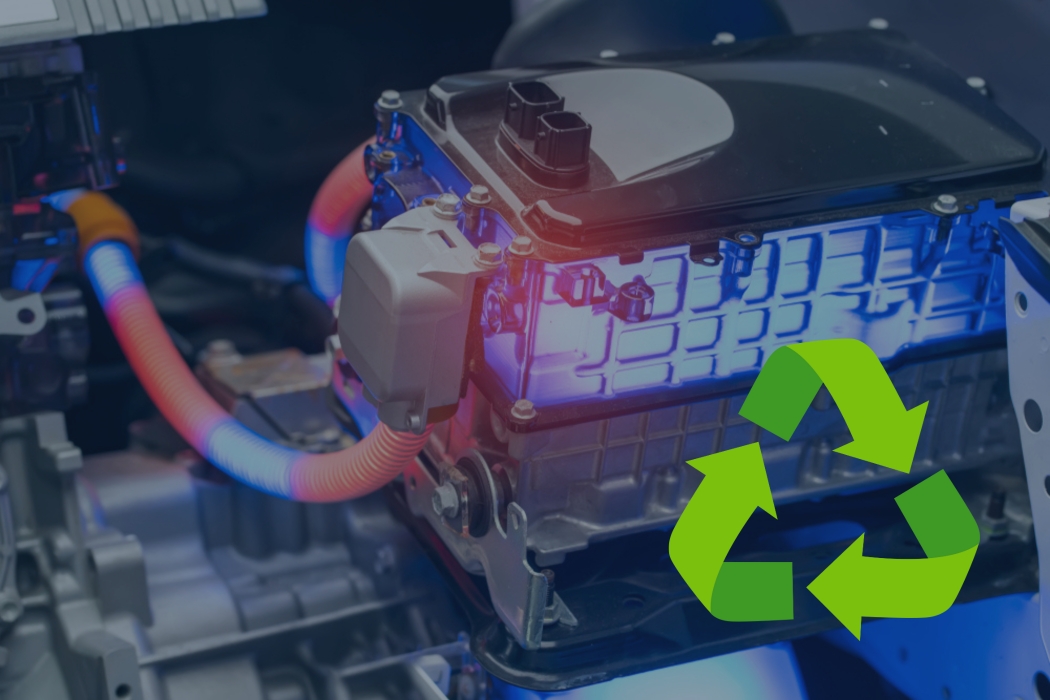
An EV battery pack isn’t just a big block of cells. It’s a full system—modules, high-voltage wiring, cooling, sensors, controls, and protective housing. And because designs aren’t standardized across manufacturers (or even across model years), recycling is more involved than most people expect.
According to the International Energy Agency (IEA), nearly one in five cars sold in 2023 was electric. This was a 35% year-on-year increase compared to 2022 and brought the number of EVs on the world’s roads to 40 million.
This guide breaks down what EV batteries are made of, when they get reused vs. recycled, how recycling works, the safety/logistics basics, what rules typically apply, and the documentation businesses should keep.
Quick Answer: Are EV Batteries Recyclable?
Yes. EV batteries can be dismantled and processed so key metals and other fractions are recovered and routed into downstream battery/material pathways instead of going into general waste.
Recycling happens for two reasons: safety and materials. End-of-life packs can still hold charge and pose fire risk if mishandled, and the economics often come down to what’s recoverable from that specific chemistry (some metals and materials “carry” the value more than others).
What “EV Battery” Means (So We’re Talking About the Same Thing)
Pack vs module vs cell
Think of it like nested layers:
- Pack: the full vehicle-level enclosure (what gets removed from the car)
- Modules: grouped sub-assemblies inside the pack
- Cells: the individual electrochemical units inside modules (where the energy storage happens)
Most of the complexity—handling, safety steps, and disassembly time—lives at the pack and module level, not the cell level.
Common chemistries you’ll hear about
You’ll see a few chemistries show up repeatedly:
- NMC / NCA (nickel-based chemistries, common in many EVs)
- LFP (lithium iron phosphate, increasingly common in some models)
- Others (varies by OEM, model, and year)
Why chemistry matters: it influences risk profile (how you stage and ship) and recovery pathways (which downstream process makes sense and what materials are realistically recovered). In plain terms: you don’t want to assume “all lithium-ion is the same,” because it isn’t.
Electric car battery recycling is real—but the “end of life” moment is usually about reduced capacity, not a battery that’s suddenly useless.
How Long EV Batteries Last and What “End of Life” Really Means
Most people anchor EV battery life around the 8–10 year warranty window, but many packs can run longer in vehicle service depending on chemistry, climate, charging habits, and thermal management.
“End of life” in EV terms usually means the pack can’t meet vehicle expectations anymore (range, power delivery, fast-charging performance). It may still function—just not at the level drivers want.
The 70% idea (and why it’s not the whole story)
A lot of second-life conversations use a rough marker: when a pack drops to ~70% of original capacity, it may no longer be ideal for vehicle use, but could still be useful for other jobs.
The catch is that “70%” is a shorthand, not a rule. Real end-of-life decisions depend on:
- State of health (SoH) testing results (not guesses)
- History (how it was charged, cycled, and stored)
- Pack variability (one bad module can drag down a whole system)
- Safety flags (any sign of damage changes everything)
Second Life vs Recycling
When second life makes sense
Second life can work when the pack’s health is known and stable, and the project economics aren’t upside down. Common use cases:
- Stationary energy storage (home, commercial, utility-scale)
- Peak shaving (reducing demand spikes)
- Backup power for buildings, sites, or equipment
- Microgrids / remote power where energy storage is the bottleneck
The big requirement: you need a reliable way to validate health and manage risk over time. If you can’t trust the pack, you can’t build a dependable system around it.
When recycling is the better call
Recycling is usually the smarter option when:
- The pack is damaged, swollen, or compromised
- The history is unknown (auction, mixed lots, unclear storage)
- Modules have failed or performance is inconsistent
- Safety risk is elevated (prior overheating events, water exposure, impact)
- Repurposing costs more than the benefit (testing + rework + integration + ongoing risk)
If you’re deciding under uncertainty, defaulting to recycling through the right channel is often the safest move.
Why EV Batteries Are Hard to Recycle
EV packs are not standardized. Designs vary by OEM and model year, which means disassembly can’t be treated like a simple “open it and dump it” process.
What makes it hard in practice:
- Labor-intensive dismantling (pack structure, adhesives, welds, fasteners)
- Residual charge (a pack can still hold dangerous energy)
- Fire risk (especially with compromised or mishandled units)
- Mixed materials (metals, plastics, electronics, cooling components)
- Economics (what gets recovered depends on process and market realities)
Recycling outcomes also depend on what a downstream program is set up to recover versus what becomes residual material that still needs managed disposal. Read our guide that explains the effects of electric car batteries on the environment.
How EV Battery Recycling Works (No Chemistry Degree Required)
Step 1: Collection + safe transport
It starts with controlled pickup and routing:
- Packs are handled as high-risk items until condition is confirmed
- Packaging focuses on stability, impact protection, and short-prevention
- Damaged or defective units typically need separate handling and stricter controls
The goal is simple: get the battery from point A to processing without incidents.
Step 2: Disassembly + separation
At the facility (or in a controlled pre-processing step), packs are broken down into major categories:
- Copper wiring and conductive components
- Aluminum housings and structural parts
- Steel brackets and enclosures (varies by design)
- Plastics and composite materials
- Electronics (controls, sensors, boards)
- Modules/cells (the core energy storage components)
This separation matters because different materials go to different downstream paths.
Step 3: Processing pathways you’ll hear about
Once cells/modules enter processing, you’ll usually hear two umbrella terms:
- Pyrometallurgy (high-heat)
Uses furnaces to recover certain metals. It can be energy-heavy and may simplify some steps, but not everything is recovered the same way. - Hydrometallurgy (solution-based)
Uses liquid solutions to leach and separate target materials. It often requires more pre-processing, but can produce different recovery outcomes depending on the setup.
Electric car battery recycling has to start with safety—because these packs can still hold serious energy, even when they’re “done.”
Safety and Fire Risk Basics (Non-Negotiables)
What makes EV batteries different from typical scrap
EV batteries aren’t like tossing a metal box into a bin. You’re dealing with:
- High energy density (a lot of stored energy in a tight package)
- Potential residual charge (even “dead” packs can still be energized)
- Damage sensitivity (impact, crushing, or compromised cells can escalate fast)
That combo is why mishandling creates real incident risk—fire, thermal events, and injury aren’t hypothetical in this category.
Safe defaults for storage/staging
If you’re staging EV batteries (packs, modules, or large-format EV-derived units), use conservative rules:
- Separate damaged from intact—no exceptions.
- Prevent crushing and movement—stable, protected, no “loose stacking.”
- Control access—keep staging away from traffic, forklifts, and clutter.
- Label clearly—condition notes, site, date, and any known issues.
- Don’t mix mystery units—unknown history should be treated as higher risk.
Rules and Compliance Basics (Practical)
In the U.S., EV battery handling is largely a patchwork of state programs, layered with transport and safety requirements. In practice, the program and downstream partner often determines:
- what they’ll accept,
- how it must be packaged,
- and what documentation you’ll receive.
In the EU, the Battery Regulation is pushing the market toward clearer expectations over time—think stronger requirements around recycling performance, recovery, and recycled content as frameworks mature.
What businesses should document
Keep it simple and consistent. Minimum documentation that actually protects you:
- Site/location (where it came from)
- Quantities (count, weight, or both—whatever your process supports)
- Condition notes (intact, damaged, unknown history, flagged units)
- Certificates of recycling (for internal controls, audits, and reporting)
What Happens to Materials After Recycling
After processing, materials typically split into “standard metals” and “battery-active” streams:
- Copper/aluminum/steel often move through established metals channels.
- Battery-active materials (the stuff tied to the cells) depend heavily on the downstream pathway and process.
Not everything is recovered at the same rate. Results vary by:
- chemistry (what’s inside the pack),
- process (how it’s treated),
- and program design (what the downstream is actually set up to recover).
Costs, Logistics, and Why Projects Get Stuck
What drives complexity
EV battery moves get complicated because of:
- Pack design variability (OEM-by-OEM differences)
- Labor to dismantle (if required by the program or site constraints)
- Transport constraints (routing, packaging, carrier requirements)
- Condition (damaged vs intact is a different playbook)
- Downstream fit (getting the right processor for the battery type)
Common failure points
Most “stuck” projects fail for predictable reasons:
- Waiting until the end of a decommission to figure out the battery plan
- Unclear inventory (no one knows what’s on-site, where, or in what condition)
- Mixed-condition staging (damaged and intact together = immediate headache)
- No plan for controlled transport (packaging and routing not solved early)
Frequently Asked Questions About Recycling EV Batteries
Do EV batteries end up in landfills?
Usually, no. The safer and more common path is controlled collection and routing because the packs carry safety risk and contain materials that recycling programs target. When anything does get disposed of, it’s typically the residual fraction after processing—not “whole packs tossed in a hole.”
Can EV batteries be reused before recycling?
Yes—sometimes. Second life can make sense for stationary storage or backup power when battery health can be validated and the economics work. If the pack is damaged, has unknown history, or fails testing, recycling is typically the better route.
What makes EV battery recycling difficult?
Lack of standardization, complex pack design, labor-heavy disassembly, residual charge, and safety risk—plus the fact that recovery outcomes depend on chemistry, process, and what the downstream program is built to recover.
What paperwork should a business keep?
At minimum: site/location, quantities, condition notes, pickup/service records, and certificates of recycling.
Is the process the same for every EV?
No. Battery pack design and chemistry vary by manufacturer, model, and year—which affects handling, disassembly, and the best recycling pathway.
Conclusion
EV batteries are recyclable, but the best outcomes come from clean inventory, controlled staging, and routing through the right program for the battery type and condition.EACR Inc. is an electronics recycling company specializing in battery recycling—we help organizations plan staging, coordinate pickup logistics, and maintain clean documentation for end-of-life battery moves.