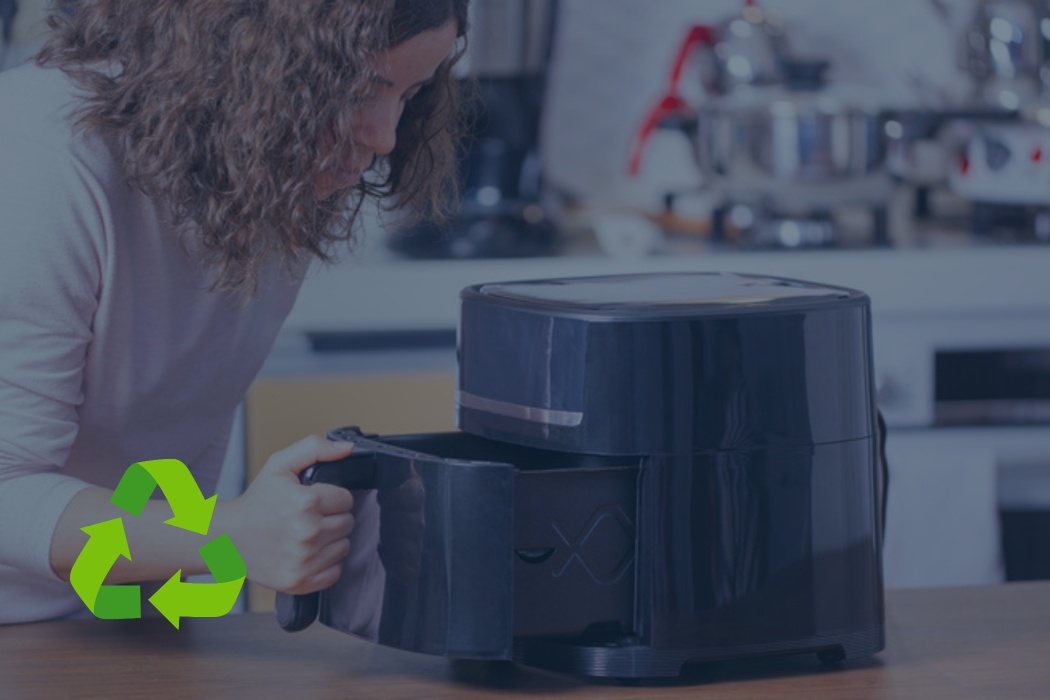
Air fryer recycling is necessary because these appliances are classified as electronic waste, not regular household trash. Even though they look like simple countertop devices, air fryers contain internal wiring, circuit boards, heating elements, and electronic controls. Sending them to a landfill creates unnecessary environmental risk. Many newer smart models may also include small lithium batteries that power memory or digital features, and those batteries can ignite if crushed in garbage trucks or compacted in landfills. Improper disposal increases fire risk and contributes to electronic waste contamination.
There is also an important difference between donation, scrap, and proper electronics recycling. If an air fryer is fully functional, clean, and safe to use, donation may be a reasonable option. If it is mostly metal, some assume scrap disposal makes sense. But junk hauling is not the same as compliant e-waste processing. Most junk removal services focus on hauling material away, not dismantling electronics responsibly. At the same time, more municipalities are expanding electronic waste restrictions, meaning small appliances cannot legally be placed in curbside trash in many areas.
If you need structured air fryer recycling for your home or facility, EACR, an electronics recycling company provides compliant electronics recycling pickup and drop-off options.
What’s Inside an Air Fryer?
An air fryer is a mixed-material electronic appliance that combines metal, plastic, and circuitry into a compact housing. It is not simply “kitchen junk,” and proper recycling requires understanding what is actually inside.
Heating Element
Air fryers operate using a high-wattage resistive heating coil that generates rapid convection heat. This component is typically made of metal alloys that can be recovered during recycling. While it appears simple, it is connected to internal wiring and control systems that classify the unit as electronic waste.
Circuit Boards and Control Panels
Modern air fryers include timers, thermostat boards, digital displays, and in some cases WiFi-enabled modules. These circuit boards contain electronic components that must be separated and processed under e-waste guidelines rather than treated as general scrap.
Wiring and Copper
Internal copper wiring distributes electricity from the power cord to the heating element and fan system. During proper recycling, copper can be recovered, but it must first be separated from plastic insulation and other materials.
Plastic Housing
The exterior shell is made from mixed polymer plastics designed to withstand heat. These plastics are not accepted in standard curbside recycling programs and require controlled separation in an electronics recycling facility.
Lithium Battery in Smart Models
Some newer air fryers contain small lithium batteries that maintain memory or power digital functions. If damaged, lithium batteries can ignite. This is one of the primary reasons small appliances should not be placed in household trash.
Can You Throw an Air Fryer in the Trash?
In most areas, air fryers should not be placed in regular trash because they contain electronic components.
Many municipalities restrict or prohibit the disposal of electronic waste in household garbage. Even where enforcement is limited, landfill disposal creates risk. Electronic components can leach materials over time, and lithium batteries can cause fires when compressed. Curbside recycling programs will not accept air fryers because they are not considered standard recyclable materials like paper, glass, or aluminum.
Air Fryer Recycling Options in 2026
There are several responsible pathways for air fryer recycling, depending on condition and volume.
Electronics Recycling Facilities
Dedicated electronics recycling facilities dismantle small appliances, separate metals and wiring, and process electronic components properly. This ensures materials are recovered and hazardous elements are managed correctly.
E-Waste Containers for Facilities
For apartment complexes, office breakrooms, property managers, and corporate kitchens, small appliances often accumulate over time. E-waste container programs allow facilities to collect electronics in one centralized location before scheduled pickup.
Scheduled Electronics Pickup
For homes or businesses with multiple small appliances, scheduled pickup offers convenience. Bulk small appliance removal can be arranged, and certificates of recycling are available upon request for documentation purposes.
Retailer Take-Back Programs
Some retailers accept old electronics when you purchase a new appliance. However, participation varies and these programs are not universal.
Manufacturer Programs
Certain brands may offer take-back or mail-in recycling options. Availability depends on the manufacturer and product line.
Professional electronics recycling is structured and traceable. It focuses on controlled material separation rather than simple removal.
Donation vs Recycling — What Makes Sense?
Donation makes sense when the air fryer is fully operational, clean, and free of electrical issues. If it heats properly and the controls function safely, a second life through resale or donation may be appropriate.
However, many air fryers end up recycled due to heating failure, control panel malfunction, coating deterioration, or electrical faults. Most donation centers will refuse small appliances unless they are tested and in good condition. When performance or safety is questionable, recycling is the responsible option.
Business Air Fryer Recycling
For businesses, air fryer recycling is rarely about a single appliance. It often involves volume.
Office breakrooms frequently upgrade appliances during renovations. Apartment complexes accumulate small electronics during tenant turnover and move-out cleanouts. Property management companies may need to remove multiple units across buildings at once. Hospitality properties periodically replace in-room appliances as part of upgrade cycles.
Professional recycling programs for businesses can include inventory tracking, pickup scheduling aligned with renovation timelines, certificates of recycling for recordkeeping, and compliant electronics handling. This structured approach separates regulated electronics recycling providers from standard junk removal companies.
Do Air Fryers Contain Hazardous Materials?
Yes, depending on design and model.
Air fryers are small, but they are still electronic appliances. That means certain components can pose environmental or safety risks if handled improperly.
Lithium Battery Risk
Some newer smart models contain small lithium batteries that power memory or digital functions. If crushed or punctured in a trash compactor or landfill, lithium batteries can ignite. This is one of the primary fire risks associated with small appliance disposal.
Circuit Board Heavy Metals
Internal circuit boards may contain trace amounts of metals such as copper and other conductive materials. While safe during normal use, these components should be processed through electronics recycling rather than sent to landfill.
Capacitors
Air fryers include capacitors that regulate electrical flow. These components store small electrical charges and should be handled within controlled recycling systems.
Insulated Wiring
Copper wiring is coated in plastic insulation. During proper recycling, copper can be separated and recovered instead of being buried in landfill.
Heat-Resistant Coatings
Internal coatings and insulated materials are designed to withstand high temperatures. These materials are not accepted in curbside recycling and require specialized separation.
Air fryers are not classified as hazardous waste in the traditional sense, but they do contain materials that should be managed through structured electronics recycling.
2026 Trends in Small Appliance Recycling
Small kitchen appliances are becoming more advanced, and recycling requirements are evolving with them.
Smart kitchen electronics are growing rapidly. More devices now include digital interfaces, WiFi modules, and embedded electronics. That means more circuit boards inside what used to be simple countertop tools.
Lithium battery integration is increasing across consumer appliances. Even small devices now contain backup batteries or rechargeable components.
Landfill restrictions continue to expand. Many municipalities are strengthening bans on electronic waste disposal in regular trash.
Municipal e-waste programs are expanding, and enforcement around electronics disposal is increasing in several regions.
Step-by-Step: How to Recycle an Air Fryer
Recycling an air fryer does not require complicated teardown or unsafe disassembly.
- Unplug the unit and allow it to cool completely.
- Remove detachable parts such as the basket or tray.
- Do not attempt to disassemble internal components. Heating elements and wiring should remain intact.
- Decide whether the unit is suitable for donation or should be recycled.
- Schedule electronics recycling pickup or arrange drop-off with a qualified recycler.
- Request documentation if needed, especially for business or facility disposal.
Avoid opening the unit or cutting wiring. Professional recyclers handle internal separation safely.
Air Fryer Recycling Near You
If you are searching for air fryer recycling near you, structured electronics recycling is the responsible option.
EACR provides service across the East Coast with both pickup and drop-off options available. Facilities generating multiple small appliances can utilize e-waste container programs for ongoing collection. Residential customers and commercial clients are both supported through organized scheduling and compliant processing.
Whether you are clearing out a breakroom, replacing appliances in a property, or upgrading kitchen equipment, coordinated recycling ensures materials are handled correctly.
Frequently Asked Questions About Air Fryer Recycling
Can you throw an air fryer in the trash?
In many areas, electronic appliances should not be placed in household trash because they contain wiring and electronic components.
Can you recycle an air fryer?
Yes. Air fryers can be processed through electronics recycling facilities where metals and internal components are separated.
Do air fryers contain lithium batteries?
Some smart models contain small lithium batteries. Not all units have them, but newer digital models may.
Will scrap yards take an air fryer?
Most scrap yards focus on bulk metal and may not accept small electronic appliances, especially those containing plastic and circuit boards.
Can broken air fryers be recycled?
Yes. In fact, non-working units are the most common items processed through electronics recycling programs.
Will I receive documentation?
Businesses and facilities can request certificates of recycling for compliance and recordkeeping.
Conclusion
Air fryers are electronic appliances, even if they look like simple kitchen devices. Landfill disposal is not ideal. Fire risks from lithium batteries and wiring are real. Responsible recycling keeps recoverable materials in use and prevents unnecessary environmental impact.
Schedule electronics recycling pickup or request an e-waste container today for responsible air fryer recycling.