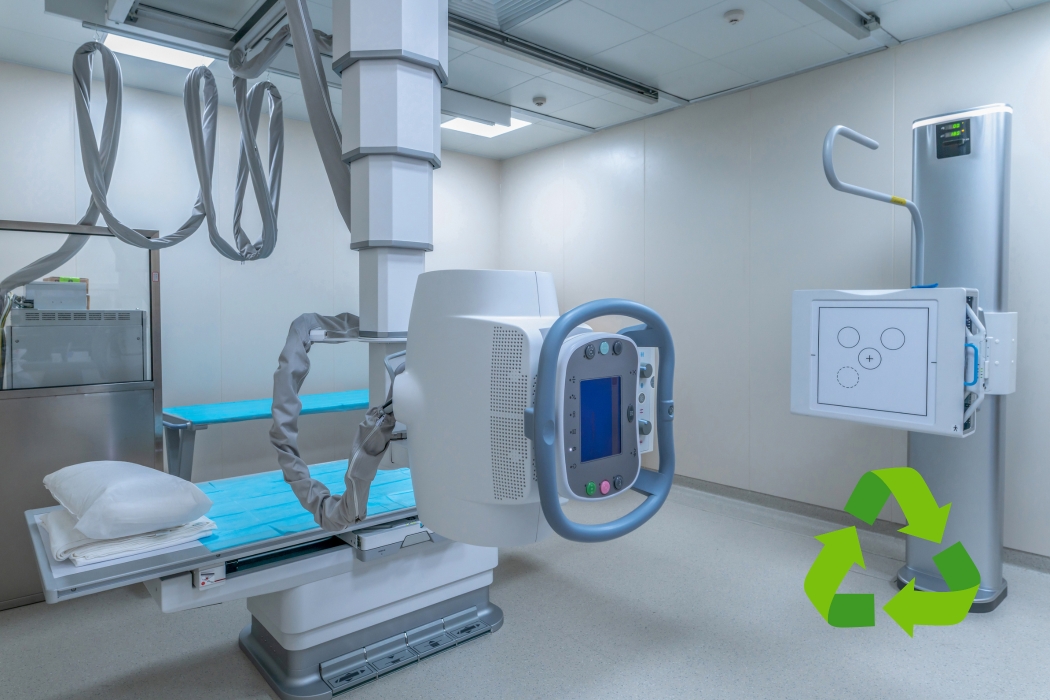
X-ray machine recycling is not about disposing of radioactive waste — it’s about managing regulated medical equipment the right way. X-ray machines do not emit radiation once they’re powered off, but improper disposal can create serious legal and environmental problems.
Many people assume old imaging equipment is dangerous simply because it produces radiation. That’s not accurate. The real concerns involve hazardous components, regulatory compliance, and documentation.
Recycling an X-ray unit requires awareness of materials like PCBs, lead shielding, and electronic components. It also requires proper decommissioning, transportation, and recordkeeping.
This guide explains the actual hazards, the legal requirements, disposal options, and how structured recycling works with an electronics recycling company.
Are Old X-Ray Machines Dangerous?
The short answer: not in the way most people think.
No Residual Radiation Risk
Radiation is only produced when the machine is energized and actively generating an image. Once unplugged and powered down, the equipment does not emit radiation.
There is no lingering radioactive output from a powered-off X-ray machine. The hazard is not radiation exposure after shutdown — it’s how the materials inside are handled.
Potential Hazardous Components
While there is no residual radiation risk, older systems may contain regulated materials that require controlled handling.
Some machines manufactured before 1979 may contain cooling oils with polychlorinated biphenyls (PCBs). These are regulated substances and can trigger hazardous waste requirements if present above threshold levels.
Lead shielding is commonly used inside imaging equipment to contain radiation during operation. Lead is recyclable, but it must be managed properly.
X-ray tubes are made of glass and sealed under vacuum. If broken, they can shatter violently and cause serious injury.
Older units may also contain oil-filled transformers and other heavy metals. In certain industrial radiography systems, cobalt sources may be present and must be removed by qualified professionals.
Why Age Matters
The age of the equipment significantly affects disposal requirements.
Older analog systems are more likely to contain PCBs and regulated materials. These units require evaluation before recycling.
Modern digital systems are typically safer to process. They still contain electronics and metals, but they are less likely to include legacy hazardous components.
Legal Requirements Before Disposal
Disposing of X-ray equipment isn’t as simple as calling a scrap yard. There are regulatory steps that must be followed.
Registration Termination Requirements
Most states require radiation-producing equipment to be registered with a radiation control program.
If the equipment is transferred, sold, decommissioned, or recycled, the owner typically must notify the appropriate state authority in writing. Registration is not automatically terminated just because the machine is unplugged.
Failing to update registration status can create compliance issues.
Hazardous Waste Regulations
If PCBs or other regulated materials are present, hazardous waste laws may apply.
PCB concentration thresholds determine whether the equipment qualifies as hazardous waste. If classified as hazardous, federal rules may require disposal within a defined window — often 90 to 180 days.
Transportation of regulated components must follow Department of Transportation requirements, including approved packaging and labeling.
Documentation & Recordkeeping
Proper x-ray machine recycling includes paperwork.
Facilities may need waste manifests, bills of lading, or hazardous waste tracking forms. Certificates of recycling or destruction are often required for compliance records.
Certificates of recycling help prove the equipment was handled responsibly from pickup through final processing.
What’s Inside an X-Ray Machine?
Understanding what’s inside the unit helps explain why structured recycling matters.
X-Ray Tube Assembly
At the core of the system is the X-ray tube. It is made of glass and sealed under vacuum.
It also contains high-voltage components used to generate radiation during operation. Because the tube is under vacuum, it should never be smashed. Breaking it can cause glass fragments to disperse and injure anyone nearby.
Removal should be handled carefully by trained personnel.
Lead Shielding
Lead shielding is built into the machine to contain radiation during use.
Lead is recyclable, but it is a regulated heavy metal. It must be separated and processed through appropriate material recovery channels.
Improper handling can create contamination risks.
Transformers & Cooling Oils
Older machines may contain transformers filled with cooling oil.
In pre-1979 systems, that oil may contain PCBs. If present above regulated limits, specialized disposal procedures apply.
Testing may be required before the equipment can be recycled.
Circuit Boards & Electronics
Modern X-ray systems include digital controls, imaging processors, wiring, and internal circuit boards.
These components are classified as electronic waste. They must be processed through electronics recycling streams that separate metals, boards, and plastics responsibly.
They cannot simply be scrapped as mixed metal.
X-ray machine disposal is not as simple as hauling equipment to the landfill or selling it for scrap. These systems are regulated, often contain hazardous materials, and may require documentation before they leave your facility.
Below is what you need to know about donation, resale, film recycling, and how structured recycling actually works.
Can X-Ray Machines Be Donated or Sold?
Sometimes. But not always.
When Donation Makes Sense
Donation can work if the system is fully functional and still supported by the manufacturer.
If the unit operates safely and meets current standards, it may be transferred to an authorized institution, teaching program, or healthcare facility that can legally accept it.
Some refurbishers specialize in upgrading and redistributing imaging systems. In these cases, donation or resale is realistic and responsible.
When Donation Is Not Realistic
Many older analog units simply do not qualify.
If the equipment is outdated, unsupported, or contains PCB-contaminated components, donation is unlikely. Decommissioned systems that have already been rendered non-functional also cannot be resold.
In these cases, structured recycling is the safer option.
Trade-In & Supplier Buyback Programs
Some equipment vendors and radiography suppliers offer trade-in programs.
If you are upgrading to digital systems, ask your supplier whether they will remove or credit older equipment. This can simplify compliance and logistics.
However, not all vendors handle hazardous components — always verify what is included.
X-Ray Film Recycling vs Machine Recycling
These are two completely different processes.
Silver Recovery from Film
Traditional X-ray film contains silver embedded in the emulsion layer.
Recycling facilities extract silver through controlled chemical processes. The recovered material can be reused, reducing the need for new mining.
Proper recycling prevents silver and other chemicals from entering landfills or water systems.
HIPAA Compliance
X-ray films contain patient information and are protected under healthcare privacy regulations.
Before recycling, films must be securely destroyed or shredded so that patient data cannot be reconstructed. Reputable recyclers provide services like data destruction to reassure this.
Medical Record Retention Rules
Retention timelines matter before disposal.
For adults, medical imaging records are generally retained for at least 7 years from the last treatment date. Pediatric records are often kept for 5 years after the patient reaches the age of majority.
Mammography films may require extended retention, sometimes 6–10 years depending on circumstances.
Always confirm records are eligible for destruction before recycling.
The X-Ray Machine Recycling Process
Professional recycling follows a structured workflow.
Step 1 – Assessment & Waste Characterization
The equipment is evaluated to identify hazardous components.
Testing may be performed to determine PCB presence or other regulated materials before removal.
Step 2 – Decommissioning
The unit is electrically disconnected and secured.
Hazardous elements such as oil-filled transformers or regulated components are removed. The system is rendered non-functional to prevent reuse.
Step 3 – Secure Packaging
Regulated components are packaged in containers.
Licensed carriers transport the equipment to approved recycling or treatment facilities.
Step 4 – Material Separation
Once processed, materials are separated into recovery streams.
Lead shielding is directed to controlled recovery. Metals are processed appropriately. Circuit boards and electronics are routed through e-waste channels.
Step 5 – Documentation Issuance
Certificates of recycling or destruction provide proof of compliant disposal.
Disposal Options Compared
Not all disposal paths are equal.
- A licensed electronics recycling company understands medical equipment and hazardous material protocols.
- A hazardous waste contractor may be required if PCB thresholds are exceeded.
- Equipment suppliers may remove units during upgrades, but confirm whether they handle compliance.
- Basic junk removal services are typically insufficient. They are not structured for regulatory documentation or hazardous material handling.
Business & Healthcare Facility Considerations
Different facilities face different obligations.
Hospitals
Large imaging departments generate high-value, regulated equipment. Compliance and documentation are critical.
Dental Practices
Dental X-ray units may appear small, but they still require proper handling and registration updates.
Veterinary Clinics
Veterinary radiography equipment follows similar disposal standards and may require state notification.
Imaging Centers
Specialized centers often rotate equipment more frequently and must manage disposal in volume.
Schools & Universities
Training labs and radiologic programs may decommission older units during upgrades.
For all of these facilities, bulk scheduling, regulatory compliance, and documentation are non-negotiable.
Step-by-Step: How to Recycle an X-Ray Machine
- Verify the equipment’s operational status and state registration.
- Identify hazardous components and determine whether testing is needed.
- Notify the appropriate regulatory body if required.
- Contact an electronics recycler experienced in medical equipment.
- Schedule compliant removal and transportation.
- Obtain documentation and retain it for your records.
Avoid dismantling high-voltage components or glass tubes yourself.
Frequently Asked Questions About X-ray Recycling
Are old X-ray machines radioactive?
No. X-ray machines do not emit radiation when powered off and unplugged.
Do X-ray machines contain PCBs?
Some units manufactured before 1979 may contain PCB-based cooling oils. Testing may be required.
Can I scrap an X-ray machine?
Only after hazardous materials are identified and removed. Direct scrapping without evaluation can create compliance issues.
How do I dispose of a dental X-ray unit?
The process is similar to larger systems. Confirm registration status, identify hazardous components, and use an electronics recycler.
Is special documentation required?
In many cases, yes. Waste manifests, recycling certificates, or state notification may be required depending on location and equipment type.
Conclusion
X-ray machines are not radioactive waste, but they are regulated equipment.
Hazardous materials must be identified before disposal. Documentation and compliance matter.
Structured recycling protects your facility from fines, liability, and environmental risk.
If you need professional X-ray recycling services, work with an e-waste recycling company that understands medical equipment compliance and provides full documentation from pickup to final processing.