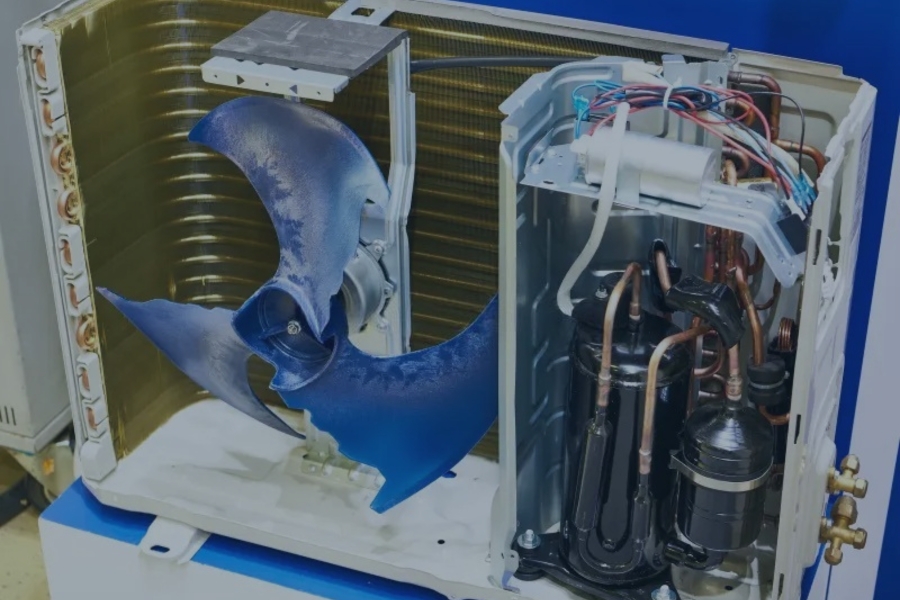
What is an air conditioner made of? Air conditioners are made of copper, aluminum, steel, plastic, motors, fans, compressors, coils, wiring, circuit boards, insulation, and refrigerant-related components.
That matters because an air conditioner is much more than a metal appliance. It contains reusable recyclable materials, electrical components, and refrigerant systems that require proper handling at the end of life. Understanding what is inside an AC unit helps explain why recycling, refrigerant recovery, and material recovery are important.
If you have old AC units, EACR Inc. offers air conditioner recycling services to help recover reusable materials and handle end-of-life equipment responsibly.
What Materials Are in an Air Conditioner?
Air conditioners are built from a combination of metals, plastics, electronics, and cooling system components. While a window unit looks very different from a commercial HVAC system, most air conditioners contain many of the same core materials.
Copper is commonly used in refrigerant lines and wiring. Aluminum is often found in coils and fins. Steel provides structural support and protection. Plastic is used for covers and interior components. Motors, circuit boards, sensors, and compressors help the unit operate, while refrigerant allows the cooling cycle to function.
The exact material mix varies by manufacturer and model, but these are the primary components found in most air conditioning systems.
Copper, Aluminum, Steel, and Plastic
Why are these materials used
The majority of an air conditioner is built from copper, aluminum, steel, and plastic because each material serves a different purpose.
Copper is used for refrigerant tubing and electrical wiring because it transfers heat efficiently and conducts electricity well. Aluminum is commonly used in coils and fins because it is lightweight and helps move heat. Steel provides strength for cabinets, frames, and protective housings. Plastic is used for vents, covers, control panels, and various internal components.
Together, these materials create a durable system capable of moving heat, protecting internal components, and operating for many years.
Why these materials matter for recycling
These materials are also the reason air conditioners are highly recyclable.
Copper and aluminum can often be recovered and processed into new products. Steel cabinets and structural parts can enter metal recycling streams. Even some plastic components may be separated during processing.
Recovering these materials helps reduce waste and decreases the demand for newly mined raw materials.
Compressors, Motors, and Cooling Components
The parts that make cooling possible
Several major components work together to create cooled air.
The compressor is often considered the heart of the system. It helps move refrigerant through the cooling cycle and allows heat to be transferred out of the building.
Motors and fans move air across the coils and throughout the system. The evaporator coil absorbs heat from indoor air, while the condenser coil releases that heat outside. Refrigerant piping connects these components and allows the cooling process to continue.
These parts contain a mix of steel, copper, aluminum, wiring, and mechanical components that often have recycling value at the end of life.
Why do these components require proper handling
Because these systems contain refrigerant, oils, motors, and electrical parts, they should not be dismantled carelessly.
Proper recycling helps separate reusable materials while ensuring cooling system components are handled safely and responsibly.
Wiring, Circuit Boards, and Electrical Components
Modern air conditioners contain electronics
Many people think of an air conditioner as a mechanical appliance, but modern units contain a surprising amount of electronics.
Control boards, sensors, capacitors, relays, switches, thermostatic controls, and wiring help regulate temperature, manage performance, and protect the system from damage.
Commercial HVAC systems often contain even more advanced controls and monitoring equipment.
Why electronics matter for recycling
These electrical components can contain copper, small metals, plastics, and circuit board materials that require proper processing.
This is one reason air conditioners should be recycled through an electronics recycling process rather than simply treated as scrap metal.
Insulation, Protective Materials, and Refrigerant
More than just metal and electronics
Air conditioners also contain insulation, foam, seals, coatings, and protective materials.
These materials help improve efficiency, reduce vibration, control condensation, and protect internal components from damage and corrosion. While they are less visible than coils or compressors, they are still an important part of the unit’s construction.
What about refrigerant?
Refrigerant is one of the most important materials inside an air conditioner, but it is not a recyclable material.
Its job is to absorb heat indoors and release heat outdoors as it circulates through the system. Before an air conditioner can be recycled, refrigerant should be recovered properly by qualified professionals.
This is one of the biggest reasons AC units should not be dumped, crushed, or dismantled improperly. Responsible recycling protects the environment while allowing reusable materials to be recovered safely.
So, What Is an Air Conditioner Mostly Made Of?
In plain English, most air conditioners are made primarily of metal and mechanical components.
The structure of the unit is typically made from steel, while copper and aluminum are used throughout the cooling system for heat transfer. Inside, you’ll also find motors, fans, wiring, circuit boards, and other electronic components that help the system operate efficiently.
Plastic is used for covers, vents, control panels, and various interior parts. The system also contains insulation, seals, protective materials, and refrigerant-related components that support the cooling process.
Although many people think of an air conditioner as a large metal appliance, it is actually a combination of metals, electronics, plastics, and a sealed refrigerant system all working together to move heat and cool a space.
Why Air Conditioner Composition Matters
Material recovery
Air conditioners contain several recyclable materials that can often be recovered when the unit reaches the end of its life.
Copper, aluminum, and steel are some of the most commonly recovered materials. Motors, wiring, circuit boards, and other components may also enter appropriate recycling streams. Recovering these materials helps reduce waste and keeps reusable resources in circulation.
Refrigerant safety
One of the most important reasons to understand air conditioner composition is refrigerant safety.
Unlike most of the metals inside the unit, refrigerant cannot simply be removed and discarded. It must be recovered properly before the system is dismantled or recycled. This helps protect workers, equipment, and the environment.
Because refrigerant is contained inside a sealed system, air conditioners require a different recycling process than many other appliances.
Environmental protection
Proper air conditioner recycling helps prevent unnecessary waste while supporting responsible resource management.
Recovering metals and electronics reduces the need for new raw material extraction. Proper refrigerant handling helps prevent environmental issues associated with improper disposal.
Recycling also helps keep large appliances out of landfills, where reusable materials would otherwise be lost.
Proper end-of-life disposal
Air conditioners should not be treated like regular household trash.
They contain metals, electronics, refrigerant systems, motors, wiring, and other components that require specialized handling. Responsible recycling ensures these materials are managed correctly and helps maximize material recovery whenever possible.
Frequently Asked Questions About Air Conditioner Materials
Are air conditioners mostly metal?
Yes. Most air conditioners contain a significant amount of metal, including steel, copper, and aluminum. However, they also contain plastics, electronics, insulation, and refrigerant-related components.
Do air conditioners contain copper?
Yes. Copper is commonly used in refrigerant lines, wiring, motors, and some coil assemblies because it transfers heat efficiently and conducts electricity well.
Do air conditioners contain aluminum?
Yes. Aluminum is frequently used in condenser fins, evaporator fins, coils, fan components, and other lightweight parts that help transfer heat throughout the system.
What part of an AC unit is most recyclable?
The most recyclable parts are usually the steel cabinet, copper tubing, aluminum coils, motors, and wiring. These materials can often be separated and processed through established recycling streams.
Can air conditioners go in the trash?
No. Air conditioners should not be placed in regular trash because they contain refrigerant, metals, electronics, and other materials that require proper handling and recycling.
Why does refrigerant need special handling?
Refrigerant is contained within a sealed cooling system and must be recovered properly before the unit is dismantled or recycled. Improper handling can create environmental and safety concerns.
Are window AC units recyclable?
Yes. Window air conditioners can usually be recycled because they contain recoverable metals, wiring, motors, electronics, and refrigerant systems that can be managed through proper recycling processes.
Are commercial air conditioners recyclable?
Yes. Commercial HVAC systems can often be recycled and may contain even larger quantities of steel, copper, aluminum, motors, wiring, and other recoverable materials than residential units.
Final Takeaway
Air conditioners contain far more than a simple metal shell. Inside are copper, aluminum, steel, plastic, motors, coils, wiring, electronics, insulation, and refrigerant-related components that all play a role in how the system operates.
Understanding what an air conditioner is made of helps explain why these units require proper end-of-life handling. Many of the materials inside can be recovered and reused, while refrigerant and other specialized components require careful management.
Proper recycling helps recover reusable materials, supports environmental responsibility, and prevents unsafe disposal practices.
When it is time to remove old cooling equipment, EACR Inc. provides air conditioner recycling to help businesses, property managers, contractors, and organizations recycle AC units the right way.