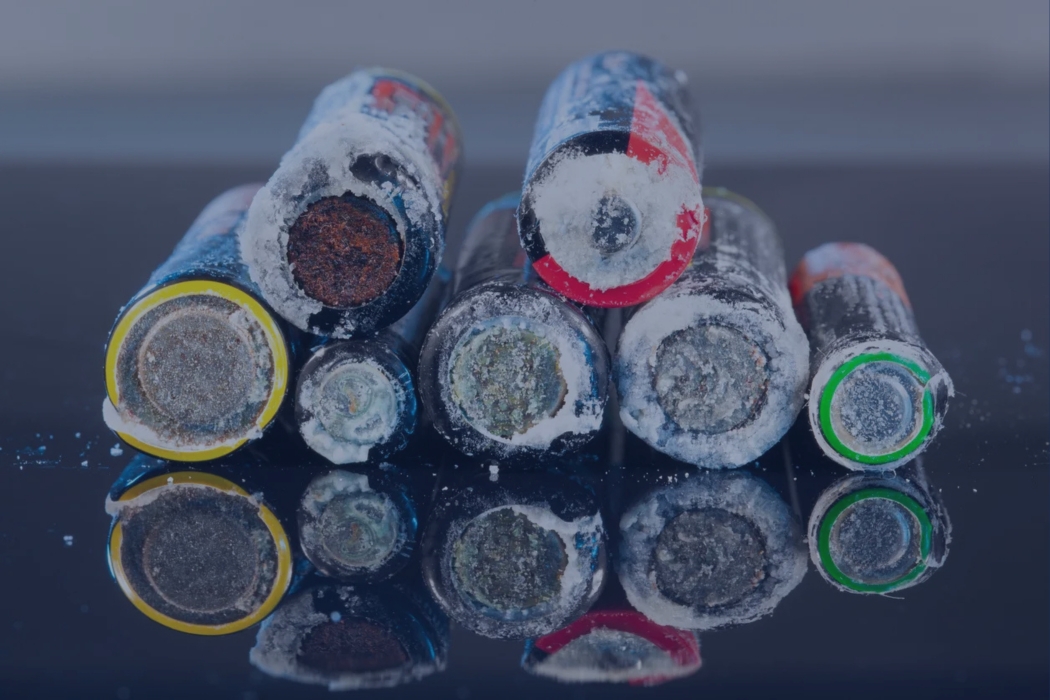
Battery corrosion is usually a sign that battery chemicals or gases have escaped and reacted with metal, air, or moisture. It can show up in different ways depending on the battery and the device, including white powder in alkaline battery compartments, blue, green, or white buildup on battery terminals, or crusty residue on contacts and cables.
This matters because corrosion is not just cosmetic. It can weaken the electrical connection, reduce performance, damage the battery itself, and sometimes damage the device or vehicle around it. This guide breaks down what battery corrosion is, what causes it, where it shows up, what it means, how to prevent it, and when replacement or recycling makes more sense. If you have leaking, corroded, or end-of-life batteries piling up, EACR Inc. offers battery recycling services that help businesses handle them more responsibly.
What is Battery Corrosion?
Battery corrosion is a chemical buildup that forms when battery contents react with surrounding materials. In simple terms, something from the battery leaks, vents, or escapes, and then reacts with nearby metal, air, or moisture.
It can happen in a lot of different places, not just under the hood of a car. You can see battery corrosion in car batteries, household alkaline batteries, backup batteries, and other battery-powered devices that sit for too long or operate under rough conditions.
What Causes Corrosion in Batteries?
Battery age
As batteries get older, they are more likely to leak, vent, or break down over time. This is one of the most common reasons corrosion shows up, especially in batteries that have been sitting in place for too long.
Leaking electrolyte or vented gases
Battery chemicals or gases can escape and react with terminals, contacts, or nearby metal. Once that reaction starts, you get the visible buildup people usually recognize as corrosion.
Overcharging
Overcharging is a common issue in some charging systems, especially with vehicle batteries and certain backup systems. Extra heat and internal pressure can increase the chance of leakage or terminal buildup.
Undercharging or weak charging conditions
Undercharging or weak charging conditions can also contribute to corrosion in some cases. This is especially relevant for vehicle batteries and backup systems that are not cycling or charging properly.
Heat and temperature exposure
High heat can increase pressure inside a battery and raise the risk of leakage. Long exposure to harsh temperatures can also make corrosion more likely over time.
Moisture and humidity
Moisture helps chemical residue react and build up faster. That is one reason corrosion tends to worsen in damp, humid, or exposed environments.
Long-term storage in unused devices
Leaving alkaline batteries in unused remotes, toys, flashlights, or tools is one of the most common ways corrosion starts. Even when the device is not being used, the batteries can still slowly discharge and break down.
Physical damage
Cracked, dropped, swollen, or otherwise compromised batteries are more likely to leak. Once the casing or seal is affected, corrosion becomes much more likely.
Mixing battery brands, ages, or charge levels
This is especially common in household devices. Mixing battery brands, ages, or charge levels can lead to uneven discharge, which raises the chance of leakage and corrosion.
Why Battery Corrosion Looks Different in Different Batteries
Alkaline battery corrosion
Alkaline battery corrosion usually shows up as white residue inside battery compartments. It is often tied to leakage after the batteries have been left in a device during long storage.
Car battery terminal corrosion
Car battery terminal corrosion often looks white, blue, or green around the battery posts and cable ends. It is usually tied to acid, gases, terminals, and charging conditions rather than just one single cause.
Corrosion in other battery-powered devices
Corrosion can also show up on contacts and springs inside other battery-powered devices. This is especially common in electronics that sit unused for long periods or are stored in poor conditions.
Common Signs of Battery Corrosion
White, blue, or green buildup
One of the clearest signs is visible buildup around the battery area. The exact color can vary depending on the battery type and the materials involved.
Crusty residue around terminals or contacts
Corrosion often looks crusty, flaky, or powdery. If you see that kind of buildup around terminals or contacts, the battery area needs attention.
Dim lights or weak device performance
Corrosion can interfere with electrical flow, which may lead to dim lights, weak output, or inconsistent device performance.
Slow cranking or electrical issues in vehicles
In vehicles, battery corrosion can cause slow cranking, weak starts, and other electrical issues. The battery may still work, but not as well as it should.
Batteries stuck inside a device
In household devices, corrosion can build up enough to make batteries difficult to remove. This is a common sign that the leakage has been sitting for a while.
Visible leakage or damage around the battery area
If you see signs of liquid, swelling, crusting, or obvious battery damage, corrosion is likely already part of the problem or very close behind it.
Why Battery Corrosion Is a Problem
It blocks electrical flow
Corrosion creates a barrier between the battery and the device or vehicle it is supposed to power. That buildup makes it harder for electricity to move the way it should.
It can reduce battery performance
When corrosion builds up, the battery may still work, but not as well. You might notice weaker performance, slower response, dim lights, or inconsistent power.
It can shorten battery life
Corrosion can speed up battery failure by putting extra stress on the connection points and the battery itself. In some cases, it helps turn a manageable battery issue into an early replacement.
It can damage terminals, cables, or device contacts
Corrosion does not always stay limited to one spot. It can spread to terminals, cables, springs, or battery contacts and make the surrounding hardware harder to clean or restore.
It can make a battery unsafe to keep using
Once a battery is leaking, badly corroded, swollen, or physically damaged, it is no longer something to keep using casually. At that point, the issue is not just performance. It is also safe handling.
Can Corroded Batteries Still Be Used?
Usually no, at least not if the battery itself is leaking or clearly corroded. Once the battery body is compromised, it is generally better to replace it than try to keep using it.
There is a difference between corrosion on the battery and corrosion on the device contacts. If the battery leaked and caused buildup on the contacts, the device might still be salvageable after proper cleaning. But if the battery itself is badly corroded, leaking, or damaged, it usually needs replacement and proper recycling.
How to Prevent Battery Corrosion
Do not leave batteries in unused devices
One of the simplest ways to prevent corrosion is to remove batteries from devices that will not be used for a while. This is especially important for remotes, toys, flashlights, and seasonal electronics.
Store batteries in a cool, dry place
Heat and moisture make corrosion more likely. Keeping batteries in a cool, dry place helps reduce leak risk and supports better battery life overall.
Avoid mixing old and new batteries
Mixing old and new batteries can lead to uneven discharge, which raises the chance of leakage and corrosion. It is a simple mistake that creates a lot of avoidable battery problems.
Avoid mixing brands or chemistries in the same device
Different brands and different battery chemistries do not always discharge the same way. Keeping them mixed in one device can increase imbalance and corrosion risk.
Check terminals and contacts regularly
A quick visual check can catch corrosion early before it becomes a bigger issue. This is especially useful for car batteries, backup systems, and devices that sit unused for long stretches.
Replace weak, old, or damaged batteries early
Old, weak, or damaged batteries are more likely to leak. Replacing them before they fail is often easier than dealing with a corroded battery compartment later.
Keep battery connections clean and secure
Loose, dirty, or unstable battery connections can make problems worse. Clean, secure contact points help reduce stress on the connection and support more reliable performance.
When Battery Corrosion Means It Is Time to Recycle
The battery is leaking
If the battery is leaking, it is time to stop using it and move it out of service. A leaking battery is no longer reliable and should be handled as an end-of-life unit.
The terminals are heavily corroded
Heavy corrosion on the terminals is a strong sign that the battery is no longer in good condition. Once the buildup is severe, replacement is often the better move.
The battery is swollen, cracked, or damaged
Any battery that is swollen, cracked, or physically damaged should be taken seriously. At that point, the safest path is usually replacement and proper recycling.
The device no longer works properly with the battery
If the battery keeps causing weak performance, inconsistent power, or failure in the device, corrosion may already be part of the issue. That is usually a sign the battery is no longer worth keeping in use.
The battery is old and no longer reliable
Sometimes the issue is not one dramatic failure, but age and declining reliability. If the battery is old and already showing signs of corrosion, replacement makes more sense than waiting for a leak.
What to Do With Corroded Batteries
Do not throw corroded batteries loosely into general trash. They should be handled more carefully, especially if they are leaking, damaged, or clearly at end of life.
The practical next step is to remove them safely, keep them contained, and route them through proper battery recycling where appropriate. For businesses or larger battery loads, EACR Inc. can help support battery recycling needs through more structured electronics and battery recycling services.
Frequently Asked Questions About Battery Corrosion
What causes corrosion in batteries?
Battery corrosion is usually caused by age, leakage, vented gases, charging problems, heat, moisture, or long-term storage in a device.
Why do alkaline batteries corrode in devices?
Alkaline batteries often corrode when they are left in unused devices for too long. Over time, they can slowly discharge, leak, and create white residue in the battery compartment.
What causes corrosion on car battery terminals?
Car battery terminal corrosion is often caused by battery acid, vented gases, charging conditions, moisture, and age-related breakdown.
Does heat make batteries corrode faster?
Yes. Heat can raise internal pressure and increase the chance of leakage or venting, which can make corrosion more likely.
Can a corroded battery still work?
Sometimes it may still work for a while, but that does not mean it should stay in use. If the battery itself is leaking or badly corroded, replacement is usually the safer move.
Is battery corrosion dangerous?
It can be. Corrosion may involve leaked battery material, weakened electrical connections, and damage to surrounding parts. It should be handled carefully.
How do I prevent battery corrosion?
Store batteries properly, remove them from unused devices, avoid mixing old and new batteries, keep contacts clean, and replace weak or damaged batteries early.
Should corroded batteries be replaced?
In most cases, yes. If the battery is leaking, heavily corroded, swollen, cracked, or no longer performing reliably, replacement makes sense.
Can corroded batteries be recycled?
Yes, many corroded batteries should be routed through proper battery recycling rather than treated like ordinary waste.
Why is there white powder around my battery?
That white powder is usually corrosion caused by leaked battery material reacting with the surrounding environment. It is common in alkaline battery compartments and sometimes around other battery contact points too.
Final Takeaway
Battery corrosion is usually caused by age, leakage, gases, charging issues, heat, moisture, or long-term storage. The buildup is more than cosmetic. It can affect performance and damage equipment over time.
The good news is that prevention is usually simple. Store batteries properly, remove them from unused devices, keep terminals clean, and replace old or damaged batteries before they leak. When corrosion is a sign the battery is no longer worth keeping in service, EACR Inc. can help with battery recycling services built around safer end-of-life handling.