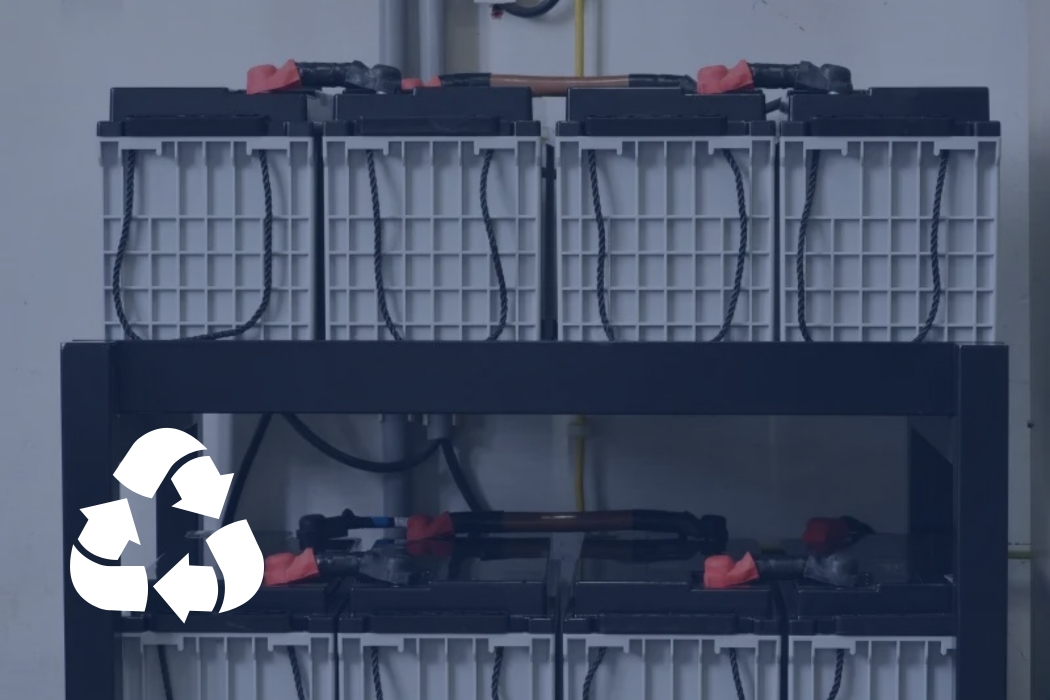
Telecom battery recycling matters because these batteries are common in backup power systems, but they are heavy, operationally sensitive, and not something to leave sitting after a changeout. They show up in telecom sites, central offices, fiber sites, pole-mounted cabinets, cellular sites, PBX systems, and other backup power environments where uptime matters.
That is what makes these projects different from casual battery disposal. Telecom battery work is often remote, timing matters, safety matters, logistics matter, and documentation matters. This guide covers what telecom batteries are, where they are used, the main recycling options, how prep and pickup usually work, how damaged batteries should be handled, and what records businesses should keep. If you are planning a telecom battery changeout, decommission, or site cleanup, EACR Inc. helps businesses coordinate battery recycling with pickup support and documentation.
What is a Telecom Battery?
A telecom battery is a backup battery used to keep communications and power systems running during outages, interruptions, or equipment issues. These batteries support critical infrastructure where power continuity matters.
In practice, this can include telecom backup batteries, site battery strings, cabinet batteries, and UPS-related battery systems used in telecom environments. The exact format may vary, but the job stays the same: provide backup power when the main system goes down. Check out our complete guide for telecom equipment recycling here.
Where Telecom Batteries Are Commonly Used
Central offices and telecom rooms
Central offices and telecom rooms often rely on backup batteries to support communication systems and reduce downtime during power loss. These are usually controlled environments, but the batteries still need replacement and recycling over time.
Cellular sites and towers
Cellular sites and towers commonly use backup batteries to help maintain service when utility power is interrupted. These projects can be more challenging because locations may be remote, elevated, or harder to access.
Fiber and distribution cabinets
Fiber sites and distribution cabinets also use backup batteries to support local communications equipment. These setups are often smaller than central office systems, but they can still create logistical challenges when batteries need to be removed.
PBX and communications systems
PBX and communications systems often depend on batteries to support continuity during outages. As those systems are maintained, upgraded, or decommissioned, the batteries need a proper end-of-life path.
Remote utility or equipment shelters
Remote utility or equipment shelters are another common use case. These sites may be harder to locate, harder to access, and more dependent on precise timing when battery work is being done.
Why Telecom Battery Recycling is Different
Telecom projects are often time-sensitive
Telecom battery projects are often tied to changeouts, maintenance windows, or backup power requirements. Battery replacements can affect backup readiness, so delays are not just inconvenient, they can create operational problems.
That is why timing matters so much. Many of these projects run on strict timelines and need a recycler that can work within them.
Sites can be hard to access
A lot of telecom battery work happens at remote sites, limited-access cabinets, rural locations, or facilities that do not have easy loading conditions. In some cases, the only real site reference may be coordinates rather than a straightforward street address.
That changes the logistics. Pickup planning has to account for the actual realities of the site, not just the battery type.
Batteries are heavy and operationally sensitive
These batteries are not a casual scrap load. They are heavy, often installed in working backup systems, and may require careful staging, lifting, and transport planning.
That is why handling matters. The job is not just getting batteries off site, but doing it in a controlled way that fits the environment and the project.
Documentation
Telecom and utility-style battery projects often require cleaner reporting and tighter downstream visibility than ordinary recycling jobs. Businesses may need pickup records, weight reporting, or certificates of recycling as part of the closeout process.
That makes documentation a real part of the project, not just an afterthought. Documentation helps support reporting, internal controls, and cleaner project management.
Common Telecom Batteries and Related Equipment That May Be Recycled
Telecom battery recycling can involve more than one battery sitting in one room. Depending on the project, it may include telecom batteries, backup battery strings, cabinet batteries, UPS-related batteries, and telecom power equipment tied to the battery changeout itself.
In some cases, related equipment may also be part of the load, such as chargers, racks, or other supporting hardware. The exact mix depends on the site and the scope of the decommission or replacement work.
Telecom Battery Recycling Options
Drop-off for very small quantities
Drop-off can work when quantities are very small and transportation is straightforward. It is the simplest route when there are only a few units and the site does not involve much complexity.
That said, it is usually not the normal route for larger telecom work. Once quantities grow or site logistics get more involved, drop-off becomes less practical.
Scheduled pickup for most telecom projects
Scheduled pickup is usually the better fit for telecom battery recycling. It works well for business quantities, battery rooms, site changeouts, and projects that need more controlled removal.
It is also the strongest option for remote sites or multi-site coordination. Instead of forcing the project team to manage all logistics internally, pickup helps align removal with the broader project schedule.
Multi-site recycling programs
Multi-site recycling programs are useful for companies managing multiple regional sites at once. This is especially helpful when work is recurring across cabinets, shelters, towers, or office locations.
A more structured program helps standardize how batteries are collected, tracked, and removed across the full project footprint.
Recycling during decommissioning or battery changeouts
One of the most common times to recycle telecom batteries is during decommissioning or planned battery changeouts. This is often the strongest fit because the removal is already tied to a scheduled equipment replacement project.
Instead of leaving old batteries behind after the install work is done, recycling becomes part of the same planned process.
When Pickup is Usually the Right Option
Large battery quantities
When the project involves a larger quantity of batteries, pickup is usually the cleaner option. It reduces internal handling and makes the removal process more manageable.
Remote site access
If the batteries are at remote or difficult-to-access sites, pickup usually makes more sense than trying to move them through ad hoc routes.
Multi-site telecom projects
For companies managing more than one location, pickup helps keep the recycling process more consistent from site to site.
Tight project timelines
When the project is running on a strict timeline, pickup can help keep removal aligned with the rest of the work instead of creating bottlenecks.
Damaged or mixed-condition batteries
If some batteries are damaged or the load includes mixed-condition units, pickup is often the safer and more practical route. It allows the project to be planned around those conditions from the start.
How to Prepare Telecom Batteries for Recycling
Telecom battery recycling goes much smoother when you treat it like a site project, not a last-minute cleanup. A little planning upfront helps reduce delays, improve safety, and make pickup easier.
Step 1: Identify what you have
Start by identifying what is actually on site. That means noting the battery type, the quantity, the site location, and whether the units are intact or damaged.
This step sounds basic, but it sets up everything that follows. It helps with quoting, packaging, pickup planning, and documentation.
Step 2: Separate by type and condition
Once you know what you have, separate the batteries by type and condition. Intact units should be kept apart from damaged units, and mixed chemistries should not be grouped together casually.
That separation matters because different batteries may need different handling. It also helps prevent confusion once removal starts.
Step 3: Stage safely
Batteries should be staged in a way that keeps them stable and controlled. Reduce shifting, prevent terminal contact, and keep them away from traffic, metal clutter, and areas where they could be bumped or damaged.
A clean staging setup makes pickup safer and faster. It also helps the site stay organized while the project is in motion.
Step 4: Package correctly
Use packaging that matches the battery type and condition. Loads should be packed in a way that supports safe handling and transport, especially if there are damaged batteries or mixed site conditions involved.
If needed, label the loads clearly by site and condition. That can make a big difference when projects involve multiple locations or more than one battery format.
Step 5: Schedule removal
Once the batteries are identified, separated, staged, and packaged, schedule removal around the actual project timeline. Pickup should be coordinated so old batteries do not get left behind after the installation or changeout work is complete.
That is one of the biggest operational wins in a good telecom battery recycling plan. Clean timing prevents scrap material from becoming the last thing holding up project closeout.
Damaged Telecom Batteries Need Extra Care
Why damaged units are different
Damaged telecom batteries need more controlled handling because the risk level is higher. Packaging, routing, and removal planning may all need to change depending on the condition of the unit.
That is why damaged batteries should never be treated like standard scrap. They usually require a more deliberate plan from the start.
Keep damaged batteries separate
Damaged batteries should be kept separate from intact loads. Mixing them together casually makes handling harder and can create unnecessary safety issues during staging, packaging, or transport.
A clean separation also makes the project easier to communicate and document. Everyone involved knows which units need more controlled handling.
Plan controlled handling from the start
If damaged batteries are part of the project, flag them early in the quoting and pickup process. That gives the recycling provider time to plan the right packaging, routing, and removal setup.
Waiting until the last minute usually makes the project harder. Telecom battery recycling works better when damaged units are identified early and handled intentionally.
What Documentation Should Be Kept?
Pickup or service record
A pickup or service record should be kept for the project. This gives the business a basic record of when the batteries were removed and what service took place.
Battery type and condition notes
Type and condition notes matter too. Keeping track of what battery formats were removed and whether units were intact or damaged helps support cleaner project records.
Certificates of recycling
Certificates of recycling are one of the most useful documents to keep. They help show that the batteries were moved through a proper recycling process instead of being handled informally.
What Happens After Collection?
After collection, telecom batteries are routed based on their chemistry and condition. The downstream process is not one-size-fits-all, because different battery types and load conditions require different handling.
From there, materials move through the appropriate recycling chain. The exact downstream path depends on the battery type, but the goal is the same: proper end-of-life handling through the right battery recycling stream.
How to Choose a Telecom Battery Recycling Company
Look for battery logistics experience
Telecom battery recycling is not just about taking batteries away. It helps to work with a company that understands battery logistics, site coordination, and the reality of timing-sensitive projects.
Ask about remote site and multi-site support
A good recycling partner should be able to support more than one easy pickup at one easy address. Telecom work often involves remote sites, regional projects, and multiple facilities, so that support matters.
Ask what documentation is included
Documentation should be discussed upfront, not after the project is over. It is worth asking what records, certificates, or reporting will be included as part of the service.
Make sure they can handle damaged batteries if needed
If there is any chance the project involves damaged batteries, confirm that early. Not every recycler handles damaged units the same way, so it is better to know before scheduling removal.
Why EACR Inc. is a The Best Fit for Telecom Battery Recycling
Support for scheduled pickups
EACR Inc. supports scheduled pickups that fit around business needs and project timelines. That helps telecom battery removal stay aligned with the larger site schedule.
Coordination for business and site-based battery projects
Telecom battery work often involves more than one person, one location, or one day. EACR Inc. helps coordinate battery recycling for business and site-based projects with a more structured approach.
Help with packaging, staging, and removal planning
Packaging, staging, and removal planning can make or break a battery project. EACR Inc. helps businesses think through those steps so the removal process goes more smoothly.
Documentation support for records and reporting
For businesses that need cleaner records, EACR Inc. supports documentation and reporting as part of the project.
Practical solutions for telecom, backup power, and related battery loads
Whether the load involves telecom batteries, backup power batteries, or related battery equipment, EACR Inc. offers practical recycling support built around real business needs.
Frequently Asked Questions About Telecom Battery Recycling
What is a telecom battery?
A telecom battery is a backup battery used to support communications or power systems during outages or disruptions.
Can telecom batteries be recycled?
Yes. Telecom batteries can be recycled through the appropriate battery recycling process based on their chemistry and condition.
How are telecom batteries usually removed?
Most telecom battery projects are handled through scheduled pickup, especially when quantities are larger or sites are harder to access.
Is pickup available for remote telecom sites?
Yes. Pickup can often be coordinated for remote telecom sites depending on the project scope and access conditions.
How do I prepare telecom batteries for recycling?
Identify what you have, separate by type and condition, stage the batteries safely, package them correctly, and schedule removal around the project timeline.
Can damaged telecom batteries still be recycled?
Yes, but damaged telecom batteries usually need more controlled handling and should be flagged early in the process.
Are telecom battery projects usually drop-off or pickup?
Most telecom battery projects are better suited for pickup. Drop-off is usually only practical for very small quantities.
What if the project involves multiple sites?
Multi-site telecom battery recycling can be coordinated with the right pickup plan and reporting structure.
Do businesses receive certificates of recycling?
Yes. Certificates of recycling are often part of the documentation businesses keep for telecom battery projects.