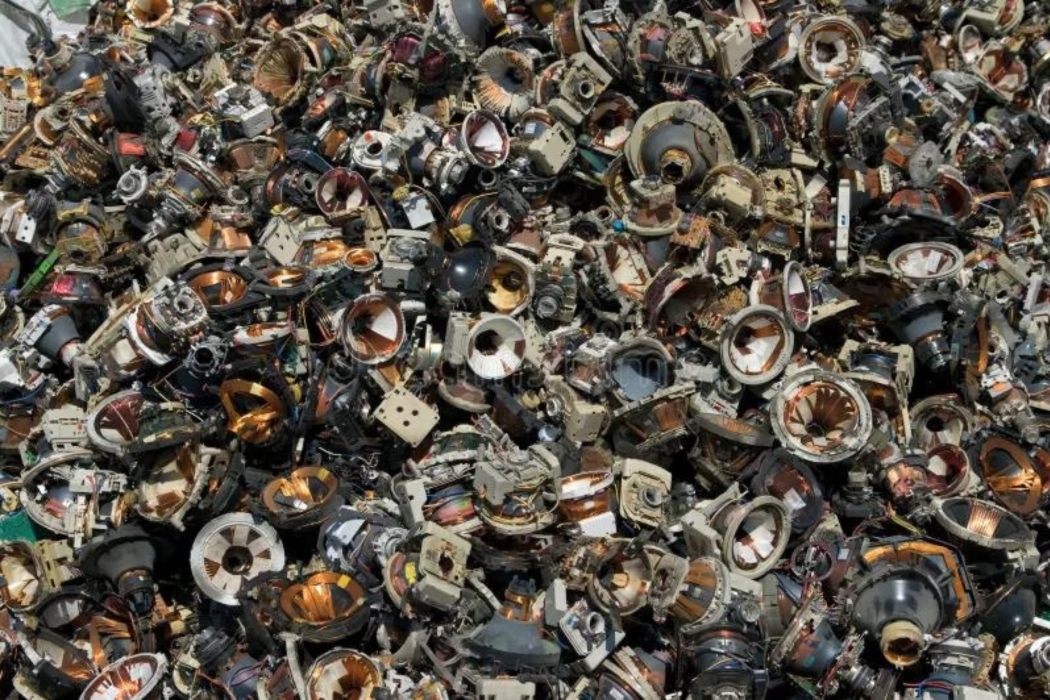
Speaker recycling is more important today than ever before. With millions of speakers, soundbars, and smart audio devices sold each year, audio equipment has become a growing contributor to the global e-waste problem. Tossing these products in the trash isn’t just wasteful—it can also create serious environmental risks.
Speakers contain plastics, metals, and other materials that don’t break down in landfills. Left untreated, these components can leach harmful substances into soil and water. Modern speakers also come with a new concern: data. Smart speakers often store personal information, making secure recycling essential to protect privacy.
What’s Inside a Speaker?
Understanding what’s inside a speaker makes it easier to see why recycling is the right choice.
Common Materials
- Magnets (neodymium, ferrite): Powerful and essential for producing sound.
- Copper coils and wiring: Used in the voice coil and internal connections.
- Steel and aluminum frames: Provide durability and structure.
- Plastics and wood cabinets: Enclosures that hold everything together.
- Circuit boards in powered speakers: Found in subwoofers and Bluetooth-enabled devices.
Hazardous Components
- Lead solder: Common in older electronics and harmful if not handled properly.
- Batteries (portable/Bluetooth speakers): Can leak or spark fires if thrown away.
- Capacitors and electronics: Store electrical energy and need safe disposal.
What Parts of a Speaker Can Be Recycled?
The good news is that many speaker components can be recovered and put back into use:
- Metals (steel, aluminum, copper): These can be melted down and reused in new products.
- Circuit boards and wiring: Processed to recover metals and other reusable elements.
- Magnets (rare earth materials): Collected and refined for use in future electronics.
- Plastics (limited reuse potential): Some can be recycled, though options are more limited.
- Batteries (must be handled separately): Require specialized recycling to prevent hazards.
How to Recycle Old Speakers Responsibly
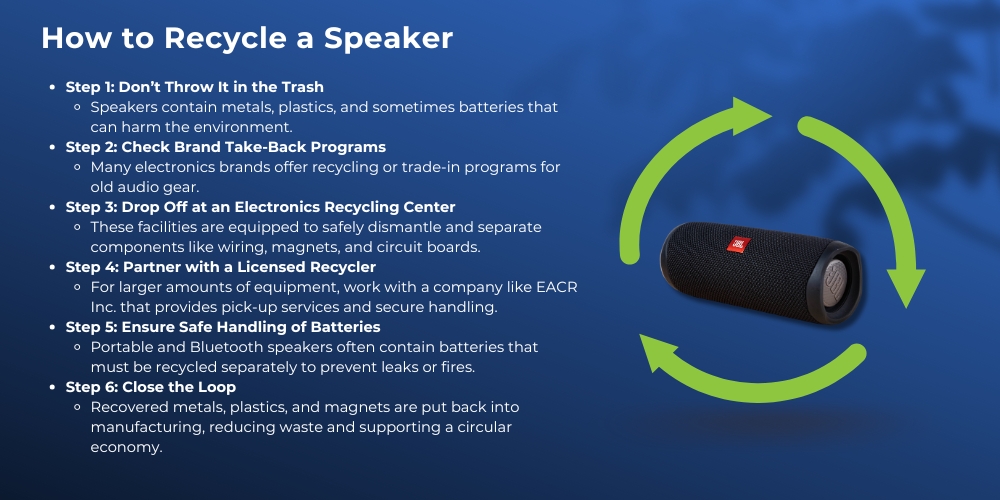
Speaker recycling isn’t just about clearing space in your garage—it’s about making sure the materials inside your speakers are handled the right way. Here are the best options available.
Drop-Off at Electronics Recycling Centers
Speakers can’t be tossed in the regular blue bin because they contain metals, plastics, and electronics that need specialized handling. Electronics recycling centers are equipped with the tools and processes to safely dismantle and separate components, keeping hazardous materials out of landfills.
Manufacturer Take-Back Programs
Some major electronics brands offer trade-in or recycling programs for old audio equipment. These programs can provide store credit or discounts on new purchases while ensuring your speakers are responsibly recycled. However, availability varies, and not all brands participate.
Partnering with Licensed Companies like EACR Inc.
For both businesses and households, working with a licensed electronics recycler like EACR Inc. is often the simplest and most reliable option.
- Pick-up services for bulk electronics: Perfect for schools, offices, or municipalities with larger amounts of equipment.
- Secure handling and logistics: Devices are transported safely from your location to the recycling facility.
- Zero-landfill recycling process: Materials are recovered and reused instead of ending up in landfills.
The Recycling Process at EACR Inc.
EACR Inc. makes speaker recycling safe, efficient, and environmentally responsible. Their process ensures that each part of your old speakers is handled the right way.
Collection and Transportation
Businesses can schedule bulk pickups, while individuals can drop off speakers directly. All equipment is transported using licensed logistics.
Sorting and Disassembly
Once received, speakers are taken apart. Plastics, metals, wiring, and circuit boards are carefully separated for proper processing.
Material Recovery
Materials like copper, aluminum, and magnets are recovered through shredding, smelting, or refining. These are prepared for reuse in new products.
Final Processing
Recovered materials are sent back into manufacturing streams, where they can be used to make new electronics, appliances, and other products—completing the recycling loop.
The Benefits of Recycling Speakers
Speaker recycling offers benefits that go far beyond clearing out clutter.
- Reduces demand for new raw materials: Recovering metals, magnets, and plastics lessens the need to mine and process fresh resources.
- Prevents toxic materials from polluting landfills: Lead solder, batteries, and electronics are kept out of the soil and water supply.
- Supports the circular economy for electronics: Components from old speakers are reintroduced into manufacturing, creating a sustainable cycle.
Helps businesses stay compliant with environmental laws: Proper recycling ensures regulations are met and liability is avoided.
Frequently Asked Questions about Speaker Recycling
No—speakers contain electronics, wiring, and sometimes batteries that municipal recycling programs aren’t equipped to handle. They need to go through specialized e-waste channels.
Yes. Smart speakers contain circuit boards, magnets, and sometimes lithium-ion batteries. They also may store personal data, which should be securely destroyed by a licensed recycler.
Some parts, like cabinets or drivers, can be reused if they’re in good condition. However, most speakers are processed for material recovery rather than resale.
Absolutely. EACR Inc. provides pick-up and bulk recycling services for businesses, schools, and municipalities that need to responsibly dispose of large volumes of equipment.
How EACR Inc. Makes Speaker Recycling Easy
EACR Inc. takes the stress out of recycling old audio equipment.
- Licensed electronics recycler with 20+ years of experience: Trusted across the Northeast.
- Options for businesses, schools, municipalities, and households: Tailored solutions for any size recycling need.
Conclusion & Call to Action
Speaker recycling isn’t just about getting rid of old audio gear—it’s about protecting the environment, conserving resources, and staying compliant with recycling laws. Choosing a licensed recycler ensures every component is handled responsibly.
Contact EACR Inc. today for speaker recycling services that keep your equipment out of landfills and protect the environment.