Solar energy is widely viewed as clean and sustainable—but end-of-life management is often overlooked. As panels age, fail, or are replaced, what happens next matters just as much as how much energy they produced.
Improper disposal undermines the environmental benefits solar panels are meant to provide. When panels are dumped, stockpiled, or mishandled, they don’t simply “go away.” They introduce toxic materials into the environment, create long-term pollution risks, and permanently waste reusable resources.
This post breaks down what actually happens to the environment when solar panels are not recycled correctly—and why responsible solar panel recycling is essential to keeping solar energy truly sustainable.
Why Solar Panels Require Proper Recycling
Solar panels are not inert waste. They are complex electronic products built from multiple layers of materials that must be handled in a controlled way at end of life.
A typical panel contains glass, aluminum framing, silicon cells, plastics, wiring, and trace toxic substances. When panels are recycled properly, these materials are separated and managed safely. When they are not, those same materials are exposed to weather, pressure, and degradation.
Standard trash disposal, informal scrap handling, or abandonment removes the safeguards that protect the environment. Cracking, crushing, and long-term exposure allow materials to escape into soil and water, creating environmental exposure that recycling is specifically designed to prevent.
Soil Contamination From Improperly Disposed Solar Panels
Heavy Metals Leaching Into Soil
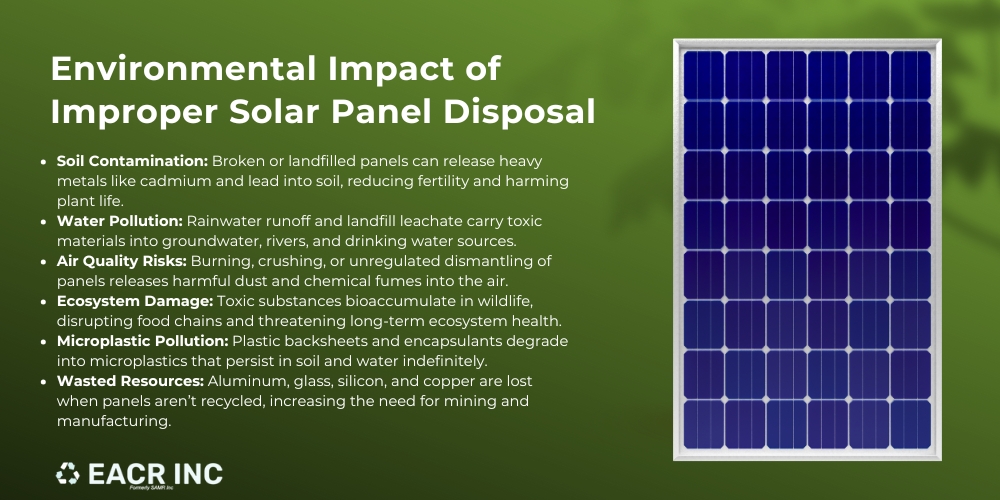
Solar panels can contain trace amounts of heavy metals such as cadmium and lead. When panels are damaged, broken, or crushed—especially in landfills—these substances can leach out over time.
The risk increases as panels degrade. Heat, moisture, and mechanical pressure accelerate material breakdown, allowing contaminants to migrate into surrounding soil.
Long-Term Soil Toxicity
Once contaminated, soil doesn’t recover quickly. Heavy metals interfere with plant growth, harm beneficial microorganisms, and reduce soil fertility. In affected areas, land reuse becomes limited or unsafe for agriculture, development, or natural habitats.
Cleanup is difficult, expensive, and often delayed for years. In many cases, contamination remains long after the panels themselves are out of sight.
Waterway Pollution and Ecosystem Damage
Runoff From Improper Disposal Sites
Dumped or stockpiled solar panels are often exposed directly to rain, snow, and temperature changes. As water flows over damaged panels, it can carry dissolved chemicals and metals into nearby streams, rivers, and drainage systems.
This runoff creates a direct pathway from improper disposal sites to natural waterways.
Bioaccumulation in Aquatic Life
Once pollutants enter water systems, they don’t stay evenly distributed. Toxic substances build up in fish and other organisms over time, a process known as bioaccumulation.
These impacts ripple through entire ecosystems, affecting predators, food chains, and biodiversity—extending the environmental damage far beyond the original disposal site.
Air Pollution From Improper Handling or Destruction
Toxic Emissions From Burning or Crushing Panels
When solar panels are improperly handled, burned, or crushed, they can release harmful pollutants into the air. Informal disposal methods—such as open burning or unregulated dismantling—break protective layers and expose internal materials.
This process can release fine particulates, silica dust, and chemical fumes. These emissions pose risks not only to the environment but also to anyone nearby, especially workers or residents exposed without protective controls.
Localized Air Quality Degradation
Communities located near illegal dumping sites, unregulated processing areas, or waste zones often face elevated exposure to airborne contaminants. Over time, repeated exposure contributes to localized air quality degradation and increased health risks.
These impacts raise serious environmental justice concerns, as waste-related pollution disproportionately affects communities already burdened by industrial or disposal infrastructure.
Plastic and Composite Material Pollution
Solar panels rely on plastic backsheets and encapsulant layers to protect internal components. When panels are abandoned or landfilled, these materials degrade very slowly.
Instead of breaking down safely, plastics fragment into microplastics over time. These particles persist in soil and water, where they are easily absorbed by organisms.
Microplastics affect wildlife health, disrupt ecosystems, and remain in the environment indefinitely—adding to the long-term pollution footprint of improperly discarded panels.
Loss of Recoverable Materials
Metals and Materials That Should Be Recovered
Solar panels contain significant amounts of materials that should never be wasted, including aluminum frames, glass, silicon, copper wiring, and other conductive components.
When panels are dumped or mishandled, these materials are permanently lost instead of being recovered through controlled recycling processes.
Environmental Cost of Replacement Mining
Replacing lost materials means increased mining and manufacturing activity. Mining disrupts habitats, consumes energy, and generates emissions long before materials ever reach production lines.
Proper recycling reduces the need for raw material extraction and lowers the environmental burden tied to producing new panels and electronics.
Why Licensed Solar Panel Recycling Matters (Environmental protection through controlled processing)
Licensed solar panel recycling ensures that hazardous components are isolated and handled correctly. Materials are separated into controlled recovery streams instead of being exposed to weather, pressure, or illegal processing.
This approach prevents contamination, pollution, and illegal dumping while ensuring compliance with environmental standards.
How Proper Solar Panel Recycling Protects the Environment
When panels are recycled correctly, toxic leakage into soil and water is prevented. Recoverable materials stay in circulation instead of being lost forever.
Recycling also reduces landfill volume and supports long-term sustainability goals by aligning renewable energy with responsible end-of-life practices.
Improper solar panel disposal creates long-term environmental damage that is entirely preventable. When panels aren’t recycled correctly, toxic materials can contaminate soil and water, reusable materials are lost, and the sustainability promise of solar energy is undermined. Working with a licensed recycler ensures panels are handled safely, responsibly, and in compliance with environmental standards.
EACR Inc. provides licensed solar panel recycling services that protect ecosystems and keep end-of-life solar equipment out of landfills—contact us to recycle solar panels the right way.