Should I throw my vape in the trash? Short answer: no—and here’s why.
Vapes look small, lightweight, and disposable, so it’s easy to assume they’re harmless once they’re used up. But that assumption is exactly what causes problems. A vape isn’t just plastic—it’s a mix of electronics, batteries, chemicals, and metals, all packed into one device.
That combination makes vapes a form of e-waste, battery waste, and plastic waste all at once. When tossed in the trash, they create safety risks, environmental pollution, and serious issues for waste and recycling systems that aren’t designed to handle them.
What’s Inside a Vape Device?
A single vape may be small, but what’s inside it is anything but simple. Most vape devices contain:
- Plastics that do not biodegrade
- Lithium-ion batteries
- Circuit boards and electronic components
- Heavy metals such as lead, mercury, and nickel
Even “disposable” vapes contain the same hazardous components you’d find in larger electronics. The only difference is size—not risk. Because of what they’re made of, vapes should never be treated like normal household waste.
Why Vapes Should Never Go in the Trash
Lithium-Ion Batteries Create Real Fire Risks
Nearly every vape contains a lithium-ion battery—even the smallest disposable ones. When vapes are thrown into the trash, several dangerous things can happen:
- They’re crushed inside garbage trucks
- They’re exposed to heat and pressure
- The battery can short-circuit, ignite, or explode
These incidents aren’t theoretical. Battery-related fires regularly occur in garbage trucks, transfer stations, and waste facilities.
There’s also another consequence most people don’t think about: when vapes are trashed, reusable battery materials like lithium and cobalt are permanently lost, even though they could have been recovered through proper recycling.
Throwing a vape away isn’t just unsafe—it’s unnecessary when responsible recycling options exist.
Vapes Don’t Belong in Household Recycling Either
It might feel like the “better” choice, but tossing a vape into your curbside recycling bin actually makes things worse. Household recycling programs aren’t built to handle devices that contain batteries, electronics, and chemicals all in one.
Lithium-ion batteries contaminate recycling streams and create fire risks inside sorting facilities. Electronic components can jam or damage automated equipment. Any leftover liquid can soak into paper, cardboard, and plastics—ruining entire loads of otherwise recyclable material. Instead of being recycled, those contaminated loads often end up sent straight to the landfill.
Disposable Vapes Make the Problem Worse
Single-Use Design = Single-Use Waste
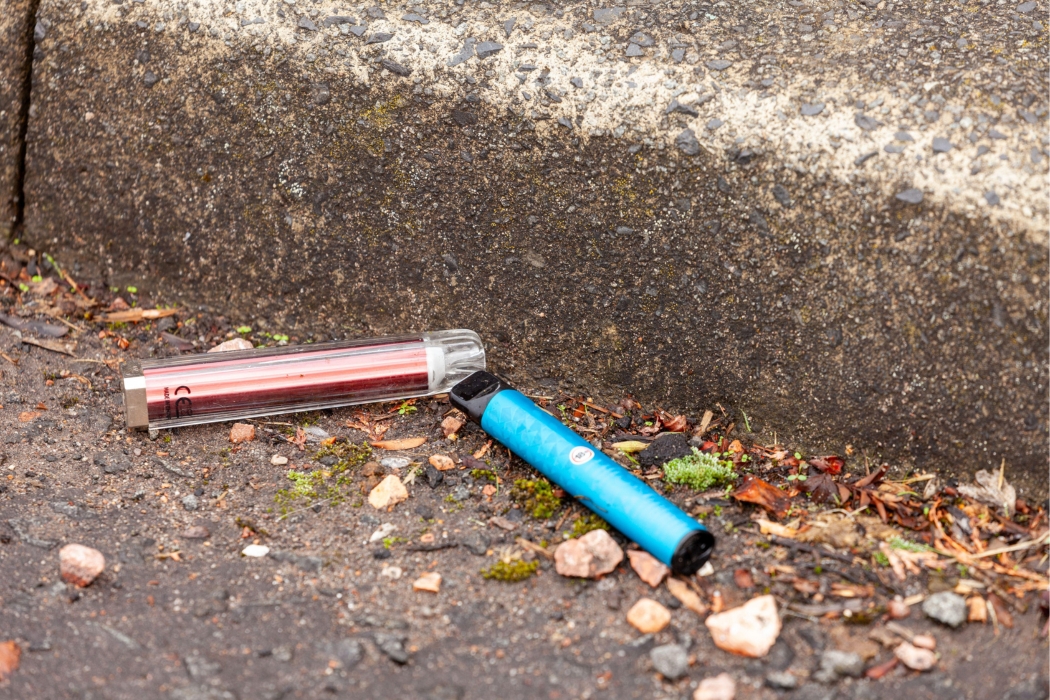
Many of today’s most popular vape products are intentionally designed to be thrown away. That includes fully disposable devices and single-use pod systems, like JUUL-style cartridges.
The convenience comes with a real environmental cost. These products combine single-use plastic with electronics and batteries, creating a complicated waste stream for a product meant to be used briefly and discarded. The result is more trash, more pollution, and more material that waste systems aren’t equipped to manage.
Lack of Manufacturer Responsibility
Most vape manufacturers shift the responsibility to the consumer. Many do not offer recycling or take-back programs, and few provide clear instructions on how to dispose of devices responsibly.
In some cases, product materials even direct users to throw vapes in the trash. According to research highlighted by the Truth Initiative (2019), there is widespread confusion about proper disposal due to a lack of education and guidance from manufacturers—an issue that directly contributes to improper disposal and littering.
Environmental Damage from Trashed Vapes
Plastic Pollution and Microplastics
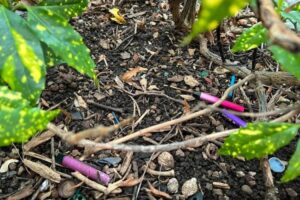
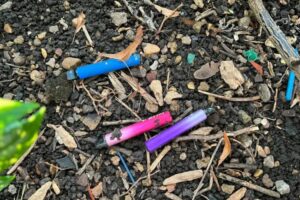
Vape housings, pods, and mouthpieces are largely made from plastic. When these plastics are discarded, they don’t biodegrade. Over time, they break down into microplastics.
Those microplastics end up in soil, rivers, and oceans, where they can be ingested by wildlife and move up the food chain. Once released into the environment, they’re nearly impossible to remove.
Heavy Metals and Chemical Leaching
Vapes also contain metals such as lead and mercury, which can leach into soil and groundwater when devices are crushed or left in landfills. Nicotine residue and other chemicals can wash into waterways, where they are toxic to fish and other aquatic life.
Over time, improperly discarded vapes contribute to long-term environmental contamination—far beyond what most people expect from a product that fits in the palm of your hand.
Why “Just One Vape” Still Matters
It’s easy to think one small device won’t make a difference. But millions of vapes are sold and discarded every year, and those numbers keep climbing. Each individual device might be small, but at scale, they add up to a massive waste stream.
When you multiply plastics, batteries, electronics, and chemicals by millions of units, the impact becomes impossible to ignore. Individual disposal decisions compound into system-wide problems—fires in waste facilities, polluted waterways, overwhelmed recycling systems, and growing piles of e-waste that shouldn’t exist in the first place.
What You Should Do Instead of Throwing a Vape Away
Treat Vapes as E-Waste
Vapes meet the definition of electronic waste, even if they’re labeled “disposable.” They contain batteries, electronic components, and hazardous materials that require specialized handling.
If you wouldn’t throw a phone or laptop in the trash, a vape shouldn’t go there either. The size of the device doesn’t change the risks it creates once it enters the waste stream.
Use Licensed Vape Recycling Services
Licensed recyclers are equipped to handle vapes safely and responsibly. At a professional facility, devices are processed in a way that protects people and the environment.
Recyclers safely isolate batteries, separate electronics, plastics, and metals.. Most importantly, vapes are diverted from landfills and processed through approved recycling channels designed for hazardous and electronic materials.
How EACR Inc. Handles Vape Recycling
EACR Inc. provides professional vape recycling programs designed for real-world use. Services include bulk collection and container-based options to safely manage vape waste at scale.
Collected devices are handled using controlled processes that reduce fire risk by isolating lithium-ion batteries. Materials are then separated and sent through appropriate downstream recycling partners. Programs are designed to support individuals, businesses, schools, and institutions that need a safe alternative to trash disposal.
Don’t Throw Your Vape in the Trash
Vapes may be small, but they’re not harmless. Throwing them in the trash increases fire risk, spreads pollution, and wastes materials that could be responsibly recovered.
Proper recycling protects sanitation workers, waste infrastructure, and the environment while keeping hazardous materials out of landfills. The takeaway is simple: if a product contains a battery, electronics, and chemicals, it does not belong in the trash.