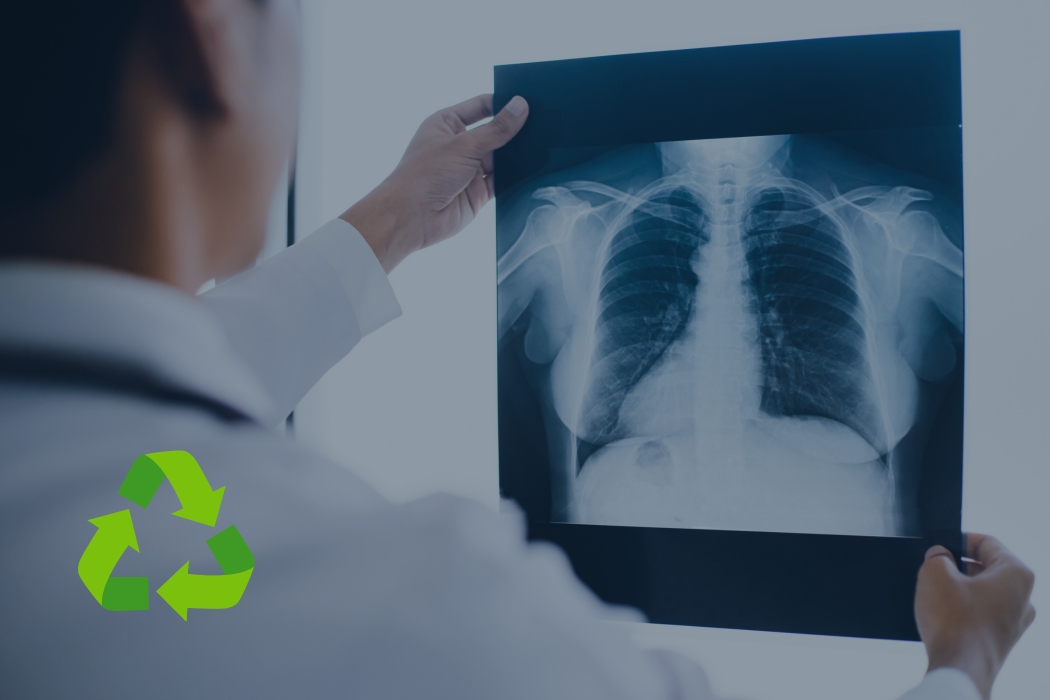
Radiographic film recycling turns archived X-rays into recoverable silver while protecting confidential information.
Even though most imaging has moved to digital, analog film still exists. It’s sitting in storage rooms, off-site warehouses, basements, and legacy file rooms inside hospitals, dental offices, veterinary clinics, and industrial facilities.
The problem is simple: facilities are transitioning to digital systems, but decades of film remain boxed with no clear disposal plan. Staff are unsure about compliance rules, silver value, or whether the film can even be recycled.
If you are upgrading or decommissioning imaging equipment, EACR Inc. provides licensed X-ray machine recycling services to coordinate secure removal alongside your radiographic film recycling.
This guide explains how silver recovery works, what compliance requirements apply, when to schedule a purge, and how structured radiographic film recycling actually happens.
What is Radiographic / X-Ray Film?
Radiographic film is traditional imaging film used before full digital conversion. It contains a silver-based image layer on a plastic backing, which is what makes it recyclable.
Types of Radiographic Film
Licensed recycling providers typically accept:
- Medical X-rays
- Dental X-rays
- Veterinary radiographs
- MRI and nuclear medicine films
- Industrial radiography and NDT film
- Unexposed film stock
- Darkroom scrap and discards
Each type can contain different silver concentrations depending on age, manufacturer, and coating style.
Why It Contains Silver
Radiographic film was designed to capture images using light-sensitive chemistry.
Key components include:
- Silver halide emulsion: The light-reactive layer that forms the image
- Polyester base: The flexible plastic backing sheet
- Double-sided vs single-sided coating: Double-coated films generally contain more silver than single-sided films
The silver embedded in the emulsion layer is the primary recoverable material during recycling.
Why Radiographic Film Recycling Matters
Silver Recovery & Resource Reuse
Radiographic film contains recoverable silver that can be extracted and refined.
Important considerations:
- Silver yield varies by film age and type
- Older films typically contain higher silver concentrations
- Industrial and certain specialty films may yield more silver than modern dry-process films
Recycling supports circular material flow by returning refined silver back into industrial supply chains instead of sending it to landfill.
HIPAA & Confidential Data Protection
Archived X-rays often contain:
- Patient names
- Dates of birth
- Medical record numbers
- Diagnostic information
Improper disposal creates real compliance and liability risk.
Secure radiographic film recycling includes:
- Controlled collection
- Secure destruction of image data
- Certificates of recycling
For healthcare facilities, this documentation is critical during audits or internal compliance reviews.
Environmental Responsibility
Landfilling radiographic film wastes recoverable material and creates unnecessary environmental impact.
Recycling:
- Prevents silver loss to landfill
- Reduces demand for virgin silver mining
- Allows recovery of polyester plastic base materials
Structured X-ray film recycling keeps silver-bearing materials out of the waste stream and supports responsible resource recovery.
Average Silver Yields by Film Type
Not all radiographic film contains the same amount of silver. Yield depends on age, manufacturer, coating style, and processing method.
This section is informational. Actual recovery varies by batch, condition, and market factors.
Medical Film Yield Trends
Pre-1979 Films
Older medical films typically contain higher silver concentrations.
- Heavier silver halide coatings
- Higher recovery potential per pound
- Often found in long-term archives
Facilities purging very old file rooms may see stronger silver recovery compared to newer film.
1980s–1990s Film
Silver content began declining as manufacturers optimized coatings.
- Moderate silver yield
- Common in hospitals that converted to digital in the early 2000s
- Often mixed with newer dry films in archives
Dry Process Films (Lower Yield)
Modern dry-process films contain less silver than traditional wet-process films.
- Lower average silver concentration
- Frequently mixed into older file archives
- Reduced overall assay when blended
Yield depends heavily on the ratio of dry to conventional films in a purge batch.
Industrial / NDT Film
Industrial and non-destructive testing film often contains higher silver concentrations than standard medical film.
- Thicker coatings
- Higher image density
- Greater recovery potential
Security Considerations for Defense Projects
Industrial radiographs may contain:
- Proprietary engineering data
- Infrastructure imaging
- Defense-related documentation
The X-Ray Film Recycling Process
Radiographic film recycling follows a structured, documented process.
Step 1: Inventory & Staging
Before removal:
- Box counts are confirmed
- Approximate weight estimates are calculated
- Film may be separated by type when necessary
Proper staging prevents loss, miscounting, or documentation gaps.
Step 2: Secure Collection
Depending on volume, facilities may choose:
- On-site purge services
- Scheduled bulk pickup
- Secure e-waste container placement for ongoing accumulation
Collection is coordinated to minimize disruption and reduce internal labor demands.
Step 3: Controlled Transport
Film is transported through secure logistics channels.
Controls may include:
- Chain-of-custody documentation
- Verified transport routing
- Controlled facility intake procedures
This step is especially important for healthcare and industrial clients.
Step 4: Film Destruction
Radiographic film is processed through:
- Shredding systems
- Chemical processing systems
Image data is permanently destroyed during processing through data destruction.
There is no reuse of intact radiographs.
Step 5: Silver Refining & Material Separation
After destruction:
- Silver is extracted through chemical processing
- Polyester film base is separated
- Remaining fractions are routed appropriately
Recovered silver is refined and returned to industrial supply chains.
On-Site Film Purges vs Bulk Pickup
Facilities typically choose between purge services and bulk removal.
On-Site Purges
Best for:
- Hospital digital conversions
- Archive room cleanouts
- Multi-year retention expiration projects
Benefits include:
- No in-house labor strain
- Reduced injury risk from lifting and moving boxes
- Controlled documentation from start to finish
This option is ideal when large storage rooms must be cleared quickly.
Bulk Pickup
Best for:
- Dental offices
- Veterinary clinics
- Small imaging centers
- Industrial facilities
Film is staged in advance and removed on a scheduled basis.
Bulk pickup works well for steady, manageable quantities or smaller archive cleanouts.
Compliance & Legal Considerations
Radiographic film recycling intersects with privacy and environmental law.
Most competitors gloss over this. Facilities should not.
HIPAA Requirements
X-ray film contains protected health information.
Proper recycling requires:
- Secure destruction standards
- Confidential handling
- Destruction confirmation records
Improper disposal can trigger regulatory exposure.
Radiographic Film Recycling for Industrial & NDT Facilities
Radiographic film recycling is not just a healthcare issue. Industrial and non-destructive testing operations generate significant volumes of film that require secure handling.
Proprietary Imaging
Industrial radiographs often document:
- Weld integrity
- Structural components
- Pipeline systems
- Aerospace and manufacturing parts
These images may contain proprietary engineering data that should never enter general scrap channels.
Government / Defense Sensitivity
Some NDT and industrial imaging projects support:
- Defense contracts
- Infrastructure projects
- Energy facilities
In these cases, secure destruction and documented chain-of-custody are critical to protect sensitive information.
Secure Destruction Importance
Industrial film should be:
- Collected under controlled conditions
- Transported securely
- Destroyed through documented processing
Using informal scrap buyers introduces risk.
Higher Silver Yield Potential
Industrial radiographic film often contains:
- Thicker emulsion coatings
- Higher silver concentrations
This can increase recovery potential compared to standard medical file film.
The focus should still be compliance first, recovery second.
Frequently Asked Questions About X-Ray Film Recycling
Can X-ray film be recycled?
Yes. Radiographic film contains recoverable silver and recyclable polyester material.
How much silver is in X-ray film?
Silver content varies. Older films typically contain more silver than newer dry-process films. Industrial film may yield higher concentrations than standard medical file film.
Is X-ray film hazardous waste?
Radiographic film itself is not typically classified as hazardous waste. However, it must be handled properly due to confidential information and silver-bearing material regulations.
Can dental X-rays be recycled?
Yes. Dental radiographs contain silver and can be processed through licensed X-ray film recycling channels.
Do I need a Certificate of Recycling?
For healthcare and regulated industries, documentation is strongly recommended. Certificates of recycling or destruction provide proof of secure processing.
Can large hospitals schedule a purge?
Yes. Large-scale purges can be coordinated for digital conversions, archive cleanouts, and multi-year retention expiration projects.
Conclusion
Radiographic film contains recoverable silver.
Improper disposal creates compliance, privacy, and liability risk.
Secure destruction protects patient and proprietary information.
Structured X-ray film recycling supports environmental responsibility and controlled material recovery.
For facilities planning a radiology refresh, EACR Inc. supports compliant X-ray machine recycling with controlled handling, secure data protection, and proper material recover