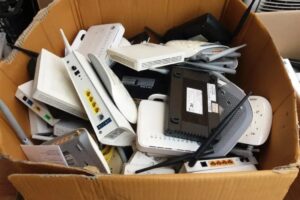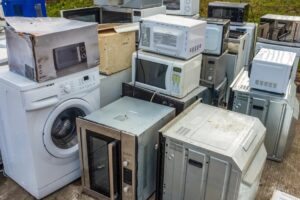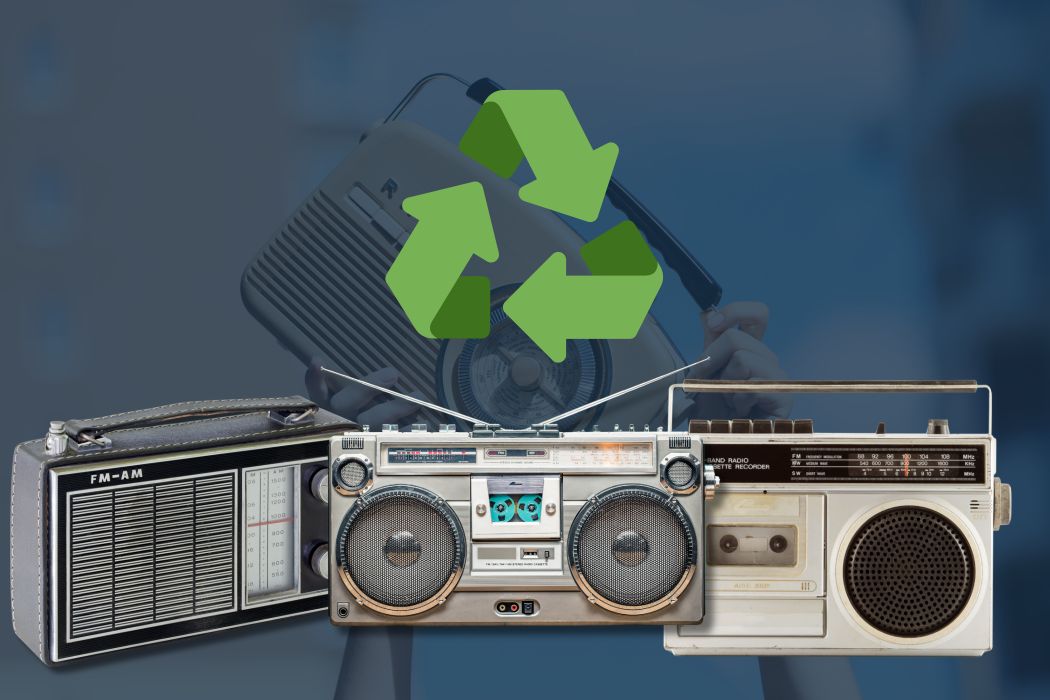
Radio recycling is an important step toward keeping old electronics out of landfills and reducing environmental harm. From classic AM/FM radios to modern smart speakers, millions of radios are tucked away in basements, garages, and storage boxes. Over time, these forgotten devices can add up to a surprising amount of electronic waste.
Even though radios seem harmless, they contain metals, plastics, and electrical components that should never end up in the trash. Inside are materials like copper, aluminum, and small circuit boards that can leach toxins or sit in landfills for decades. Recycling radios prevents waste and ensures reusable materials are recovered and reintroduced into the manufacturing process.
This guide explains why radio recycling is essential, what types of radios can be recycled, and how companies like EACR Inc. make it easy to recycle electronics the right way.
Why You Should Recycle Old Radios
Environmental Impact
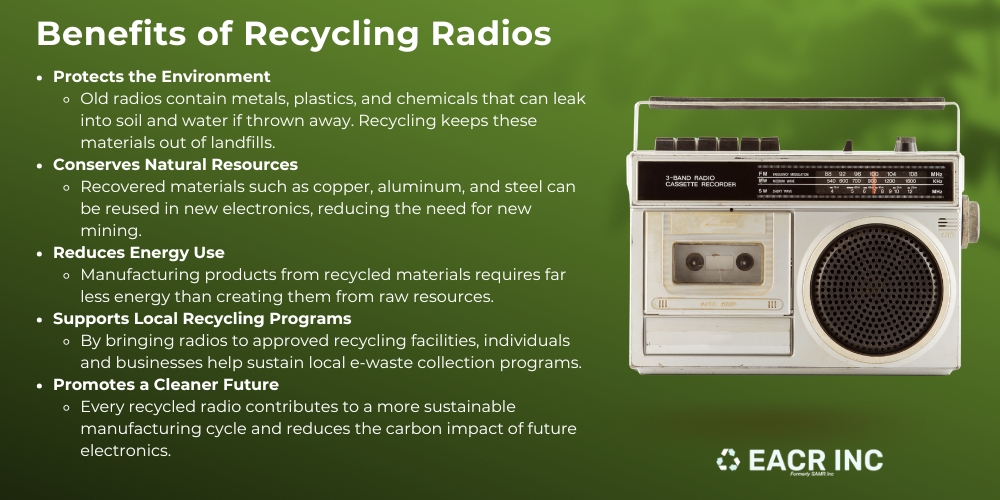
When radios are thrown away, the materials inside can cause long-term damage to soil and water. Circuit boards, wiring, and batteries may release heavy metals or chemicals as they break down. Recycling prevents this contamination while allowing metals, plastics, and glass to be properly processed and reused.
Each recycled radio helps conserve natural resources by reducing the need for new raw materials. It’s a small but meaningful action that adds up when more people participate.
Reuse of Components
Many radios are built with high-quality metals such as copper, aluminum, and steel that can be recovered and reused in new products. Even old speakers, knobs, and plastic casings can be processed and repurposed through specialized recycling methods.
Instead of letting those parts sit unused or decay in a landfill, recycling allows them to reenter production cycles and support sustainable manufacturing.
What Types of Radios Can Be Recycled
Home and Portable Radios
Traditional AM/FM radios, portable handheld radios, and newer digital or Bluetooth models can all be recycled.
Household radios may be small, but multiplied across millions of homes, they represent a major opportunity to reduce e-waste.
Car and Marine Radios
Car stereos and marine radios often include extra wiring, metal casings, and speakers that can be dismantled and processed for material recovery. Whether built into dashboards or installed on boats, these devices contain recyclable metals and plastics that shouldn’t end up in the trash.
At recycling facilities, they’re treated like other small electronics — safely disassembled and sorted by material type.
Professional and Two-Way Radios
Two-way radios, walkie-talkies, and communication systems used in workplaces, schools, and security operations can also be recycled. These devices often contain rechargeable batteries, antennas, and circuit boards that must be processed properly.
EACR Inc. accepts all types of professional radios under corporate and bulk recycling programs, ensuring they’re handled safely and responsibly.
The Radio Recycling Process
Collection and Sorting
Radio recycling begins with proper collection and sorting. Radios are gathered through community drop-offs, corporate pickups, or local e-waste events. Once collected, each device is inspected and organized by material type and overall condition.
Sorting helps recyclers like EACR Inc. identify which components can be recovered and reused efficiently. Plastic housings, circuit boards, and metal parts are separated before further processing, ensuring maximum material recovery and minimal waste.
Data and Component Removal
Some modern radios include internal memory or digital storage for settings, recordings, or preferences. These are wiped or physically dismantled to ensure no data remains.
During this stage, batteries, cords, antennas, and speakers are also removed. Each part is routed into the correct recycling stream—ensuring both safety and environmental sustainability
Material Recovery and Processing
After disassembly, recyclable materials like metals, plastics, and wiring are processed for reuse. These materials are cleaned, refined, and prepared to reenter manufacturing cycles for new products.
EACR Inc. follows a strict zero-landfill policy, meaning that every recoverable part of a radio is reused, repurposed, or responsibly handled. This approach keeps toxic materials out of landfills while supporting a more sustainable electronics industry.
Where to Recycle Radios
Licensed Electronics Recycling Facilities
EACR Inc. accepts all types of radios and related accessories through its licensed electronics recycling network. Individuals and businesses can take advantage of drop-off, mail-in, or scheduled pickup options for convenience.
Local E-Waste Collection Events
Many towns and municipalities host e-waste collection events where residents can drop off radios for safe recycling. These community programs often partner with recyclers like EACR Inc. to handle the devices properly and ensure materials are reclaimed.
If your local area has upcoming electronics recycling events, bring your old radios along. It’s one of the easiest ways to ensure they’re processed correctly—and you’ll help reduce e-waste in your community.
Preparing Your Radio for Recycling
Check for Personal Data
Some modern or digital radios store data such as saved stations, recorded audio, or personal settings. Before recycling, double-check that any personal information has been erased. This step helps protect your privacy while preparing your radio for responsible recycling.
Contact EACR Inc. for Pickup or Drop-Off
When you’re ready to recycle, contact EACR Inc. for guidance on how to dispose of your radios safely. The company offers convenient options including drop-offs, scheduled pickups, and mail-in services for both individuals and businesses.
Whether you’re recycling one device or hundreds, EACR Inc. ensures every radio is handled in compliance with environmental standards and processed under a zero-landfill policy.
FAQs About Radio Recycling
Can all types of radios be recycled?
Yes. Almost every type of radio—from classic analog models to modern digital units—can be recycled through a licensed electronics recycler.
Do radios contain harmful materials?
Yes, many contain small amounts of metals and electronic components that can release toxins if improperly disposed of. Recycling prevents these materials from harming the environment.
Can broken radios still be recycled?
Absolutely. Even if a radio no longer works, its materials such as copper wiring, circuit boards, and plastic casings can still be recovered and reused.
Does EACR Inc. provide bulk recycling for offices and facilities?
Yes. EACR Inc. offers corporate recycling programs that include bulk pickups, data destruction, and Certificates of Recycling for recordkeeping.
What happens to the materials after recycling?
Recyclers separate metals, plastics, and electronic parts for reuse. These materials are cleaned, refined, and reintroduced into manufacturing to create new products.
Conclusion: Keep Radios Out of Landfills
Every recycled radio helps reduce pollution and supports a cleaner, more sustainable future. Proper radio recycling prevents hazardous materials from entering the environment and allows reusable components to be recovered. Contact us today.