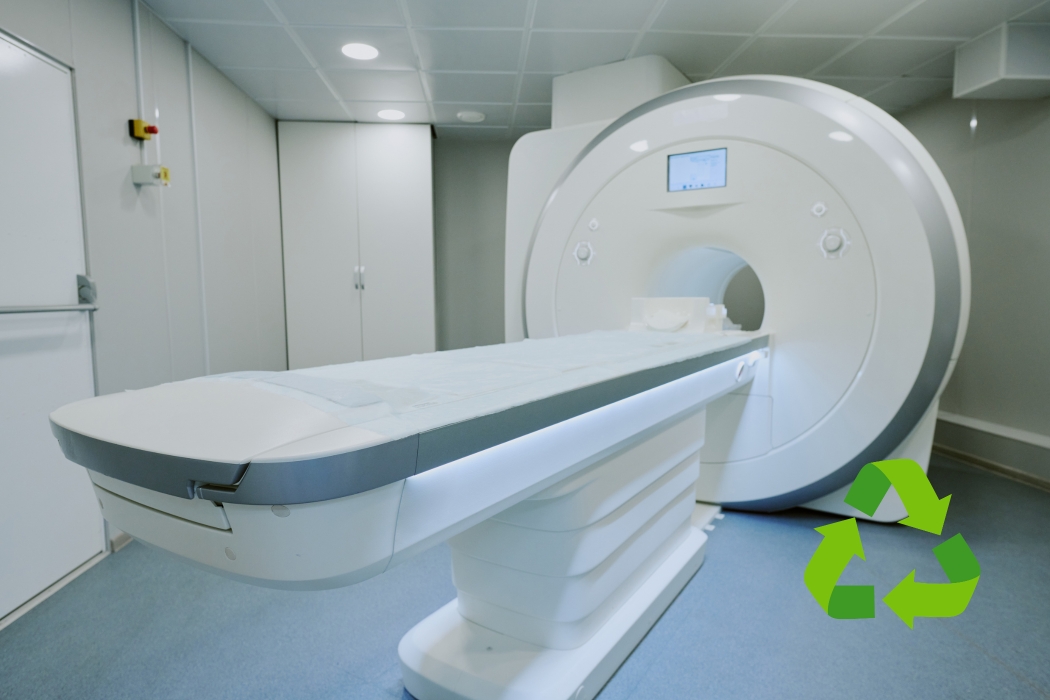
MRI systems are massive, high-tech medical assets — and recycling them requires precision.
MRI system recycling is not just about removing a large machine from a room. It involves superconducting magnets, cryogens like liquid helium, rare earth elements, embedded electronics, and regulated materials that must be handled correctly.
Improper disposal can create serious environmental risk, regulatory penalties, and data security issues. These systems contain recoverable materials, but they also contain components that can become hazardous if mishandled.
This guide explains how MRI recycling works, what materials are involved, the compliance requirements you need to understand, and how electronics recycling companies manage the process responsibly.
What is Inside an MRI System?
Before you can recycle an MRI system, you need to understand what you are dealing with. These machines are complex assemblies of metals, magnets, electronics, and cooling systems.
Superconducting Magnet Assembly
At the core of most MRI systems is a powerful superconducting magnet.
This assembly typically includes:
- Niobium-titanium alloy windings that carry electrical current without resistance
- Copper coils that support magnetic field generation
- A cryostat vessel that insulates and contains cooling materials
- A liquid helium cooling system that keeps the magnet at superconducting temperatures
This magnet is the heart of the machine — and one of the most technically demanding components to decommission.
Rare Earth Magnet Components
MRI systems rely on rare earth materials to create stable, high-strength magnetic fields.
These may include:
- Neodymium magnets
- Samarium-cobalt magnets
- Dysprosium elements used for thermal stability
- Yttrium-based superconducting materials in advanced systems
These materials are considered strategically important and are recoverable when processed correctly.
Structural & Mechanical Materials
Beyond magnets, MRI systems contain substantial structural material.
This includes:
- Steel framing
- Aluminum panels
- Copper cabling
These metals represent significant recoverable material streams when properly dismantled and separated.
Electronics & Data Storage
Modern MRI systems are fully integrated digital platforms.
They contain:
- Control boards
- Embedded drives
- Network interfaces
- Software systems that may store protected health information (PHI)
Any MRI disposal process must address data destruction before equipment leaves the facility.
Why MRI System Recycling is Critical
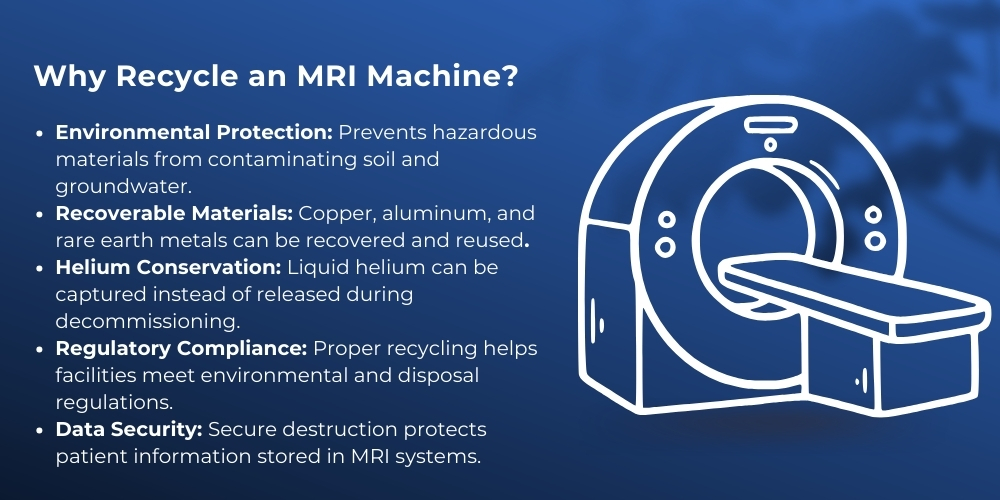
Recycling an MRI system is not optional housekeeping. It is environmental responsibility and regulatory risk management.
Environmental Protection
MRI machines can contain trace amounts of mercury, beryllium, and other regulated materials.
If improperly disposed of, these components can contaminate soil and groundwater. Rare earth mining also carries a heavy environmental footprint, including radioactive waste and ecosystem disruption. Recycling helps reduce demand for new extraction.
Helium conservation is another factor. Liquid helium is non-renewable and increasingly scarce. Responsible decommissioning minimizes unnecessary release.
Recovery of Materials
MRI systems contain substantial recoverable materials.
Copper and aluminum can be separated and processed through established metal recovery streams. Rare earth magnets, niobium-titanium alloys, and superconducting materials can also be extracted and reintroduced into industrial supply chains.
When handled correctly, these recoverable materials support circular supply chains and reduce reliance on new mining.
Regulatory & Legal Risk Reduction
MRI system recycling is heavily regulated.
Hazardous waste laws may apply depending on the materials involved. HIPAA requirements mandate secure handling and destruction of patient data. Environmental violations can trigger significant EPA penalties.
The MRI Decommissioning Process
MRI decommissioning is not demolition. It is controlled, technical, and highly regulated. Every step must be planned before tools ever touch the machine.
Step 1 – Site Evaluation
The process starts with a full assessment.
- Magnet type identification determines whether the system is superconducting, permanent, or hybrid. Each requires a different removal strategy.
- A hazardous material review evaluates potential mercury, beryllium, cooling systems, and regulated components.
- A data storage assessment identifies embedded drives, control systems, and networked components that may contain protected health information.
No removal should begin without this evaluation.
Step 2 – Controlled Magnet Quench
The magnet must be safely shut down before removal.
- A controlled quench involves the safe shutdown of the superconducting field, allowing the system to transition out of its energized state.
- Proper helium containment procedures are critical. Helium is expensive, non-renewable, and must be managed carefully.
- Pressure and safety management protects personnel and prevents structural damage during the process.
This step requires experienced, licensed professionals.
Step 3 – Cryogen Recovery
- Cryogen recovery focuses on capturing usable helium rather than venting it.
- Helium recapture reduces waste and supports responsible material management.
- Environmental safeguards ensure that cooling systems are drained and handled without releasing harmful substances into the environment.
Step 4 – Controlled Disassembly
- Once the system is safe, physical dismantling begins.
- Magnet extraction removes the core assembly from the housing.
- Electronics removal separates drives, control boards, and embedded systems for proper processing.
- Structural separation breaks down steel frames, panels, and copper cabling into recoverable streams.
Everything is documented. Nothing is randomly scrapped.
MRI Magnet Recycling Explained
The magnet is the most complex and material-intensive component of the system.
Rare Earth Recovery
MRI magnets contain rare earth elements and superconducting alloys that can be recovered when processed correctly.
This may include:
- Neodymium processing
- Samarium-cobalt separation
- Dysprosium extraction
- Niobium-titanium alloy recovery
These recoverable materials are reintroduced into industrial supply chains instead of being lost to landfill.
Advanced Separation Methods
Recycling MRI magnets requires specialized technology.
- Eddy current separation isolates non-ferrous metals like aluminum and copper.
- Hydrometallurgical processes help extract rare earth elements from complex assemblies.
- Magnet isolation technologies separate high-strength magnetic materials from surrounding components.
This is industrial-scale material science, not basic scrap processing.
Circular Supply Chain Impact
Recycling supports a circular medical equipment lifecycle.
- It reduces reliance on environmentally intensive mining.
It strengthens domestic material recovery efforts.
It keeps recoverable metals and rare earth elements in productive use.
This is not just disposal. It is resource stewardship.
Data Security in MRI Disposal
MRI systems often store patient data. That risk does not disappear when the machine is unplugged.
HIPAA-Compliant Data Destruction
All storage devices must be addressed before removal.
This may involve:
- Drive wiping protocols using secure data erasure standards
- Physical data destruction when wiping is not sufficient
- Documentation issuance confirming sanitization
Data protection is not optional. It is a legal requirement.
Legal & Environmental Compliance
MRI recycling intersects with multiple regulatory frameworks.
Hazardous Material Handling
Certain systems may contain regulated substances such as:
- Mercury
- Beryllium
- Other controlled metal components
These materials must be identified and handled under appropriate environmental guidelines.
Documentation
Structured MRI recycling includes paperwork.
Facilities may receive:
These records demonstrate responsible processing and regulatory alignment.
MRI Recycling for Hospitals & Imaging Centers
Healthcare facilities face unique planning challenges.
Equipment Upgrade Planning
MRI recycling should be integrated into upgrade timelines. Decommissioning planning reduces downtime and logistical surprises.
Budget Offsets Through Recoverable Materials
Copper, aluminum, and rare earth components represent recoverable materials that can help offset disposal costs in some cases.
Licensed Recycler Partnerships
Working with a licensed electronics recycling company provider ensures proper magnet handling, cryogen management, and compliance support.
Scheduling & Site Coordination
Large imaging suites require coordinated removal, rigging access, and environmental safeguards. Advanced scheduling prevents operational disruption.
Challenges in MRI System Recycling
MRI recycling is specialized for a reason.
Helium Loss During Quench
Improper quenching can result in helium loss, safety hazards, and costly system damage.
Extreme Equipment Weight
Magnets often weigh several tons. Removal requires structural planning and heavy lifting coordination.
Limited Rare Earth Processing Infrastructure
Rare earth recovery infrastructure remains limited. Not all facilities are equipped to process these materials efficiently.
Safety & Liability Risks
Improper handling exposes facilities to environmental liability, injury risk, and regulatory penalties.
Step-by-Step: How to Recycle an MRI System
- Confirm the upgrade or decommission timeline.
- Secure patient data and coordinate with IT.
- Engage a licensed MRI recycling provider.
- Perform a controlled magnet quench.
- Recover cryogens responsibly.
- Dismantle and separate materials.
- Receive full documentation for records.
Planning prevents risk.
Frequently Asked Questions About MRI Recycling
Can MRI magnets be recycled?
Yes. Rare earth magnets and superconducting materials can be processed and recovered through specialized recycling systems.
What happens to rare earth magnets after recovery?
Recovered materials are refined and reintroduced into industrial supply chains for future manufacturing use.
Is helium recovered during MRI recycling?
In structured decommissioning, helium can be captured and managed rather than released unnecessarily.
Are MRI systems considered hazardous waste?
Certain components may be regulated depending on materials present. Evaluation determines classification.
What documentation is required for MRI disposal?
Facilities may require data destruction verification, recycling certificates, and waste tracking documentation.
How much does MRI system recycling cost?
Costs vary depending on system size, location, access requirements, and material composition. A site evaluation determines pricing.
Conclusion
MRI systems contain significant recoverable materials. Improper disposal creates environmental and regulatory risk. Licensed recyclers ensure safe magnet handling, data protection, and compliant processing. Structured MRI recycling supports sustainability, protects patient information, and reduces liability.
Contact a licensed e-waste recycling provider to schedule evaluation and compliant removal.