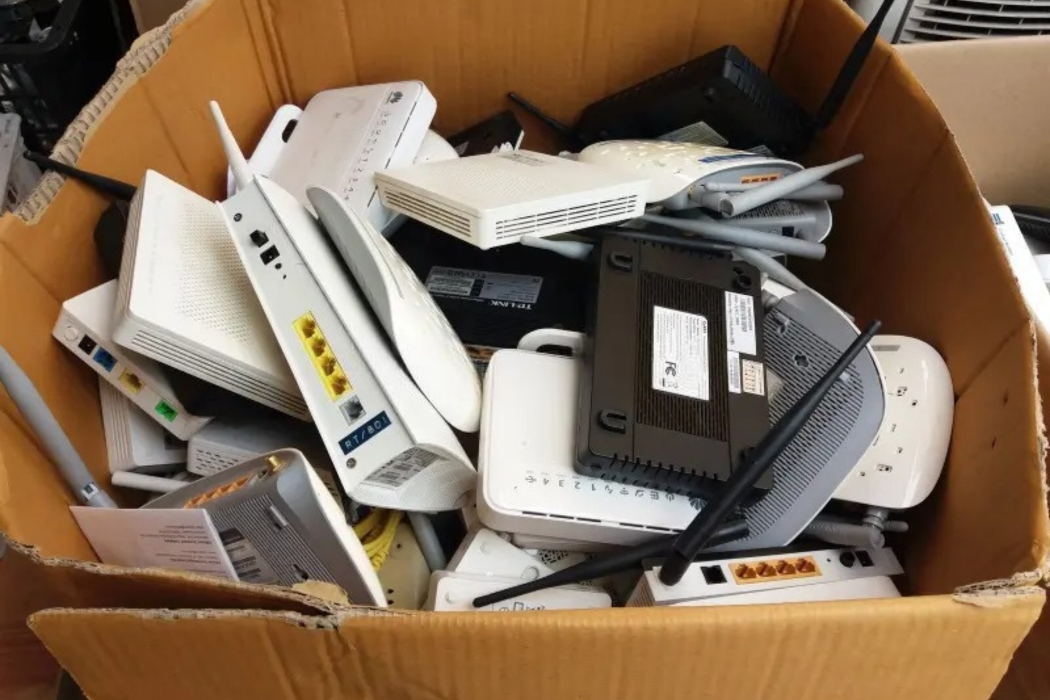
Modem recycling is the proper way to dispose of old or unwanted modems through licensed electronics recycling programs—not the trash. Modems often feel harmless because they’re small, lightweight, and quiet, but they’re still electronic devices packed with internal components that don’t belong in household waste.
You’ll find modems almost everywhere today, including:
- Homes and apartments
- Offices and coworking spaces
- Schools and libraries
- Data closets and network rooms
This guide explains what’s inside a modem, why improper disposal causes real problems, and how modem recycling actually works. EACR Inc. provides licensed electronics recycling services designed to help individuals and organizations recycle networking equipment responsibly.
Why Modems Should Never Be Thrown in the Trash (Environmental, safety, and compliance risks)
Modems qualify as electronic waste—even when they’re small or outdated. Inside each device are circuit boards, wiring, plastics, and in some cases internal batteries, all of which require controlled handling.
Throwing modems in the trash creates several risks:
- Fire hazards caused by damaged electronics or batteries
- Metal and chemical contamination in landfills
- Improper handling of electronic components not designed for waste streams
Curbside recycling programs are not equipped to process electronics safely, and trash disposal bypasses the protections needed for electronic waste. Many states and municipalities restrict electronics from landfill disposal, making licensed recycling the responsible option.
What’s Inside a Modem? (Materials and electronic components)
Common Recyclable Materials
Modems contain several materials that can be recovered when processed correctly, including:
- Plastic housings
- Copper wiring and internal conductors
- Aluminum heat sinks and shielding
- Metal ports and connectors
These materials can be separated and routed into appropriate recycling streams through licensed electronics recycling.
Electronic & Regulated Components
Beyond basic materials, modems also include regulated electronic parts that require proper handling:
- Printed circuit boards
- Power regulators and processing chips
- Capacitors and soldered components
- LEDs, antennas, and signal modules
These components are the primary reason modems must be recycled as e-waste rather than treated as general household trash.
Types of Modems That Can Be Recycled (Residential, commercial, and enterprise)
Cable Modems
Cable modems, including DOCSIS models from internet service providers, are fully recyclable. Both standalone and leased units contain electronics and metals that qualify as e-waste.
DSL Modems
DSL modems use telephone lines for internet access and are often combined with routers. Despite their simpler appearance, they still contain circuit boards and wiring that require proper recycling.
Fiber & ONT Modems
Fiber and ONT modems are used for high-speed internet in homes and commercial buildings. These devices typically include advanced electronics and shielding that must be processed through licensed channels.
Modem-Router Combos
All-in-one modem-router devices combine networking functions into a single unit. Their higher electronic complexity makes proper recycling especially important.
Enterprise & Commercial Modems
Used in offices, schools, hospitals, and data environments, enterprise modems often have higher component density and metal content. These units are well-suited for bulk electronics recycling programs.
How Modem Recycling Works With EACR Inc. (Step-by-step process)
Modem recycling through EACR Inc. follows a controlled, safety-focused process designed to keep electronic devices out of landfills while recovering reusable materials responsibly.
Step 1: Collection or Drop-Off
EACR Inc. offers multiple ways to recycle modems depending on volume and need:
- Daily drop-off for individuals and small quantities
- Scheduled pickups for businesses and institutions
- Bulk handling for office cleanouts, IT refreshes, and equipment upgrades
This flexibility makes it easy to recycle everything from a single home modem to hundreds of devices from a commercial network upgrade.
Step 2: Inspection & Component Identification
Once received, modems are handled as electronic waste:
- Devices are sorted and logged as electronics
- Regulated components are identified
- Units are prepared for controlled processing
This step ensures electronics are handled safely from the start.
Step 3: Processing & Sorting
Modems are processed to separate:
- Electronics
- Plastics
- Metals
This creates clean material streams and prevents cross-contamination during recycling.
Step 4: Responsible Material Recovery
Separated materials are routed through approved channels:
- Electronics processed through licensed recycling programs
- Plastics and metals handled according to downstream standards
- No landfill disposal at any stage
Benefits of Recycling Modems (Environmental and operational impact)
Recycling modems instead of trashing them delivers meaningful benefits:
- Reduces electronic waste entering landfills
- Prevents fires caused by damaged electronics
- Keeps reusable materials in circulation
- Lowers demand for new raw material extraction
- Supports responsible technology upgrades for homes and businesses
Recycling Options Available Through EACR Inc. (Programs for every scale)
E-Waste Containers
For organizations that generate electronics regularly, EACR Inc. provides:
- On-site electronics collection bins
- Scheduled pick up services
- Ideal solutions for IT departments and facility managers
Municipal & Community Recycling Support
EACR Inc. works with public entities to support:
- Municipal electronics recycling initiatives
- Community recycling programs and collection events
Daily Drop-Off Recycling
Residents and small generators can recycle modems through:
- Convenient drop-off options
- Acceptance during operating hours
What About Data on Modems?
Many people don’t realize modems can store information, including:
- Network settings
- Login credentials
- Configuration data
Throwing devices in the trash can create unnecessary data exposure risks. Proper modem recycling helps ensure devices are handled responsibly and not resold, scavenged, or accessed improperly.
How to Prepare a Modem for Recycling (Simple steps)
Preparing a modem for recycling is easy:
- Unplug power and disconnect all cables
- Remove external accessories if possible
- Do not dismantle the device yourself
- Bundle multiple units together for efficient recycling
Modem Recycling FAQs
Can modems go in the trash?
No. Modems are electronic devices and should never be placed in regular trash.
Are leased modems recyclable?
Yes. Leased modems can be recycled once returned or released by the provider.
Do modem-router combos recycle the same way?
Yes. All-in-one devices are processed as electronic waste.
Can broken or outdated modems be recycled?
Absolutely. Functionality does not matter—material recovery is the goal.
Do you accept bulk loads of networking equipment?
Yes. Bulk recycling is available for businesses and institutions.
Can businesses schedule recurring pickups?
Yes. Ongoing pickup programs can be arranged.
Electronics Recycling Made Simple
Modems are just one part of the broader electronics waste stream. EACR Inc.’s complete electronics recycling services cover networking equipment, IT hardware, and other electronic devices, making it easier to manage upgrades responsibly across your entire organization.
Conclusion: Recycle Your Modem the Right Way
Modems may seem small, but they are still electronic waste that requires proper handling. Recycling protects people, infrastructure, and the environment while reducing fire risk and landfill impact. When it’s time to replace or retire a modem, choose responsible recycling instead of disposal. Contact EACR Inc. to schedule modem recycling services or submit a request through the service form today.