Microwaves might look like simple appliances, but they’re classified as electronic waste (e-waste) because of the components inside — like circuit boards, capacitors, and wiring. Tossing one in the trash isn’t just environmentally careless — in many places, it’s actually illegal.
Several states, including California, prohibit e-waste from entering landfills. According to the California Department of Toxic Substances Control (DTSC), microwaves must be handled as universal waste and recycled through proper channels. Similar rules exist in New York, New Jersey, and other states with strict e-waste regulations.
Hidden Hazards Inside Old Microwaves
There’s more going on inside your microwave than buttons and a spinning plate. Some internal parts can pose real environmental and safety risks if landfilled or crushed:
- Magnetrons: These are the vacuum tubes that generate microwaves. They contain metals and, in some cases, beryllium oxide, which is toxic if dust particles are inhaled.
- Capacitors: These store electricity and can retain a powerful charge even after the microwave is unplugged. A ruptured or shorted capacitor can leak harmful chemicals.
- High-voltage transformers and circuit boards: Often contain leaded solder, plastics, and metals that don’t break down easily and may contaminate soil and groundwater.
Disposing of a microwave responsibly helps prevent these materials from entering the environment — and protects sanitation workers from exposure during transport or crushing.
What’s Inside a Microwave and What Can Be Recycled
Recyclable Materials
When broken down properly, most microwaves contain materials that can be recovered and reused:
- Metal casing: Usually steel or aluminum — fully recyclable.
- Copper wiring: Found in transformers and power cords, copper is one of the most sought-after recycling metals.
- Glass trays: Often made from heat-resistant tempered glass.
- Circuit boards: Contain trace metals like gold, silver, and palladium.
- Motors and magnets: Used in fans or turntable assemblies, often reusable.
- Switches, lights, and fans: Can be salvaged or recycled depending on condition.
Non-Recyclable or Regulated Parts
Not every component is landfill-safe — and not everything can be recycled at a standard facility. This is why it’s important to use a licensed e-waste recycling company:
- Ceramic insulators: Especially those with beryllium oxide, which is hazardous if crushed.
- Leaded solder: Found on older circuit boards; requires special handling.
- Control panels: Often laminated plastics and digital components that can’t be recycled like traditional materials.
Licensed e-waste facilities know how to safely separate, handle, and process these components according to state and federal standards.
Can You Recycle a Microwave?
The Short Answer: Yes

Yes — microwave ovens are recyclable, and doing so is the safest, smartest way to dispose of them. While you can’t toss them in the curbside bin, you can bring them to a licensed e-waste facility or use a take-back program.
This answers the most common questions people ask:
- Are microwave ovens recyclable? Yes.
- Can you throw away a microwave? In most places, no.
- Where do I dispose of an old microwave? Keep reading.
Where to Recycle Old Microwaves
You have several eco-friendly and legal options:
- Licensed E-Waste Facilities: These are the best choice. They handle all components safely and offer documentation. Some even offer bulk pickup or business programs.
- Retailer Take-Back Programs:
- Best Buy accepts microwaves at most locations, even if you didn’t buy it there. Learn more at Best Buy’s Recycling Program.
- Lowe’s and Home Depot may offer haul-away services during appliance deliveries.
- Best Buy accepts microwaves at most locations, even if you didn’t buy it there. Learn more at Best Buy’s Recycling Program.
How to Prepare Your Microwave for Recycling
Remove Personal Items
Before you drop it off, make sure to:
- Take out the glass tray, packaging, or anything else that isn’t part of the main appliance.
- Wipe down the inside if there’s food residue. It’s not required, but it’s respectful and helps workers handling the unit.
A clean, empty microwave is much easier (and safer) to recycle.
Unplug and Cool Down
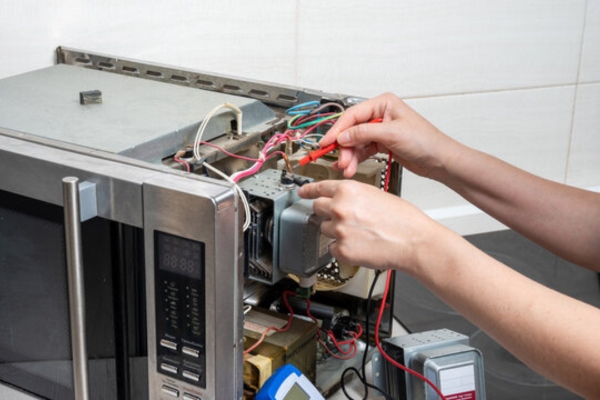
Always unplug the microwave and give it time to cool. Never attempt to open the unit or take it apart — even if it looks easy.
Why? Because capacitors can store deadly voltage for months after use. One wrong move with a screwdriver could result in a severe electrical shock, even if the microwave has been unplugged for days.
For this reason, Microwave Recycling should always be handled by licensed professionals who have the proper tools, safety training, and disposal methods to ensure the unit is processed without risk to people or the environment.
Unless you’re a trained technician, don’t risk disassembling a microwave. That’s why licensed electronics recycling companies exist — to do the hard work for you.
Other Responsible Microwave Disposal Options
Donate if It Still Works
Before you recycle, ask yourself: Does it still work?
If so, donating your old microwave is a great first step. Many organizations gladly accept working appliances:
- Goodwill or other local thrift stores
- Homeless shelters or churches
- Freecycle, Buy Nothing, or Facebook groups
Why Microwave Recycling Matters
Global E-Waste is Growing Fast
In 2019, the world generated approximately 53.6 million metric tons of electronic waste — and only 17.4% of it was properly recycled Global E-Waste Monitor 2020.
That number is expected to reach over 81 million tons by 2030. Microwaves, TVs, phones, and other everyday electronics are a major part of this growing problem.
Every Appliance Counts
A single microwave might not seem like much — but recycling just one helps recover:
- Copper from internal wiring
- Steel and aluminum from the frame
- Glass from the turntable
At EACR Inc., we’re committed to reducing e-waste through licensed, responsible microwave recycling. Every microwave we recycle helps move the needle toward a more sustainable future.
Microwave Recycling Services We Offer
Whether you’re an individual, property manager, or business, we make microwave recycling fast and stress-free.
- Drop-Off & Pickup Options: Bring it to us, or we’ll come to you.
- Bulk and Residential Service: From one appliance to a truckload, we handle it.
- Licensed Recycling Facility: Your microwave won’t end up in a landfill.
Frequently Asked Questions
Usually not. Most areas classify microwaves as e-waste, making it illegal to toss them in household trash. Always check with your city or recycler.
Licensed e-waste facilities, retailer take-back programs, or municipal drop-off days are the best options.
Not all — but most are. Licensed recyclers know how to safely handle recyclable parts like metal and copper while managing hazardous materials like capacitors.
No. Microwaves contain high-voltage capacitors that can hold a dangerous charge even after unplugging. Leave disassembly to the pros.
We disassemble it, sort the components, recycle what we can, and safely dispose of regulated materials in full compliance with environmental standards
Conclusion: Recycle Your Microwave Responsibly
When it comes to microwave recycling, the smartest move is to use a licensed electronics recycler that handles the process safely and legally. You’ll protect the environment, comply with local laws, and give materials a second life. Contact us today to get started.