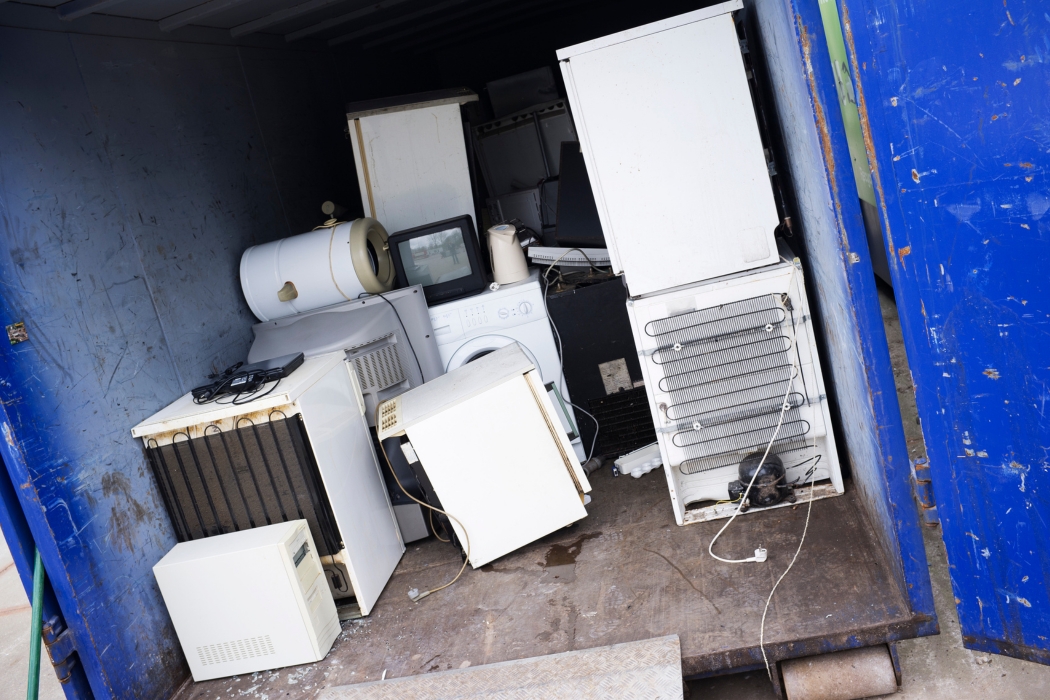
Freezer recycling is one of the most important steps you can take when getting rid of an old appliance, and it’s more than just clearing space in your home. Proper recycling protects the environment, keeps hazardous materials out of landfills, and recovers reusable metals and plastics that can be given a second life. Whether you’re replacing a single unit or managing disposal for a business, knowing how to recycle a freezer the right way makes a big difference.
Why Freezer Recycling Matters
Freezer recycling isn’t just about getting rid of an old appliance—it’s about protecting the environment and making the most of reusable materials. Freezers are filled with components that can either harm the planet or be put back into circulation when handled the right way.
Environmental Concerns
Most freezers contain refrigerants like Freon, R-134a, or R-410A, along with oils that help the system run. If released into the air, these substances contribute to ozone depletion and climate change. Recycling ensures they’re removed and processed safely.
Public Health Risks
Improper disposal doesn’t just impact the planet—it affects people. Chemicals and heavy metals inside freezers can seep into soil and groundwater if the unit ends up in a landfill. Recycling stops these toxins from spreading.
Reusable Materials
Freezers are packed with reusable resources. Steel, copper, aluminum, and even durable plastics can be recovered and turned into new products. By recycling, you’re reducing waste and conserving resources that would otherwise need to be mined or manufactured from scratch.
The Dangers of Improper Freezer Disposal
Throwing a freezer out with regular trash is more than just careless—it’s risky and, in many places, illegal.
Illegal Dumping Issues
Most states have strict rules banning freezers from landfills because of the refrigerants they contain. Ignoring these regulations can lead to fines and environmental damage.
Hazards of DIY Disposal
It may be tempting to try and drain or dismantle a freezer yourself, but refrigerants and oils require specialized equipment and training. Handling them without the right tools can be dangerous—and in many cases, against the law.
Wasted Resources
When a freezer is tossed instead of recycled, all of the reusable metals and plastics inside are lost. That means more energy and raw materials are needed to create new products, which only adds to environmental strain.
What’s Inside a Freezer That Can Be Recycled?
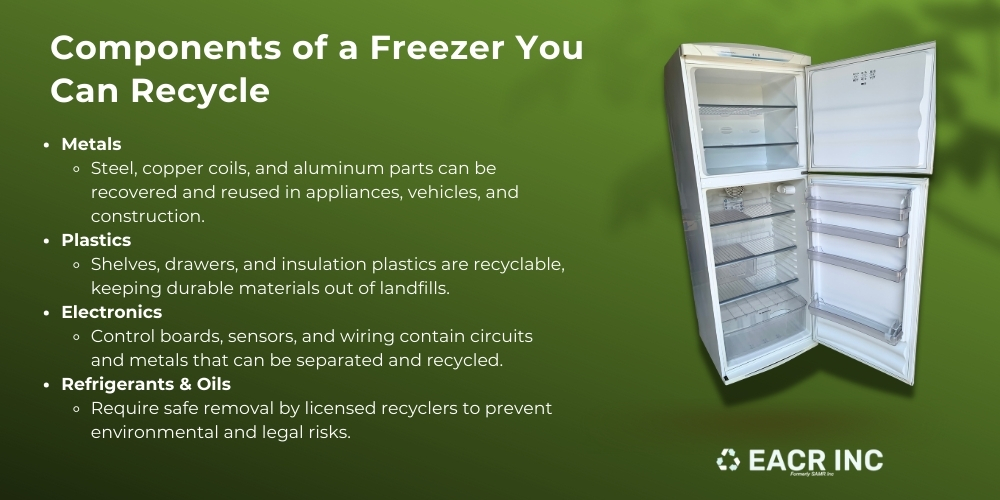
Looking inside a freezer shows just how much can be recovered when it’s recycled properly.
Metals
Steel framing, copper coils, and aluminum parts make up a large portion of most freezers. These metals are highly recyclable and can be repurposed for use in new appliances, vehicles, and construction.
Plastics
From shelves and drawers to insulation materials, freezers contain a significant amount of plastic. Recycling keeps these durable materials out of landfills where they would otherwise sit for decades without breaking down.
Electronics
Modern freezers often have control boards, sensors, and wiring. These components contain circuits and metals that can be carefully separated and recycled.
Refrigerants and Oils
The most sensitive part of freezer recycling is handling refrigerants and oils. These substances must be extracted and processed by licensed recyclers to avoid environmental and legal problems.
Freezer Recycling Laws and Regulations
Freezer recycling isn’t just best practice—it’s the law in many cases. Because freezers contain refrigerants and other hazardous materials, both federal and state agencies regulate how they must be handled.
EPA Section 608
Under the Clean Air Act, EPA Section 608 requires that refrigerants like Freon, R-134a, and R-410A be properly recovered before disposal. This process can only be performed by licensed professionals with the right equipment, ensuring harmful gases don’t escape into the atmosphere.
How to Recycle a Freezer the Right Way
When it’s time to say goodbye to your old appliance, freezer recycling should follow the safest and most efficient path. Luckily, there are several convenient options.
Licensed Electronics Recycling Facilities
One of the most reliable solutions is working directly with a licensed electronics recycler like EACR Inc. You can schedule a pick-up or drop off your freezer at a facility where it will be dismantled and processed according to strict environmental guidelines.
Retailer Take-Back Programs
Major retailers such as Best Buy, Lowe’s, Home Depot, and Sears often offer haul-away programs when you purchase a new freezer. These programs make it easy to recycle without making an extra trip.
Municipal Collection Events
Many towns and counties host seasonal e-waste and appliance collection events. These community drop-offs are convenient for residents who want to recycle a freezer safely without leaving their local area.
Mail-In and Commercial Programs
For businesses, schools, or organizations that need to dispose of multiple freezers, EACR Inc. provides bulk pick-ups, and e-waste container services. These scalable solutions make large-scale freezer recycling efficient and compliant.
Preparing Your Freezer for Recycling
Getting your freezer ready for recycling doesn’t take much, but following a few simple steps ensures safety and efficiency.
- Unplug and Defrost Completely: Allow enough time for the unit to thaw out before disposal.
- Remove Food, Shelves, and Accessories: Empty the freezer and take out any detachable parts.
- Wipe Down and Dry Interior: This prevents mold and makes transport cleaner.
- Secure Doors Shut for Safe Transport: Tape or tie the doors to prevent accidents during pickup.
- Contact a Licensed Recycler: Schedule a pickup or drop-off with a provider like EACR Inc.
Why Choose EACR Inc. for Freezer Recycling
When it comes to freezer recycling, EACR Inc. offers peace of mind and proven experience.
- Licensed electronics and appliance recycler with 25+ years in the industry.
- Zero-landfill policy—materials are reclaimed, not wasted.
- Services designed for individuals, businesses, schools, and municipalities.
- Flexible programs including drop-off, pick-up, containers, and mail-in options.
Frequently Asked Questions About Freezer Recycling
No. Freezers contain refrigerants and other components that require professional handling.
Yes—nearly every freezer, old or new, uses refrigerants for cooling. These must be removed safely before recycling.
Metals, plastics, and electronics are recovered and sent for reuse. Refrigerants and oils are processed to prevent environmental harm.
Yes. Businesses receive certificates of recycling showcasing their freezer has been properly recycled.
Absolutely. EACR Inc. offers customized pick-up and container solutions for large-scale recycling needs.
Conclusion
Freezer recycling protects the environment, keeps hazardous refrigerants and materials out of landfills, and recovers reusable metals and plastics. Whether you’re replacing a single unit or managing bulk disposal for a business, the right approach makes a real difference. Contact EACR Inc. today for freezer recycling services that are safe, compliant, and eco-friendly.