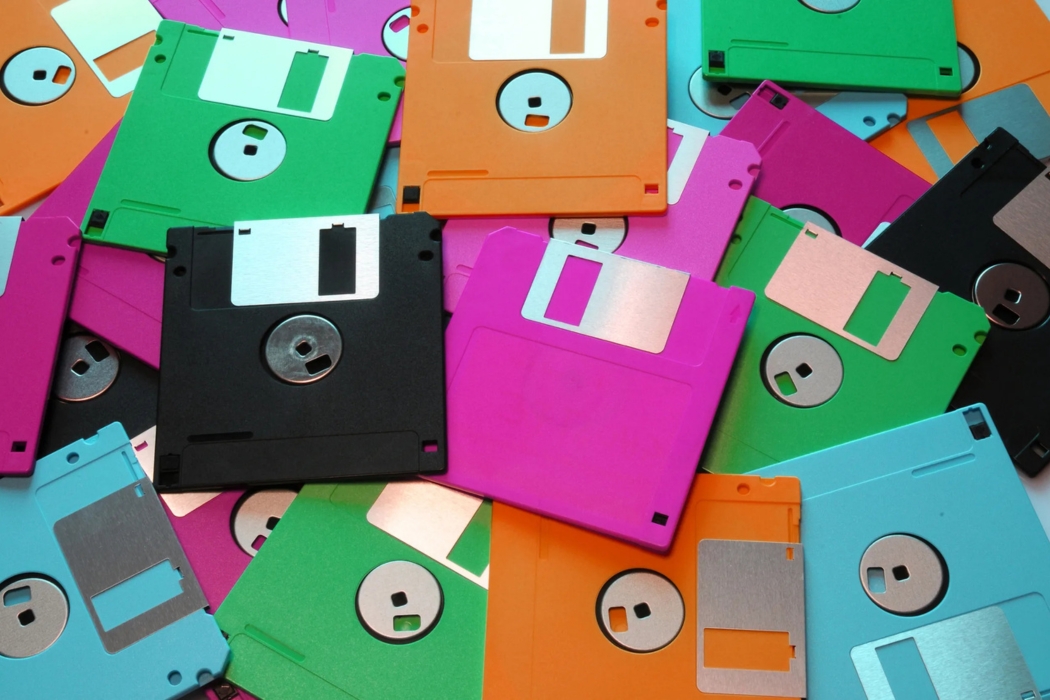
Floppy disk recycling is the process of safely collecting and breaking down old floppy disks so their materials can be recycled or reused instead of wasted. These once-innovative storage devices may look harmless, but like all electronics, they’re made from plastics, metals, and coatings that need proper handling.
Floppy disks first appeared in the 1970s in 8-inch format, followed by the more common 5.25-inch disks in the 1980s, and eventually the sturdy 3.5-inch disks that defined the 1990s. They were the standard for saving files, running programs, and transferring data before CDs, flash drives, and cloud storage took over.
Even though they’ve been obsolete for decades, floppy disks are still sitting in filing cabinets, boxes, and storage rooms across schools, offices, and homes. That’s why recycling them now is more important than ever.
Why Floppy Disks Should Be Recycled
While small, floppy disks contain materials that can cause harm if thrown into the regular trash. The plastic casing, the magnetic tape inside, and the metal hub all contain substances that shouldn’t sit in landfills. The coatings on the magnetic film, for example, can release toxins into the soil or water as they break down.
Recycling keeps these risks in check while also recovering useful resources. Plastics can be processed for reuse, metals can be melted down, and even the magnetic material can find a second life in other manufacturing streams. Choosing to recycle floppy disks means protecting the environment while making use of what’s still valuable.
Can You Still Recycle Floppy Disks?
The answer is simple: Yes, floppy disks can still be recycled. Licensed electronics recyclers like EACR Inc. accept them through their electronics recycling programs, ensuring safe material recovery and proper disposal.
If you’re wondering how, you’ve got options:
- Municipal e-waste programs accept floppy disks along with other small electronics.
- Mail-in recycling services let you ship old disks directly to a recycler.
- Community recycling events often take floppy disks alongside items like cell phones and small electronics.
- Licensed electronics recyclers such as EACR Inc. provide the most reliable solution, with a zero-landfill policy and secure destruction methods for any data still stored on the disks.
So yes—those boxes of old disks gathering dust can finally be cleared out responsibly.
The Floppy Disk Recycling Process
Collection and Sorting
The first step is getting floppy disks to a recycler. This might mean dropping them off at an e-waste event, arranging a pickup, or using recycling containers provided by companies like EACR Inc. Once collected, the disks are sorted by type and condition.
Data Destruction
Even though floppy disks hold very little data by today’s standards, they can still contain sensitive files. Recyclers make sure the magnetic data is securely erased or the disks are physically destroyed, so there’s no chance of recovery.
Material Recovery
After destruction, the disks are processed. The plastic casing, metal hub, and magnetic film are separated and properly recycled. Plastics can be reprocessed, metals can be melted down, and the magnetic material can be reused.
Benefits of Recycling Floppy Disks
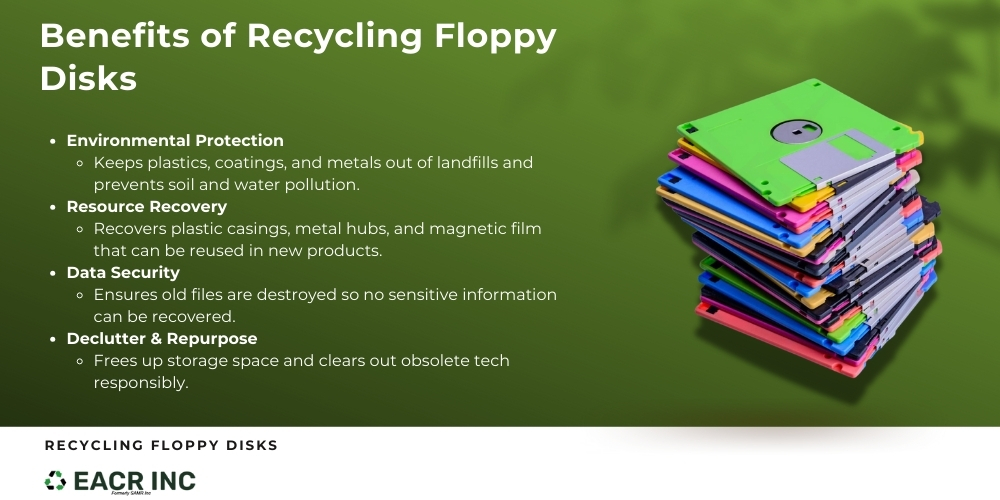
Environmental Protection
Floppy disks may be small, but they still contain plastics, coatings, and metals that don’t belong in landfills. Recycling prevents these materials from polluting soil and water.
Resource Recovery
By recycling, the plastics and metals inside floppy disks can be recovered and turned into new products. This reduces the need for fresh raw materials and cuts down on manufacturing waste.
Compliance and Security
E-waste recycling isn’t just about being eco-friendly—it’s also about meeting EPA and all applicable regulations. Partnering with a licensed electronics recycler ensures compliance and guarantees that any stored data is completely destroyed.
Where to Recycle Floppy Disks Near You
You don’t have to hold on to stacks of old floppy disks—there are still recycling options available:
- Local municipal e-waste events: Many towns and counties host collection days for electronics, and floppy disks are often accepted.
- Licensed recyclers like EACR Inc.: The most reliable option. EACR Inc. follows a zero-landfill policy and provides secure data destruction, ensuring every disk is handled responsibly from start to finish.
FAQs About Floppy Disk Recycling
Yes. Even though their storage is small, floppy disks can hold files. Licensed recyclers securely erase or physically destroy them to ensure no data remains.
Yes. All floppy disk formats—from the smallest 3.5-inch disks to the oldest 8-inch models—can be recycled.
Yes. Floppy disk drives, along with other legacy computer hardware, are considered e-waste and can be recycled through the same process.
Recyclers recover plastic casings, metal hubs, and magnetic film, all of which can be reused in new products.
Yes. Because they contain magnetic materials and coatings, they must be processed by licensed e-waste recyclers who follow environmental guidelines.
Final Thoughts on Floppy Disk Recycling
Floppy disks may feel like relics of the past, but that doesn’t mean they belong in the trash. Recycling keeps hazardous plastics and coatings out of landfills, recovers reusable materials, and ensures any lingering data is destroyed. If you’ve still got boxes of old disks sitting around, now’s the time to act. Contact EACR Inc. today to recycle floppy disks safely and responsibly while protecting both the environment and your data.