

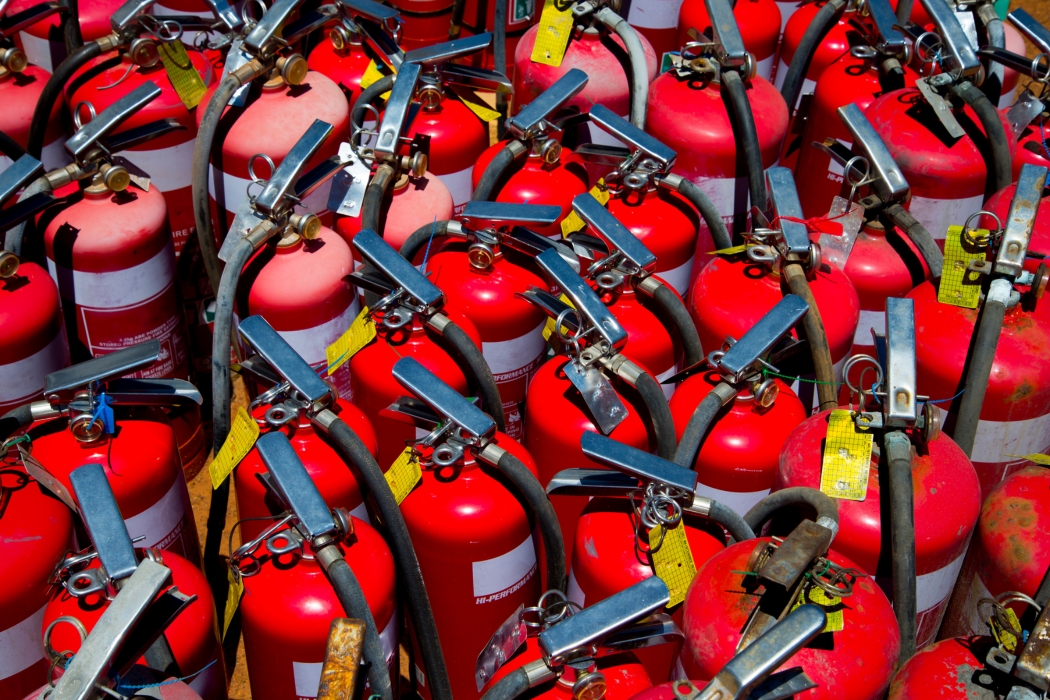
Fire extinguishers are essential safety tools—when you need one, it can save lives and prevent serious property damage. But like all equipment, they don’t last forever. At some point, every extinguisher reaches the end of its life.
Here’s the problem: you can’t just toss a fire extinguisher in the trash or place it in your curbside recycling bin. Because they’re pressurized and contain chemical agents, fire extinguishers require special handling.
The good news? Yes, fire extinguishers can be recycled. Licensed electronics recyclers like EACR Inc. provide safe recycling services that protect both the environment and the community.
What Are Fire Extinguishers Made Of?
Fire extinguishers may look simple on the outside, but they’re made of materials that require extra care when it’s time to recycle.
Cylindrical Pressure Vessels
Most extinguishers are hand-held, cylindrical vessels built from steel or aluminum. These metals are recyclable once the extinguisher is properly depressurized and dismantled.
Extinguishing Agents
Inside the canister is the extinguishing agent, which may be:
- Dry chemicals (mono-ammonium sulfate, sodium bicarbonate, potassium bicarbonate)
- Carbon dioxide (CO₂)
- Water
- Specialty foams or clean agents
Why Special Handling Is Required
The combination of pressurized containers and chemical agents makes fire extinguishers unsafe for standard waste streams. Improper disposal risks explosions, chemical leaks, and environmental contamination—making licensed recycling the only safe option.
Types of Fire Extinguishers
Stored-Pressure Extinguishers
The most common type, stored-pressure extinguishers, typically contain dry chemicals and are widely used in homes, offices, and vehicles.
Cartridge-Operated Extinguishers
Often found in industrial and commercial settings, cartridge-operated extinguishers use a separate gas cartridge to expel the agent. They’re less common in households but require careful handling due to size and contents.
When Should a Fire Extinguisher Be Replaced?
Even if it looks fine, every fire extinguisher has a shelf life.
Lifespan
Most extinguishers should be replaced or professionally serviced after 10–12 years, even if they haven’t been used.
Replace After Any Use
If an extinguisher has been discharged—even partially—it must be replaced or recharged immediately.
Key Warning Signs
You should recycle or replace your extinguisher if you notice:
- Pressure gauge in yellow or red (low or no pressure).
- Cracked hose or nozzle, broken handle, or missing pin.
- Missing inspection tag or sticker.
- Corrosion or visible damage to the body of the extinguisher.
If any of these apply, the extinguisher is no longer reliable in an emergency and should be responsibly recycled.
Why Can’t Fire Extinguishers Go in the Trash or Curbside Recycling?
At first glance, a fire extinguisher looks like a simple metal cylinder—but it’s far from ordinary waste.
Pressurized Canisters
Fire extinguishers are pressurized containers. If crushed in a garbage truck or compacted at a recycling facility, they can explode, creating a serious safety hazard for workers and equipment.
Hazardous Chemicals
Depending on the type, extinguishers may contain dry chemicals, CO₂, or specialty foams. If these leak into the environment, they can contaminate soil and water, or cause respiratory irritation if released into the air.
Special Handling Required
Because of these risks, fire extinguishers must be processed at facilities that know how to properly recycle them. Licensed recyclers have the tools and training to ensure the materials are recovered without harming people or the environment.
Options for Fire Extinguisher Disposal
Refill / Recharge
If the extinguisher isn’t too old and hasn’t been damaged, it may be recharged by a professional. This extends its life and avoids unnecessary disposal.
Local Fire Departments
Some fire departments accept drop-offs, but always call ahead—not every station has the ability to take extinguishers.
Hazardous Waste Facilities
Many cities and counties offer Household Hazardous Waste (HHW) programs. These facilities collect pressurized containers and other difficult-to-dispose-of items during scheduled events or at permanent sites.
Licensed Recyclers
For the safest and most reliable solution, work with a licensed recycler like EACR Inc.. They provide collection, recycling, and certificates of recycling for businesses, schools, hospitals, and municipalities, ensuring extinguishers are handled correctly from start to finish.
Benefits of Recycling Fire Extinguishers
For the Environment
Recycling ensures the steel and aluminum canisters are reused instead of ending up in landfills. It also prevents leftover chemical agents from leaching into soil or water.
For Safety
A pressurized canister in the wrong place can explode, spark a fire, or injure workers. Recycling removes that risk by making sure extinguishers are properly recycled.
For Businesses
Proper disposal keeps companies in compliance with EPA and applicable regulations. Recycling also provides documentation for sustainability and ESG reporting, supporting environmental goals while reducing liability.
Conclusion
Fire extinguishers are essential safety tools, but when they reach the end of their life, they need to be handled carefully. They can’t go in the trash or curbside recycling—but they can be recycled safely and responsibly.
Recycling fire extinguishers means safer communities, recovered resources, and full compliance with regulations.
Contact EACR Inc. today to safely recycle your fire extinguishers and other electronic waste.