The environmental impact of vapes is far bigger than most people realize. E-cigarettes and vape devices are often marketed as small, disposable, and convenient—but that image hides the serious waste problem they create once they’re thrown away.
Vapes combine single-use plastics, electronic circuitry, lithium-ion batteries, toxic chemicals, and heavy metals into one compact product. That mix makes them dangerous to discard improperly and impossible to treat like normal trash.
Because of what’s inside them, vaping waste sits at the intersection of e-waste and hazardous waste. Tossed into landfills or littered outdoors, vapes can spark fires, leak toxic substances, and pollute soil and water.
That’s why proper recycling through licensed facilities like EACR Inc. is critical—not optional—when a vape reaches the end of its life.
The Rapid Rise of Vaping and Vape Waste
Vaping has moved quickly from niche product to mainstream habit, especially among teens and young adults—and vape waste has grown right alongside it.
Disposable vapes like JUUL, Puff Bar, and similar single-use devices have exploded in popularity. These products are designed for convenience, not longevity, which means they’re often used briefly and discarded almost immediately.
Key trends driving the waste problem include:
- Millions of vape devices sold every year, with sales continuing to climb
- Disposable vapes accounting for a growing share of total usage
- Youth adoption fueling single-use design, since disposables are easy to hide, easy to buy, and easy to throw away
As vaping increases, so does the volume of plastics, batteries, and electronics entering the waste stream—with little guidance on what to do next.
Why Vapes Create a Unique Environmental Problem
Unlike traditional cigarettes, vapes introduce a much more dangerous mix of materials into the environment.
A single vape can contain:
- Plastics that don’t biodegrade
- Lithium-ion batteries that can ignite or leak
- Circuit boards and electronics
- Heavy metals like lead and mercury
- Chemical liquids and nicotine residue
This combination makes vapes far more complex—and more dangerous—than cigarette waste. Cigarette butts are a major litter issue, but vapes add fire risk, toxic leaching, and electronic contamination on top of plastic pollution.
Once discarded incorrectly, vapes don’t just sit in landfills—they actively create environmental and safety hazards.
Single-Use Plastics and Vape Litter
Disposable Pods and Devices
Many popular vape products are built around single-use plastic pods or full disposable units. JUUL pods, for example, are designed to be used once and thrown away.
Compounding the issue:
- Most manufacturers do not offer recycling programs
- Some devices include official guidance telling users to throw them in the trash
- There’s little to no disposal education included with the products themselves (Truth Initiative, 2019)
This design choice guarantees waste—and a lot of it.
Vapes as Litter
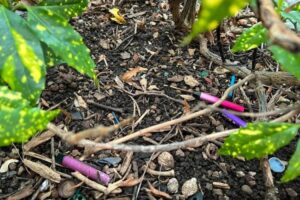
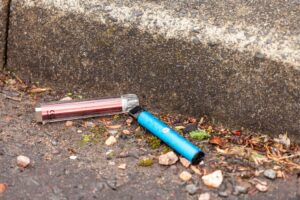
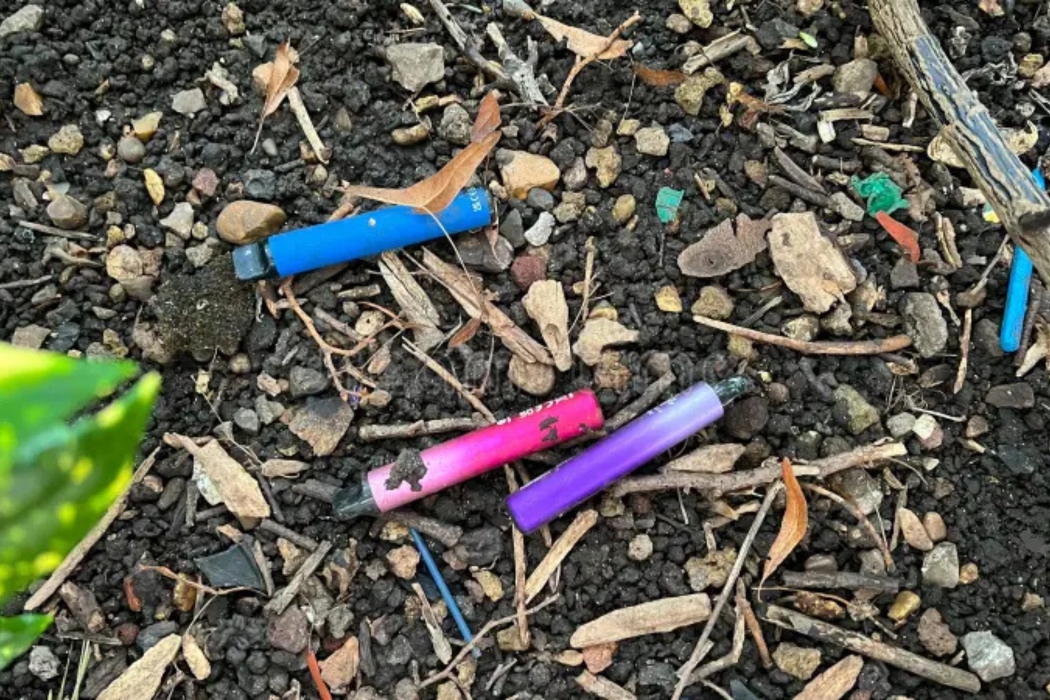
Not all vapes even make it into the trash. Pods and disposables are commonly found:
- On sidewalks
- In schoolyards
- Near waterways
- In parks and public spaces
Like cigarette butts, vape waste has become one of the most visible forms of litter—but with longer-lasting consequences. These plastics don’t break down naturally. Instead, they fragment into microplastics, spreading through soil and water and entering the food chain.
E-Waste Inside Every Vape
Lithium-Ion Batteries and Fire Risk
Nearly every vape contains a lithium-ion battery, even the smallest disposable ones. When thrown in the trash or mixed into household recycling:
- Batteries can spark fires in garbage trucks and waste facilities
- Crushing or heat exposure increases ignition risk
- Reusable battery materials like lithium and cobalt are lost
These fires aren’t rare—they’re a growing problem for waste processors across the country.
Circuit Boards and Electronics
Inside a vape you’ll often find:
- Circuit boards
- Sensors and chips
- Screens or indicator lights
- Internal wiring
These components officially qualify vapes as electronic waste. Throwing them away like normal garbage exposes the environment to metals and chemicals that should only be handled by licensed recyclers.
Toxic Chemicals and Heavy Metals
Vapes may look clean and modern, but what’s inside them is anything but environmentally friendly.
Many devices contain heavy metals such as:
- Lead
- Mercury
- Nickel
When vapes break down in landfills or outdoors, these metals can leach into soil and groundwater, contaminating ecosystems and drinking water sources.
Vapes also contain nicotine salts, which are highly toxic to wildlife. Even small amounts can be lethal to fish, insects, and animals exposed through water runoff. Unlike natural compounds, nicotine doesn’t degrade quickly once it enters the environment.
Over time, cracked devices, damaged pods, or discarded disposables release chemical residue into soil and waterways, creating localized pollution that spreads through storm drains and water systems.
Mining, Manufacturing, and Resource Depletion
The environmental impact of vapes starts long before a device is ever used.
Vape batteries rely on the extraction of lithium, cobalt, and nickel—materials mined through energy-intensive and often environmentally destructive processes. Mining these metals is linked to:
- Soil and water contamination
- Air pollution
- Habitat destruction
- Human rights concerns in mining regions
Beyond mining, tobacco- and vape-related supply chains also drive significant water use and deforestation, especially in areas where tobacco plants are grown and processed.
Perhaps most alarming is the waste itself: disposable vapes throw away lithium that could otherwise be reused in long-term energy storage systems like electric vehicle batteries. Instead of serving years of clean energy use, this material is discarded after days or weeks.
Why Improper Disposal Makes the Problem Worse
Improper disposal is where the environmental damage accelerates.
Surveys consistently show that:
- Most users throw vapes in the regular trash
- Many place them in the wrong recycling bins
- Significant numbers of devices are littered outdoors
This behavior isn’t accidental. Manufacturers provide little to no disposal guidance, leaving consumers guessing—or defaulting to convenience.
The result is widespread confusion about whether vapes are trash, recyclables, or hazardous waste. In reality, they’re all three risks combined when handled incorrectly.
Are Vape Manufacturers Responsible?
Unlike many other electronics, vape manufacturers are not held to consistent end-of-life responsibility standards.
There is:
- No standardized disposal or take-back system
- No mandated recycling infrastructure
- No enforceable requirement for manufacturers to manage post-consumer waste
Instead, some companies engage in PR-driven cleanup campaigns that focus on appearances rather than systemic solutions. This greenwashing distracts from the real issue: manufacturers created the waste stream but placed the burden of disposal entirely on consumers.
This stands in sharp contrast to other regulated electronics, where recovery, recycling, and reporting standards are clearer and more enforced.
Environmental Awareness vs Real-World Behavior
Interestingly, studies show that young people are aware that vape waste is harmful to the environment.
The problem isn’t ignorance—it’s access.
There’s a clear gap between:
- Knowing vapes are harmful
- Having a realistic way to recycle them
Most users don’t know where to take devices, don’t have local drop-off options, or find proper recycling inconvenient. Without infrastructure, good intentions don’t translate into better outcomes.
How Vapes Should Be Recycled
Why Home Disposal Doesn’t Work
Trying to dismantle vapes at home is unsafe. Lithium-ion batteries can ignite if punctured, and exposure to nicotine residue or leaked chemicals presents health risks.
Household trash and curbside recycling systems are not designed to handle this mix of electronics, chemicals, and batteries.
Proper Vape Recycling Through Licensed Facilities
Proper recycling requires:
- Battery isolation and safe handling
- Separation of metals, plastics, glass, and electronics
- Controlled and approved processing
Licensed electronics recyclers have the equipment, training, and downstream partners required to do this safely and compliantly.
How EACR Inc. Helps Reduce Vape Pollution
EACR Inc. approaches vape recycling as both an environmental and safety priority.
Their process includes:
- Safe handling and isolation of lithium-ion batteries
- Material separation for plastics, metals, glass, and electronics
- Responsible downstream recycling and recovery
- Support for consumers, vape retailers, schools, and businesses
This ensures vaping waste is processed legally, safely, and in a way that minimizes environmental harm.
How Individuals and Businesses Can Reduce Vape Impact
Reducing the environmental impact of vapes starts with smarter choices:
- Avoid disposable devices when possible
- Use refillable systems that last longer
- Choose proper recycling instead of trash disposal
For businesses and vape shops, setting up collection or take-back programs creates a clear path for customers to dispose of devices responsibly.
Conclusion: Vapes and the Environment
Vapes leave behind more than vapor. They contribute to:
- Plastic pollution
- Electronic waste
- Toxic chemical exposure
- Resource depletion
The environmental impact of vapes is real—and growing fast. But it’s also preventable.
Recycling vapes responsibly and partnering with licensed electronics recyclers like EACR Inc. keeps dangerous materials out of landfills and helps protect ecosystems, communities, and future resources. If vapes are part of modern life, responsible disposal must be part of it too.