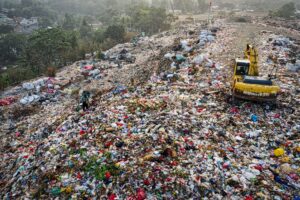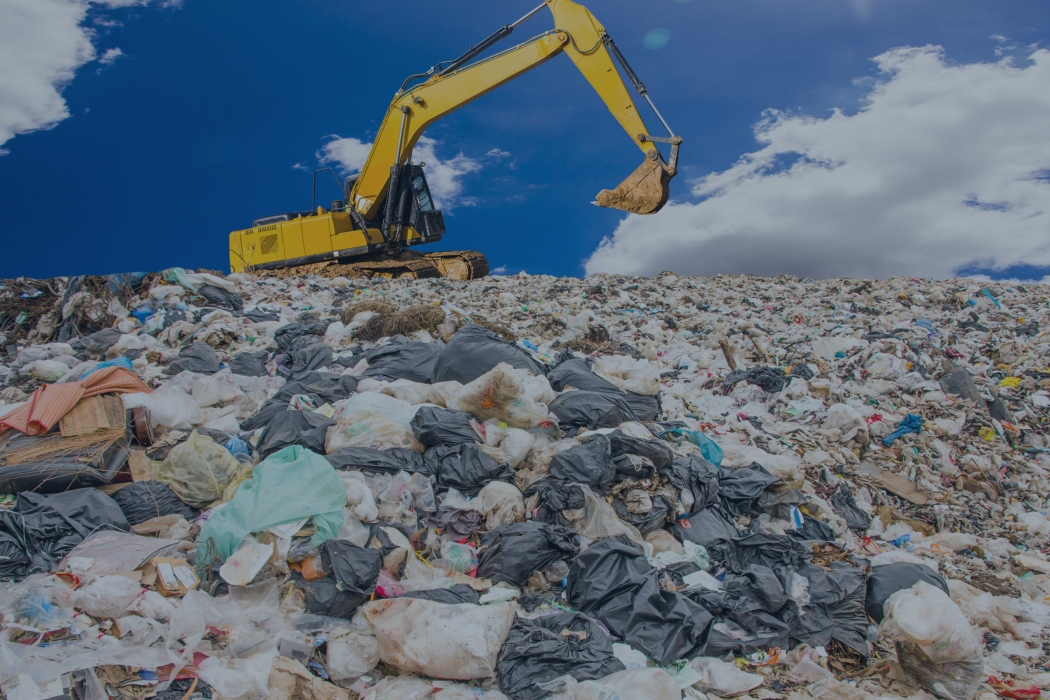
The environmental impact of landfills is becoming harder to ignore as waste continues to pile up worldwide. Landfills are designated sites where waste is compacted, layered, and buried, and they remain the most common disposal method because they’re inexpensive and easy for cities to maintain. But even with modern improvements, they come with serious environmental consequences.
Despite rising interest in recycling, the majority of global waste is still dumped into landfills. An estimated 40% of the world’s waste ends up in landfill sites, and the 50 largest landfill sites directly affect the daily lives of 64 million people. These sites contaminate air, soil, and water, release massive amounts of greenhouse gases, destroy natural habitats, and create long-term public health risks for surrounding communities.
This article breaks down the full environmental, social, and economic consequences of landfill waste so readers can understand what’s at stake—and what needs to change. If your business wants to reduce its landfill footprint, partnering with licensed electronics recycling providers like EACR Inc. is one of the most effective ways to divert waste from landfills and support a more sustainable waste stream.
How Landfills Work
The Basic Landfill Process
Landfills operate by compacting waste into tightly packed layers, covering it with soil, and repeating the cycle as new waste arrives. Each section—or “cell”—is designed to maximize space and minimize exposure.
Modern landfills use liners, drainage systems, and barriers to try to contain contaminants. But liners can tear, membranes eventually degrade, and no landfill system is completely leak-proof.
Why Landfill Waste Decomposes Slowly
Landfills are designed to limit oxygen and moisture, which drastically slows down decomposition. Many materials—plastics, rubber, treated wood, electronics—can sit buried for decades or even centuries without breaking down.
This slow decay means waste accumulates faster than it decomposes, creating long-term environmental burdens.
Why Landfills Continue to Grow
As cities expand and consumerism increases, landfill growth becomes inevitable. The U.S. alone sends 146.1 million tons of municipal solid waste to landfills every year, and this number doesn’t include industrial or hazardous waste streams.
Rising populations, fast fashion, disposable products, and rapid technology upgrades all accelerate the volume of waste entering landfills.
Major Environmental Impacts of Landfills
1. Greenhouse Gas Emissions (Methane + CO₂)
The most harmful environmental impact of landfills comes from their greenhouse gas emissions. As organic waste decomposes without oxygen, it produces methane—a greenhouse gas 84 times more potent than carbon dioxide.
Landfills emit both methane and CO₂, making them major contributors to climate change. In fact, they are projected to account for 10% of global greenhouse gas emissions by 2025 if current trends continue.
Gas capture systems exist, but they are imperfect. Methane escapes before collection systems are installed, and even active systems capture only a portion of what’s produced.
2. Air Quality Problems
Landfills release volatile organic compounds (VOCs) and hazardous air pollutants like benzene, toluene, and formaldehyde. These gases can create smog, irritate respiratory systems, and contribute to long-term health problems.
Odors, dust, and airborne debris are also constant issues for nearby communities. Heavy machinery and trucks transporting waste add further particulate pollution to surrounding areas.
3. Soil Contamination
Leachate—the toxic liquid created when water filters through waste—carries heavy metals such as lead, mercury, and cadmium into surrounding soil.
This contamination harms:
- Agriculture
- Vegetation
- Soil organisms
- Local ecosystems
These toxins can remain in the soil for decades, creating long-lasting environmental damage.
4. Water Pollution
Leachate doesn’t just stay in the soil—it can seep into groundwater and surface waters if not effectively contained. Even “modern” lined landfills are known to leak over time as membranes break down or become damaged.
When leachate containing high levels of ammonia enters waterways, it transforms into nitrate and triggers eutrophication, creating oxygen-depleted “dead zones” where marine life cannot survive.
Contaminated groundwater is extremely difficult—and often impossible—to restore, making this one of the costliest and most dangerous impacts of landfill waste.
5. Habitat Destruction & Biodiversity Loss
The environmental impact of landfills extends far beyond waste storage—these sites dramatically reshape ecosystems. The average landfill covers around 600 acres, wiping out forests, wetlands, and habitats that once supported diverse plant and animal life. Across the U.S., more than 1.8 million acres of natural habitat have already been lost to landfill development.
Runoff, constant noise, heavy machinery, and toxic exposure disrupt nearby wildlife. Animals that remain are often forced to relocate or face contaminated food sources, polluted soil, and damaged ecosystems that can’t sustain them.
6. Effects on Bird Migration & Wildlife Behavior
Landfills strongly influence bird behavior—often in harmful ways. Many species feed directly on landfill waste, ingesting plastics, aluminum, and other materials that can cause fatal health issues.
Even more concerning, the constant availability of food causes some migratory birds to stop migrating altogether. Over time, this disrupts instinctual migration patterns and affects the survival of younger generations who never learn the natural routes.
Landfills don’t just attract birds—they permanently alter wildlife behavior across entire regions.
7. Fire & Explosion Hazards
Methane buildup beneath landfill surfaces creates an ongoing fire risk. When methane becomes trapped and ignites, it can trigger fires that smolder underground for weeks or months.
These aren’t normal flames—they’re deep, internal landfill fires that release toxic dioxins, fumes, and hazardous smoke. Explosions can also occur when gas pressure spikes, putting workers and nearby communities at risk.
8. Land Value Decrease
Large landfills significantly impact nearby property values. Studies show that homes adjacent to major landfill sites lose around 12.9% of their value.
Persistent odors, noise, dust, constant truck traffic, and concerns about pollution make these areas less desirable to live in. As a result, landfills often perpetuate cycles of economic decline in nearby neighborhoods.
Social & Public Health Impacts
Health Risks to Nearby Communities
People living near landfill sites face higher exposure to methane, VOCs, airborne pollutants, and contaminated water. One New York study found a 12% increase in congenital defects among children whose families lived within one mile of a hazardous landfill.
Other risks include:
- Respiratory issues
- Skin irritation
- Long-term health complications from heavy metal exposure
- Elevated cancer risks in some regions
Landfills affect more than the environment—they directly impact human health.
U.S. Landfill Statistics and Key Facts
Number of U.S. Landfills
- 2,600+ active municipal solid waste landfills
- 10,000+ closed landfills
- Thousands more industrial, hazardous, and construction debris sites
Landfills remain one of the most common disposal methods in the country.
Biggest Landfills in the U.S.
- Apex Regional Landfill (Nevada): Largest by capacity; projected to operate for 250+ more years
- Fairless Landfill (Pennsylvania): Largest by annual intake
These sites handle millions of tons of trash every year.
State-by-State Landfill Waste Levels
States with the most landfill waste per person:
- Nevada
- Pennsylvania
- Colorado
States with the least:
- Idaho
- North Dakota
- Connecticut
Most Common Items Found in Landfills
- Food waste — 24.1%
- Plastics — 18.5%
- Paper — 11.8%
- Metals — 9.5%
- Wood — 8.3%
- Textiles — 7.7%
These numbers show how much recyclable or compostable material still ends up in landfills.
How Much Recycling Ends Up in Landfills
Despite progress, an estimated 15–45% of recyclable materials still end up in landfills due to contamination, lack of sorting, or improper disposal.
Why Landfills Are Still Used
The environmental impact of landfills is massive, yet landfills remain the most common waste solution worldwide. Understanding why they’re still used helps explain how the problem grew—and how we can start fixing it.
Convenience & Cost
Landfilling is the cheapest and easiest disposal method for most municipalities. Infrastructure like hauling routes, transfer stations, and landfill capacity already exists, so cities continue using what’s available rather than investing in new systems.
Lack of Recycling Access
Many regions still don’t have reliable, consistent recycling programs. Even where recycling does exist, contamination—like food-covered plastic or mixed materials—causes tons of items to be rejected and sent straight to landfill instead.
Consumer Habits
Our throwaway culture drives landfill growth. Single-use products, fast consumerism, and low recycling participation rates mean most waste still ends up in the trash. Even recyclable items often get tossed simply because it’s easier.
How to Reduce Landfill Dependence
Expanding Recycling Efforts
A big part of reducing landfill use is improving recycling access and education. Cities need better collection systems, cleaner sorting, and more local facilities.
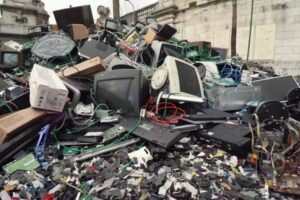
Electronics, in particular, should never go to landfill. Businesses can recycle computers, TVs, and IT equipment through licensed e-waste recyclers like EACR Inc. for safe, compliant handling.
Composting & Organics Diversion
Food and organic waste create methane when buried in landfills. Diverting this material through composting programs dramatically reduces greenhouse gas emissions and helps soil health.
Waste-to-Energy Options
Some areas use controlled incineration to convert waste into electricity. While not perfect, waste-to-energy is far safer and cleaner than landfilling methane-producing organic waste.
Reduce, Reuse, Repair Culture
The fewer products we throw away, the less waste ends up buried. Buying durable goods, repairing electronics, and choosing reusable items helps shorten the waste stream and extend product life cycles.
Business Solutions (CTA)
Organizations produce a significant portion of landfill waste—and they have the most power to change it.
EACR Inc. offers:
- Commercial recycling programs
- Bulk pickups for offices, schools, and government facilities
- Full-service e-waste recycling
- Reporting, documentation, and compliance support
- Zero Landfill Policy
These programs help businesses cut waste, meet sustainability goals, and reduce landfill impact.
Conclusion
The environmental impact of landfills is one of the biggest global waste challenges we face today. Landfills generate methane, contaminate water, destroy habitats, lower property values, and pose serious public health risks. As waste generation continues to rise, reducing landfill dependence becomes more urgent than ever.
Both individuals and businesses can help by recycling properly, reducing consumption, composting organics, and choosing sustainable waste solutions.
Ready to reduce your landfill footprint? Contact EACR Inc. for licensed, sustainable electronics recycling and landfill-reduction solutions.