Dishwasher recycling is the process of safely dismantling and reusing parts from old or broken dishwashers instead of sending them to a landfill. It matters because dishwashers contain materials that can be recovered, as well as hazardous components that need careful handling. Recycling keeps harmful substances out of the environment, conserves natural resources, and ensures compliance with disposal laws. At EACR Inc., we provide licensed dishwasher recycling services across multiple states, offering both drop-off and e-waste pickup options so it’s easy to recycle responsibly.
Why Recycling Dishwashers Matters
Environmental Risks of Improper Disposal
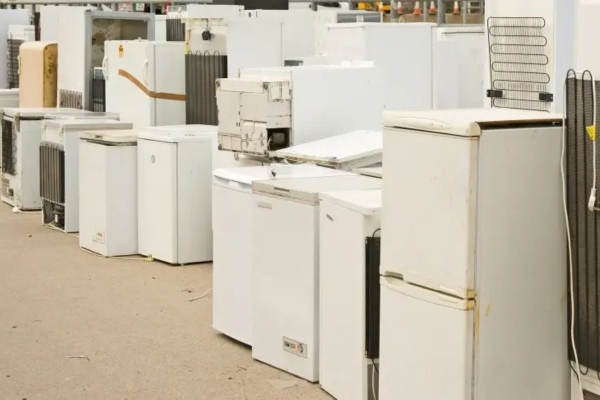
When a dishwasher ends up in a landfill, it doesn’t just take up space—it can actively harm the environment. Over time, chemicals and heavy metals inside the appliance can leach into the soil, contaminate groundwater, and even contribute to air pollution. These pollutants can disrupt ecosystems, affect drinking water quality, and pose long-term health risks to people and wildlife.
Toxic Components in Dishwashers
Many older dishwashers contain hazardous materials that require special handling:
- Lead solder in wiring can leach toxins into the ground if not properly processed.
- Mercury switches in older models can release dangerous vapors and contaminate waterways.
- Plastics with harmful additives, such as certain flame retardants, can pollute the environment if burned or improperly discarded.
Resource Recovery Opportunities
Dishwashers aren’t just bulky waste—they’re a source of reusable materials. Inside every unit you’ll find:
- Stainless steel interiors and frames that can be melted down for new manufacturing.
- Copper wiring from motors and electrical systems, which is highly sought after for recycling.
- Aluminum components that can be repurposed into new products.
- Durable plastic parts that can be processed into pellets for use in other applications.
Sustainability Benefits
Recycling dishwashers has a ripple effect on the environment and the economy:
- Landfill reduction: Keeps large appliances out of already overcrowded waste facilities.
- Lower greenhouse gas emissions: Reusing metals requires far less energy than mining and processing new raw materials.
- Circular economy support: Encourages a system where old products feed into the creation of new ones, a circular economy that minimizes waste and maximizes resource efficiency.
Legal Requirements for Dishwasher Disposal
Disposing of a dishwasher isn’t as simple as dragging it to the curb. Many states and municipalities have strict rules for large appliance disposal because dishwashers contain metals, electronics, and plastics that must be processed properly. Local laws often require appliances to be handled by licensed recycling facilities to prevent environmental contamination.
Why curbside disposal is usually prohibited
Most waste companies won’t take a dishwasher left on the curb with regular trash. Large appliances are too heavy, too bulky, and contain components that can’t go to a standard landfill. Even bulk pickup services often require special arrangements and can’t guarantee your unit will be recycled.
Potential fines for illegal dumping
Leaving a dishwasher in an alley, vacant lot, or unapproved location isn’t just bad for the environment—it can get expensive. Many jurisdictions impose steep fines for illegal dumping, and repeat offenses can lead to legal action. Responsible recycling keeps you compliant and avoids costly penalties.
Best Dishwasher Recycling Options
Licensed Electronics Recycling Centers
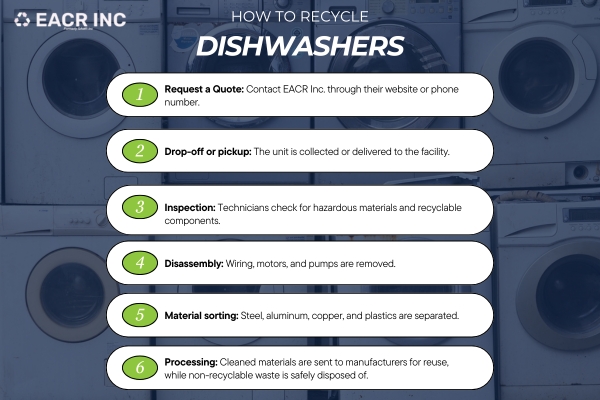
The safest, most environmentally responsible way to get rid of an old dishwasher is to use an electronics recycling company. These facilities follow strict guidelines to ensure hazardous components are handled properly and reusable materials are recovered.
Step-by-step recycling process for dishwashers:
- Drop-off or pickup: The unit is collected or delivered to the facility.
- Inspection: Technicians check for hazardous materials and recyclable components.
- Disassembly: Wiring, motors, and pumps are removed.
- Material sorting: Steel, aluminum, copper, and plastics are separated.
- Processing: Cleaned materials are sent to manufacturers for reuse, while non-recyclable waste is safely disposed of.
Municipal Drop-Off Sites
Many towns and counties offer designated drop-off locations for large appliances. These programs are often run through the local waste management or public works department and ensure appliances are processed legally.
Documents, fees, and scheduling requirements:
Some sites require proof of residency, and a small fee may apply for processing. Operating hours and scheduling vary, so always check your local guidelines before making the trip.
Retailer Haul-Away Programs
Big box retailers like Home Depot, Best Buy, and Lowe’s often provide haul-away services when delivering a new dishwasher.
- Free vs. paid haul-away: Some stores include this service at no extra cost, while others charge a small fee.
- These programs usually partner with licensed recyclers, ensuring your old unit is dismantled and processed responsibly.
Manufacturer Take-Back Programs
Brands like Whirlpool, LG, and Samsung sometimes offer recycling or trade-in programs for old appliances. These initiatives help recover materials for new manufacturing and reduce landfill waste.
How these programs support sustainability:
By taking back old products, manufacturers can reclaim metals, plastics, and electronics for reuse, helping create a closed-loop production cycle.
Donation Options (If Still Functional)
If your dishwasher still works, donation can extend its useful life. Habitat for Humanity, local charities, and community organizations may accept clean, fully functional units.
Cleaning and condition requirements:
Donation centers typically require the dishwasher to be in working order with no major damage. Wipe it down inside and out before arranging drop-off or pickup.
Signs It’s Time to Recycle Your Dishwasher
- Persistent leaks or water damage: Repeated leaking can cause mold, flooring damage, and electrical hazards.
- Inefficient cleaning or long cycles: If dishes come out dirty or cycles take much longer than they should, it may be time to replace.
- Rising energy/water usage: Older models often consume more water and electricity than modern, energy-efficient ones.
- Frequent costly repairs (50% rule): If repairs cost more than half the price of a new unit, recycling and replacing is usually the smarter choice.
Common Dishwasher Components That Get Recycled
Motors, Pumps, Wiring, and Stainless Steel Interior
The heavy-duty parts inside a dishwasher are rich in recyclable metals. Motors and pumps contain copper wiring, while the stainless steel interior and frame can be melted down and reused in new products. These recovered materials help reduce the need for mining raw resources.
Plastic Racks and Panels
Dishwasher racks, door panels, and other plastic components can be processed into raw plastic pellets for manufacturing. Recycled plastic often ends up in items like storage containers, appliance parts, and automotive components.
Electronic Control Boards
Modern dishwashers use control boards to manage cycles and functions. These boards contain small amounts of metals and electronic components that can be carefully extracted and recycled, keeping hazardous materials out of landfills.
How EACR Inc. Handles Dishwasher Recycling
Licensed, Environmentally Responsible Process
At EACR Inc., every dishwasher is processed according to applicable regulations. Our team ensures hazardous materials are handled properly while maximizing the recovery of reusable metals, plastics, and electronics.
Material Sorting and Hazardous Waste Handling
After collection, each dishwasher is processed. Dishwashers will be processed for their metals, plastics, and electronic waste.
Service Area Coverage
We provide dishwasher recycling services throughout Connecticut, Delaware, Maine, Maryland, Massachusetts, New Hampshire, New Jersey, New York, Pennsylvania, Rhode Island, Vermont, Virginia, and Washington, DC.
Pickup or Drop-Off Options
Customers can arrange for pickup service, or bring their old dishwasher directly to our Lakewood, NJ facility. Either way, we handle the heavy lifting and ensure the appliance is recycled responsibly.
FAQs About Dishwasher Recycling
No. In most areas, curbside disposal of large appliances is prohibited. Use a licensed recycling service to stay compliant.
Yes. The dishwasher should be unplugged and disconnected from the water line before collection.
Yes, but it’s usually more efficient to let our team handle the processing. If you do remove parts, dispose of them through a proper recycling program.
Conclusion
Recycling your dishwasher protects the environment, follows legal requirements, and helps recover materials for reuse. EACR Inc. is committed to a zero-landfill policy and uses a licensed, environmentally responsible process for every appliance we handle. Whether you drop off your dishwasher or schedule a pickup, our team ensures it’s recycled the right way.
Contact EACR Inc. today to schedule your dishwasher recycling service and keep harmful waste out of the landfill.